

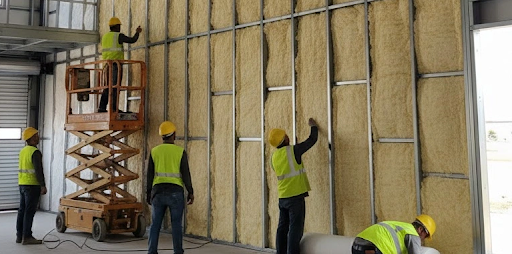
In offices, warehouses, factories, and retail spaces, these large scale buildings need insulation systems installed and maintained properly, and this is the work commercial insulation contractors handle. Different altogether from residential insulation, commercial work turns out to be. Bigger surface areas, HVAC setups more complex, and rules stricter around fire safety and energy usage, these things make commercial projects stand apart from the rest. Better decisions about building performance and running costs over the long term, property owners and facility managers can make once they understand what these contractors actually do and why their expertise matters so much.
What Gets Covered Under Commercial Insulation
Walls, roofs, ceilings, floors, pipework, and ductwork inside non residential buildings, all these areas get touched by commercial insulation work. Much wider than a typical home insulation job, this scope turns out to be, since commercial buildings usually carry several zones, and each zone has its own separate needs for temperature and humidity. A warehouse, for one, often needs insulation that keeps stored goods at a stable temperature. In an office building though, focus shifts more toward thermal comfort and reducing noise levels. Industrial sites, depending on what processes run inside, often require insulation capable of surviving heat, moisture, or chemical exposure.
Why Commercial Buildings Call for a Different Approach
Small residential properties don’t experience heat gain and loss the way big commercial spaces do. High ceilings, large glazing areas, and operating hours that run round the clock, together these factors mean heating and cooling systems work much harder when insulation isn’t done properly. Higher energy bills result from this, along with temperature that swings more than what’s needed. A specialized approach targets the spots where heat transfer turns out worst, roof cavities, external walls, and mechanical rooms falling under this. Staying compliant with energy performance codes also gets easier for buildings this way.
Materials Commonly Used in Commercial Projects
For commercial jobs, a handful of materials show up again and again, each one suited for a particular purpose.
- Fiberglass batts, chosen often for walls and ceilings, thanks to thermal and acoustic properties
- Spray foam, useful for awkward spaces and pipework areas, where airtight seal becomes necessary
- Rigid foam boards, used frequently for roofs, because of strength held under pressure
- Reflective or radiant barrier insulation, helpful in cutting down heat gain for metal roof buildings
- Mineral wool, valued highly for fire resistance in industrial or higher risk settings
Building design, fire safety rules, moisture levels, and available budget, these factors usually decide which material gets picked for a project.
How Insulation Shapes Energy Efficiency in Buildings
How well insulation performs across every zone, energy efficiency in large buildings depends closely on this. When roof or wall insulation stays weak, heat slips out during winter and creeps back in during summer months, forcing HVAC systems to run for longer and consume more energy than what’s actually needed. Research on commercial building performance has shown repeatedly that once insulation gets upgraded, heating and cooling energy use can drop quite significantly, though the exact figure depends on the building’s age and how construction was originally done. Lower energy use over time also brings lower running costs, and this is really what makes upfront spending on insulation worth it, rather than treating it just as another expense.
Beyond Temperature Control, What Role Does Insulation Play
Just keeping the building warm or cool, insulation isn’t only about this. Moisture inside walls and ceilings gets managed through it too, and this lowers chances of condensation and mould building up over time. Noise moving between floors or rooms also gets reduced through acoustic insulation, something carrying a lot of weight in offices, hospitals, and schools, places where how well people focus or carry out work gets affected by sound control.
What Makes Someone a Qualified Insulation Professional
Understanding of building codes, fire safety rules, and handling of materials specific to non residential structures, all this becomes necessary for taking up commercial insulation work. Training in safe installation methods is something most professionals in this field go through, especially where spray foam or protective gear related work comes in. When someone has already worked across different building types, retail stores to industrial plants for instance, judging what a particular building needs based on design and daily usage becomes a lot easier for them.
How Projects Get Assessed Before Work Starts
Before installation begins, usually an assessment takes place first, so existing insulation levels can get checked, areas losing heat can get identified, and materials suiting the building’s conditions can get figured out in the best way possible. Thermal imaging, moisture checks, or simply inspecting roof and wall cavities by hand, any of these methods might get used during this process. Whatever the assessment finds shapes the decisions about which insulation systems will actually perform well for that particular space.
Across many different industries, a real part in improving energy efficiency, comfort, and code compliance gets played by commercial insulation contractors. Choosing the right materials to using installation methods suited for large structures, problems that look very different from a standard home insulation job get solved through this kind of work. As building rules keep changing and energy costs keep climbing, facilities running efficient, comfortable, and compliant still depend heavily on commercial spaces that stay properly insulated.