

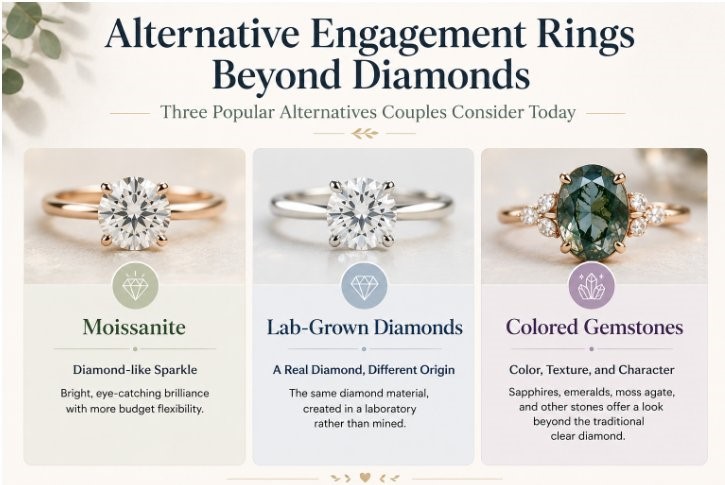
Shoppers find that more couples in Spain are choosing lab grown diamonds because it comes down to getting a much larger, certified gem for their planned wedding budget. These stones share the exact carbon structure as mined gems, so partners don’t sacrifice visual fire while keeping their spending under control.
Why Spanish couples are choosing lab grown stones
Couples often feel stuck between traditional retail markups and their real savings, which leads them to evaluate why their jewelry budget feels so limited. Looking at lab grown diamonds spain jewelers offer reveals four distinct drivers:
- Stretched wedding budgets: Natural gems force severe cutbacks on diamond size or metal choice. Choosing manufactured stones preserves the scale you want without draining honeymoon savings.
- Traceable origins: Traditional supply paths often lack clear paperwork. Lab stones provide a documented, modern supply line that gives buyers clear proof of where their diamond was made.
- Desire for higher clarity: Mined stones within average budgets show visible carbon spots. Laboratory options provide eye-clean clarity grades within that same spending tier.
- Local availability: Major cities like Madrid and Barcelona now feature extensive collections, ending the need to order blindly from foreign websites.
| What the Buyer Notices | Likely Cause | Plain Action to Take |
| Mined ring exceeds target budget | High extraction and dealer markups | Switch to an equivalent manufactured stone |
| Stone looks hazy in showroom light | Low clarity grade to meet budget | Select lab grown diamonds with VS2 clarity |
| Unclear paper trail for origin | Complex legacy supply channels | Ask the jeweler for an IGI or GIA dossier |
Safe Checks to Perform Before Buying
Checking a stone requires no specialist equipment, and you shouldn’t buy without verifying basic credentials yourself.
- Examine the laser inscription: Jewelers can show you the stone’s girdle under simple counter magnification to check for a unique report number.
- Match the grading paperwork: The certificate from the International Gemological Institute or the Gemological Institute of America must match that etched serial code.
- View the gem in daylight: Step toward a window to ensure the stone shows crisp sparkle rather than a blue or brownish tint under natural sun.
Tip: If a seller hesitates to show you the girdle inscription under a standard loupe, pause the purchase and visit a different jeweler.
Should You Choose Lab, Go Mined, or Consult an Independent Appraiser?
If you want the largest, cleanest diamond for a fixed amount of cash, choose a lab stone from an established Spanish seller. The main trade-off is future resale value: manufactured stones don’t hold secondary market equity the way rare mined gems historically have. This path isn’t for buyers viewing jewelry purely as an investment asset.
For rare family heirlooms where long-term asset value outweighs everyday size, choose a traditional mined gem. If an independent jeweler offers an uncertified stone claiming it’s an incredible bargain, don’t gamble. Pay a licensed gem appraiser for an independent evaluation before handing over any payment.
Take your partner to view both gem types side by side in daylight before making your final selectio.