

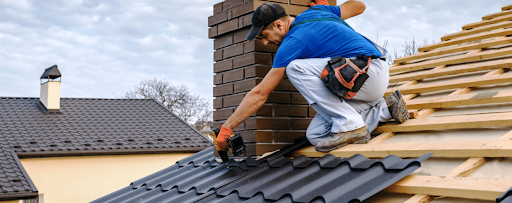
Auckland’s weather has a particular cruelty to it. Not dramatic — just persistent. The same isthmus geography that gives the city its harbour views also funnels weather systems from both coastlines, meaning roofs here cop moisture, UV, and wind in combinations that roofing materials in other parts of the country rarely face with the same frequency. Most homeowners discover this the hard way. Re-roofing in Auckland is rarely a decision made from a position of comfort — it is usually made after something has already gone wrong, which is precisely the wrong time to be making it.
The Climate Does Specific Damage
Auckland’s humidity enables moisture to accumulate, a phenomenon that is not observed in arid climates. That means that oxidation advances under paint systems on metal roofs from the edges inward, invisibly, for years before it becomes visible rust. The tile matrix is fractured from within rather than on the surface as a result of the minor expansion of absorbed moisture by temperature changes in concrete tiles. This phenomenon occurs over some cycles. The substrate beneath flat roof membranes retains heat and moisture simultaneously, which causes them to blister. None of these procedures is particularly noteworthy. They are slow and concealed, and the harm has typically been accumulating for an extended period of time by the time they manifest as a stain on a ceiling.
When Repairs Stop Making Sense
The repair-versus-replace calculation is not complicated once the right question is asked. The right question is not whether a repair will fix the current leak. It almost certainly will. The right question is whether fixing this section leaves the surrounding material in a condition worth protecting. A roof patched in multiple places over several years tells a story — that it is failing across its surface, not just at isolated points. Re-roofing in Auckland becomes the logical response, not when one thing goes wrong but when the pattern of things going wrong makes clear that the roof has no good years left in it.
What Gets Uncovered During the Process
This is the part most homeowners do not anticipate. When old roofing material is stripped back, the underlying timber structure is exposed — often for the first time in decades. What contractors regularly find is rot in the sarking boards, damage to the batten structure, and, in some cases, compromised rafters that have been silently softening under trapped moisture for years. None of this was visible from inside or outside the house. A repair job would have sealed it back under new material without addressing it. The strip-and-replace process that professional re-roofing contractors in Auckland follow forces that inspection, which means structural problems get caught and fixed rather than buried.
Material Choice Is Not Obvious
Long-run steel dominates the Auckland re-roofing market, and for most properties, it makes sense — it sheds water efficiently, handles the UV load reasonably well with quality paint systems, and requires very little from the homeowner over its lifespan. But it is not automatically the right answer. Low-pitch roofs in exposed coastal positions behave differently from steep-pitched roofs inland. Some older villa and bungalow styles sit awkwardly under corrugated profiles both aesthetically and structurally. Clay tiles perform differently from concrete tiles in the same climate. The material conversation should come after a proper site assessment, not before it.
The Hidden Cost of Waiting
Moisture does not stay where it enters. It travels — down through insulation, into wall cavities, along timber framing, and eventually into spaces that are genuinely difficult to remediate. A roof that leaks modestly today creates conditions that quietly worsen for months or years before the interior consequences become obvious. By that point, the job is no longer just a roof replacement. It involves insulation, framing, sometimes lining and cladding. The roof was the original problem, but waiting turned it into several problems arriving simultaneously.
Conclusion
The householders who achieve the greatest success are those who respond to the initial indications rather than waiting for irrefutable evidence of failure. Re-roofing in Auckland, when executed by contractors who comprehend the unique requirements of this climate, is not merely a matter of installing a new roof. It pertains to the mitigation of a gradual risk before it escalates into an issue that extends far beyond the roofline.