

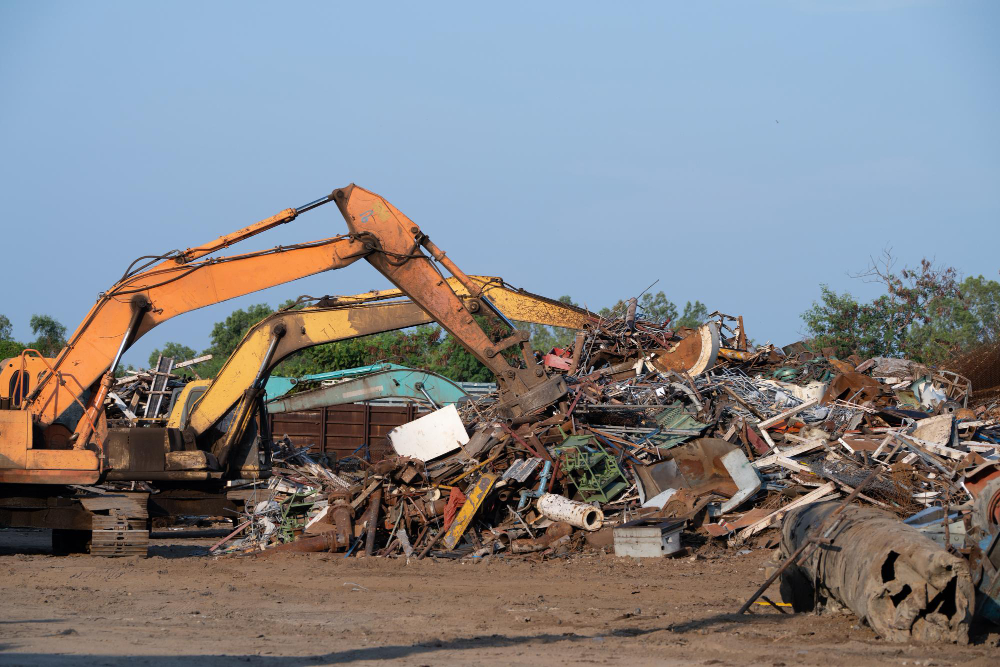
You just wrapped up a major project, a commercial demolition, an HVAC system overhaul, or a manufacturing cleanout. Now you have a pile of steel I-beams, copper wiring, and aluminum siding. You know it has value, but figuring out how much value feels like trying to hit a moving target. The price you were quoted last month might be completely different from the payout you get today. This volatility can make budgeting and forecasting a serious challenge.
This price fluctuation isn’t random. It’s driven by a complex interplay of global markets, industrial demand, and even local logistics. A slowdown in manufacturing thousands of miles away can lower the value of the steel in your yard, while a new local construction boom can increase demand for recycled materials. Understanding the core factors affecting scrap metal prices is the first step toward turning your scrap from a liability into a predictable asset. It allows you to have more informed conversations and better plan your project timelines.
❝ The most common mistake is treating all metal the same. The price drivers for ferrous metals like steel and iron are tied heavily to large-scale construction and industrial production. In contrast, non-ferrous metals like copper and aluminum are more sensitive to manufacturing trends in electronics, transportation, and energy infrastructure.
Quick answer: Scrap metal prices are set on global commodity exchanges, driven by worldwide supply and demand, currency fluctuations, and energy costs. Local market conditions, transportation expenses, and the quality and sorting of your material then determine your final payout from that global benchmark.
What’s inside
- How Global Markets Set the Baseline Price
- Why Industrial Demand Is the Biggest Driver
- What Local Factors Influence Your Payout
- How Metal Grade and Quality Affect Value
- Can You Time the Market for a Better Price?
- Frequently Asked Questions
────────────────────────────────────────
How Do Global Markets Set the Baseline Price?
The daily price for metals like copper, aluminum, and steel is established on global commodity exchanges, which act as a worldwide auction based on industrial supply and demand.
Your local scrap yard doesn’t invent a price each morning. Instead, they reference benchmark prices set on major exchanges like the London Metal Exchange (LME) and the COMEX in New York. These platforms trade contracts for pure, refined metals, not your specific pile of I-beams. The price you receive is derived from that global benchmark, adjusted downward to account for the costs of transportation, sorting, and melting your scrap back into a usable form. This is why a major economic shift in another country can directly impact your payout.
Industrial demand is the primary engine driving these global prices. When manufacturing and construction are booming worldwide, the demand for raw materials like steel, copper, and aluminum surges. Economic indicators from major industrial nations are closely watched. Industry benchmarks tracked by Statista show the scale of the global steel scrap import market. A rise in manufacturing output or new construction projects signals that more metal will be needed, pushing futures prices higher. Conversely, a slowdown can create a surplus, causing prices to fall.
The supply side of the equation is just as important. The flow of scrap metal from industrialized nations competes directly with newly mined virgin ore. In fact, secondary aluminum is a major contributor to U.S. supply, with approximately 43% of the total domestic aluminum supply coming from scrap recovery, according to the U.S. Geological Survey. If global mining operations increase output and lower their costs, it can put downward pressure on the value of recycled metal. Currency fluctuations also play a key role. Because metals are traded globally in U.S. dollars, a stronger dollar makes metal more expensive for buyers using other currencies. This can reduce overall demand and, in turn, lower the benchmark price.
❝ A useful way to think about it is that scrap prices follow the prices of newly mined metals, but with a discount. For example, #1 heavy melting steel might trade at a specific discount to the price of new steel billet. This gap, or “spread,” reflects the cost of melting, refining, and transporting the scrap back into a usable form.
────────────────────────────────────────
What Local Factors Influence Your Payout?
The final price you receive depends on the yard’s operational costs, transportation logistics, and how well your metal is sorted and prepared before arrival.
While global markets set a benchmark, your local scrap yard’s price is what actually matters to your bottom line. A significant factor is transportation. A yard located far from a steel mill, smelter, or shipping port has higher freight costs to move the processed material. These costs are ultimately factored into the price they can offer you. A yard with direct rail access, for instance, might have a cost advantage over one that relies solely on trucking for long-haul transport.
The yard’s own operational efficiency plays a role as well. The heavy equipment needed to shear, bale, and sort metal is expensive to run and maintain. A yard’s processing volume, labor costs, and adherence to environmental regulations all contribute to their overhead. This is why prices can vary between different facilities in the same city. One of the most important factors for ensuring a fair transaction is the scale. Ask if the truck and platform scales are state-certified. You should be able to see a current certification sticker on the scale or its indicator.
❝ Your scale ticket is a critical document. It should clearly list the gross weight (your vehicle plus scrap), the tare weight (your vehicle empty), and the resulting net weight of the material. Before you leave, make sure you understand any deductions for contaminants or material type.
The most control you have over the price is in the preparation of your scrap. Clean, well-sorted material fetches a higher price because it requires less labor for the yard to process. For example, a load of #1 Heavy Melting Steel, which is clean steel cut to specific dimensions, will be more valuable than a load of unsorted demolition debris containing a mix of steel, wood, and concrete. The Institute of Scrap Recycling Industries (ISRI) publishes standardized grades for different metals, and yards use these specifications to price material. Separating your copper from aluminum, and your stainless steel from regular steel, can directly increase your payout.
────────────────────────────────────────
How Does Metal Grade and Quality Affect Value?
The grade of your metal is the most significant price factor you can control. Clean, dense, and well-sorted materials are more valuable because they require less labor and energy to recycle, directly increasing their worth to a steel mill or smelter.
Ferrous metals, which contain iron and are magnetic, are graded by their density, size, and cleanliness. The highest grade, #1 Heavy Melting Steel (HMS), must be at least a quarter-inch thick and cut to specific dimensions, often no larger than five feet by two feet. This size specification exists so the material can be fed directly into a furnace. In contrast, lower-value “light iron” includes items like appliances and sheet metal. These materials have a lower density and often contain contaminants like plastic and insulation. They must be shredded and magnetically separated, a process that consumes energy and results in a lower yield of pure steel.
Non-ferrous metals like copper and aluminum are not magnetic and are valued much higher by weight, making proper sorting even more critical. The U.S. Environmental Protection Agency (EPA) estimates that in 2018, aluminum accounted for 3.7 million tons of municipal solid waste generation in the United States, with only 0.67 million tons ultimately recycled, highlighting the significant potential for increased recovery of this valuable material. The difference in price between grades can be substantial.
- #1 Copper: This grade includes clean, unalloyed copper pipe and thick-gauge bare wire. It must be free of paint, solder, and heavy corrosion.
- #2 Copper: This grade may have solder joints, light corrosion, or a thin coating. The price is lower because these impurities must be burned off during the smelting process, which adds cost and reduces the final amount of pure copper recovered.
- Insulated Wire: For insulated copper wire, the price is based on the recovery percentage. A yard estimates how much copper is inside the plastic sheathing. Thick industrial cable might have an 80% copper recovery, while thin household extension cords might only have 30%.
❝ Time spent sorting on your job site is almost always time well spent. Separating your #1 copper from your #2 copper, or pulling aluminum extrusions out of a mixed pile, can yield a significantly higher return. It’s often the difference between a good payout and a great one.
────────────────────────────────────────
Frequently Asked Questions
Why are scrap metal prices fluctuating so much right now? Scrap prices are tied to global economic activity, which makes them inherently volatile. A slowdown in global manufacturing, changes in international trade policies, or shifts in construction demand can cause prices to drop. Conversely, new infrastructure projects or supply chain disruptions can cause them to rise quickly. Think of it less as a stable price and more as a reflection of the real-time health of the industrial economy.
How can I find the current price for scrap metal in my area? Most scrap yards do not publish their daily prices online because the market changes too frequently. The most reliable method is to call the yards near you directly. When you call, be ready to describe the type and quantity of metal you have, as the price for #1 copper pipe will be very different from the price for light iron from an old appliance.
How much is a large quantity of copper, like 1,000 pounds, worth? The value depends entirely on the grade of the copper and the yard’s current price for that grade. For example, if you have 1,000 pounds of clean #1 copper and the yard’s price is a certain amount per pound, your payout is a simple multiplication. However, if that same 1,000 pounds is #2 copper with solder and paint, the price per pound will be lower, resulting in a smaller total payout. Always confirm the price for your specific grade before you deliver.
Will scrap metal prices go up in the future? Predicting commodity prices is notoriously difficult, and anyone who guarantees future prices is speculating. Long-term trends are influenced by global economic growth, green energy initiatives that require vast amounts of copper and aluminum, and the pace of industrialization. Rather than trying to time the market perfectly, you will get a better result by focusing on what you can control: meticulously sorting your materials to achieve the highest possible grade.
Does the time of year impact scrap prices? While there isn’t a strict “season” for metal prices, weather and construction cycles can influence local markets. For example, a harsh winter can slow down demolition and collection activities, temporarily reducing the local supply. A spring construction boom can increase regional demand for recycled steel. These are typically short-term, localized effects, while the major price trends remain driven by global supply and demand.
────────────────────────────────────────
Your Best Strategy in a Volatile Market
Understanding the global forces that move metal markets is useful, but it will not change the price on a given day. The real takeaway is that you have more influence over your payout than you might think. While you cannot control international trade policy or mining output, you can directly impact the value of the material you bring to the scale. The most profitable strategy is not trying to time the market, but instead focusing your efforts on preparation.
The price difference between well-sorted #1 copper and a mixed pile of #2 copper and wire is significant. The same logic applies to steel. Clean, properly sized heavy melting steel will always command a premium over unsorted light iron. This preparation is where your time and labor yield the highest and most reliable return. It transforms a variable you cannot influence, the market price, into one you can, the material grade.
Ultimately, the best approach is to treat your scrap metal as a product you are preparing for sale. By cleaning it, sorting it by grade, and understanding the specifications that yards use, you shift from being a passive price-taker to an active participant in the transaction. This focus on quality is the one factor that consistently pays off, regardless of daily market fluctuations.
────────────────────────────────────────
About the author
Olympus Recycling provides scrap metal recycling services for industrial, commercial, and individual clients from its facilities in Atlanta and Gainesville, Georgia. The company processes a wide range of ferrous and non-ferrous metals, offering roll-off dumpster services for job sites and manufacturing facilities. Their work focuses on creating an efficient process for contractors and businesses to manage scrap metal, from demolition debris to production byproducts, turning waste streams into revenue through a structured weighing and payment system.