

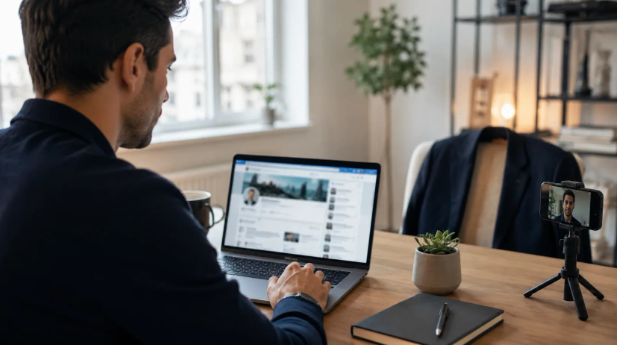
There is a strange moment that happens after you update your LinkedIn photo.
You do not get a parade. Nobody sends a formal note saying your professional identity has been refreshed. But the small signals change. People who ignored your profile start accepting connection requests. Recruiters spend a little longer on your page. A client who has only seen your name in an inbox finally has a face to put with it.
That sounds dramatic until you remember how people actually read online profiles. They skim. They scan. They decide quickly whether the person in front of them feels current, trustworthy, and easy to place in a professional setting.
A LinkedIn headshot used to feel like a small admin task. Find a halfway decent photo. Crop out the wedding guest standing next to you. Hope the lighting does not look too chaotic. Done.
That version is starting to feel dated.
Your profile photo is now closer to a first outfit than a passport photo. It tells people what kind of room you belong in before they read a single bullet point. For founders, consultants, job seekers, real estate professionals, designers, sales teams, and anyone trying to be taken seriously online, the headshot has become part of the uniform.
The Photo Has To Do More Work Than It Used To
The old internet let people hide behind logos, usernames, and half-finished bios. The current one is less forgiving. A LinkedIn profile, company team page, conference speaker bio, podcast guest page, Slack profile, and email signature often use the same photo. One weak image can travel farther than you expect.
That is why the photo has to do several jobs at once.
It has to look like you. Not a heavily filtered version, not a ten-years-ago version, and not a stock-photo version of what a professional person is supposed to be. LinkedIn’s own profile photo guidance starts with a blunt point: the photo should give people a clear idea of what you would look like if they met you tomorrow.
It also has to read clearly at a tiny size. Most people are not judging your image on a full desktop screen. They see it as a small circle beside a comment, search result, message preview, or recruiter dashboard. That means the background, crop, and expression matter more than people think.
And finally, it has to feel appropriate for your field. A startup founder, therapist, attorney, software engineer, real estate agent, and creative director should not all look identical. Professional does not mean stiff. It means intentional.
That is the part many people get wrong. They aim for “formal” and end up with “uncomfortable.”
The Best LinkedIn Headshots Feel Current Without Trying Too Hard
The strongest professional photos usually share a few quiet traits.
The lighting is clean. The face is easy to see. The background is calm. The clothes make sense for the person’s industry. The expression feels like someone you could actually speak to, not someone trapped in a corporate brochure.
None of that requires a luxury studio. It does require taste.
For a LinkedIn photo, your face should take up enough of the frame to be readable. A distant full-body shot wastes the small thumbnail. A cropped vacation photo feels improvised. A photo with several people in it creates confusion for no good reason.
The outfit should not be the loudest thing in the image. Solid colors usually beat busy patterns. A blazer can work, but so can a neat knit, a clean shirt, or a smart casual look if that matches your industry. The goal is not to cosplay as a banker unless you are one.
Backgrounds matter too. White, gray, soft studio tones, modern office environments, or subtle outdoor light can all work. Clutter does not. A kitchen, car seat, gym mirror, or messy bookshelf asks the viewer to process the wrong details.
This is where AI headshots have become more useful than people expected. A focused service such as this LinkedIn headshot tool lets you test professional looks without booking a photographer, commuting to a studio, or guessing which single outfit will work forever.
That matters because most people do not need one perfect photo. They need options.
One Image Rarely Covers Every Professional Setting
Think about where your headshot appears.
LinkedIn is the obvious place, but it is not the only one. The same image might show up in a Microsoft Teams account, a Slack workspace, an email signature, a company bio, a GitHub profile, a sales deck, a speaker submission, or a press quote. Each context has a slightly different tone.
The photo that works for a job hunt may not be the best one for a panel bio. The one that feels warm enough for a coaching practice may feel too casual for a law firm profile. The one that works on a white background may disappear inside a website with a pale layout.
That is why the “one and done” headshot is losing ground.
People now need a small set of professional images the way they need a few reliable outfits. One polished LinkedIn option. One slightly more formal image for company pages. One friendlier version for speaking opportunities. One neutral, cropped image for communication tools.
Traditional photography can do this, of course, but the cost adds up. The ProfessionalHeadshot.io LinkedIn page compares a traditional session at hundreds of dollars with an AI-powered option starting at $29. The homepage lists 40-100 headshots per session, 30+ outfit styles, 14 backgrounds, and delivery in 15-30 minutes depending on the plan.
That changes the decision. You are no longer asking, “Is a headshot worth a whole afternoon and several hundred dollars?” You are asking, “Is my current photo quietly making me look less prepared than I am?”
For a lot of people, the answer is uncomfortable.
The Mistakes Are Usually Small, But They Add Up
Bad headshots are rarely bad in one spectacular way. They are usually a stack of small compromises.
The lighting is a little flat. The crop is too wide. The shirt competes with the face. The background is busy. The photo is old enough that you hope nobody notices. The expression is either too serious or too casual. The image was taken for another purpose and forced into a professional role later.
Each issue might seem minor. Together, they create friction.
That friction matters most when someone does not know you yet. A hiring manager deciding between similar candidates. A founder checking whether to reply to a cold email. A client deciding whether a consultant feels credible. A conference organizer reviewing dozens of submissions.
Nobody admits they judge a person from a headshot. Everyone does it anyway.
That does not mean your photo has to be flawless. It means it should not make the viewer work harder than necessary. The best headshot gets out of the way. It says, “This person is real, current, and appropriate for the room.”
The wrong photo says, “This person has not looked at their own profile in a while.”
Style Still Matters, Even In Professional Photos
There is a reason INSCMagazine’s style and lifestyle readers understand this better than most business audiences. Presentation is not vanity when it affects how people interpret you. Clothes, grooming, posture, lighting, and background all send signals.
The trick is not to over-style the image.
If your profession is conservative, you probably want restraint: a blazer, clean shirt, neutral background, and controlled lighting. If you work in tech, creative strategy, design, media, or consulting, a softer look may feel more believable. If you are client-facing, approachable usually beats intense.
Your headshot should match the person who shows up on calls.
This is one reason I like having multiple versions. A single image can trap you in one mood. A set gives you range. You can use the crisp studio look on LinkedIn, a warmer version in an email signature, and a more relaxed one for a podcast bio or community page.
The point is not reinvention. It is alignment. That is the practical appeal of ProfessionalHeadshot.io: it turns one upload into several usable professional looks instead of forcing every context through a single photo.
If you are a sharp, competent person, your online photo should not make you look like you grabbed a cropped group picture five minutes before applying for a job. If you are warm and collaborative, your headshot should not make you look frozen. If you work with high-trust clients, your image should not feel anonymous.
AI Headshots Are Best When They Stay Believable
There is a bad version of this trend.
You have probably seen it: waxy skin, strange suits, impossible office backgrounds, eyes that look a little too polished, and faces that are technically realistic but emotionally off. Those images create the opposite of trust. They make people pause for the wrong reason.
The better approach is more restrained.
Use AI headshots to create a polished version of yourself, not a fantasy executive. Keep the face recognizable. Choose outfits you would actually wear. Pick backgrounds that make sense for your industry. Avoid anything that looks like a movie poster, luxury ad, or stock image.
ProfessionalHeadshot.io says users upload 5-20 selfies, choose style options, and receive 40-100 polished images. Its privacy copy also says selfies are deleted after 30 days, not sold or shared with third parties, and not used to train AI models. That matters because headshots are personal data, not generic content.
The service homepage also notes full commercial usage rights, which is important if you plan to use the image beyond LinkedIn. A profile picture is one thing. A company bio, press page, conference program, or sales document is another.
The cleaner the rights and privacy terms are, the easier it is to use the final images without second-guessing the decision later.
When To Replace Your LinkedIn Headshot
There is no universal schedule, but there are obvious triggers.
Update it if your current photo is more than two or three years old. Update it if your hair, glasses, facial hair, or overall look has changed enough that people might be surprised in person. Update it if you have moved industries and the old image no longer fits the room you are trying to enter.
Also update it when the photo feels tied to a previous version of your career.
That happens more often than people admit. The graduation photo that used to feel ambitious starts to feel young. The founder photo from your first website starts to feel scrappy in the wrong way. The old corporate badge photo does not match your current consulting practice. The cropped wedding photo was never really working.
If you are actively job searching, fundraising, selling, speaking, recruiting, or building an audience, a current headshot is not cosmetic. It is part of your basic professional infrastructure.
People will still judge you by your work. They just see your photo first.
The New Rule Is Simple
A good LinkedIn headshot should look like you on a day when you came prepared.
Not overdone. Not fake. Not stiff. Prepared.
That means the lighting is considered, the background is clean, the outfit makes sense, the crop works in a small circle, and the expression feels like someone a recruiter, client, or collaborator could trust.
The headshot has become part of personal style because work itself has become more visible online. Your profile photo follows you into inboxes, calls, team pages, comments, search results, and public bios. It is no longer a tiny detail sitting in the corner of a resume-adjacent page.
It is often the first impression.
And first impressions, for better or worse, still get made before anyone reads the rest