

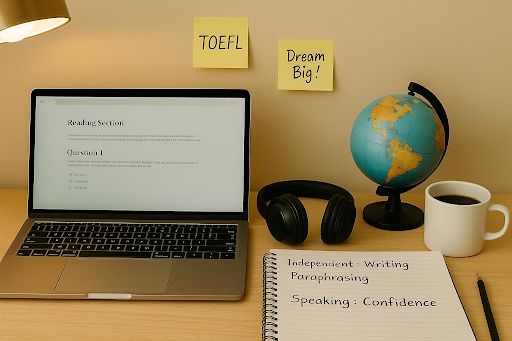
The Test of English as a Foreign Language (TOEFL) remains one of the most widely accepted English proficiency exams for students aiming to study abroad. As we step into 2026, competition for international admissions continues to rise, making a strong TOEFL score more important than ever. This complete guide will help you understand the test, prepare effectively, and achieve a high score to unlock global academic opportunities.
Understanding the TOEFL Exam Format
The TOEFL iBT (Internet-Based Test) assesses four core language skills: Reading, Listening, Speaking, and Writing. The total score ranges from 0 to 120, with each section contributing 30 points. Universities typically require scores between 80 and 100, while top institutions may expect 100+.
The Reading section evaluates your ability to understand academic texts. Listening measures how well you comprehend lectures and conversations. Speaking tests your ability to express ideas clearly, while Writing assesses your ability to construct well-organized responses.
Understanding the format is the first step toward success. Familiarity reduces anxiety and helps you manage time efficiently during the exam.
Setting a Target Score
Before starting your preparation, research the TOEFL requirements of your desired universities. Setting a clear target score gives your preparation direction. For example, if your goal is to study in top universities in the USA, you should aim for at least 100.
Take a diagnostic test to evaluate your current level. This will help you identify strengths and weaknesses and create a focused study plan.
Creating an Effective Study Plan
Consistency is key in TOEFL preparation. Ideally, you should dedicate 6–8 weeks of focused study. Divide your time among all four sections and ensure balanced practice.
A strong study plan includes:
- Daily vocabulary building
- Practice tests twice a week
- Listening to English podcasts or lectures
- Speaking practice with a partner or recording yourself
- Writing essays and getting feedback
Time management is equally important. Train yourself to complete each section within the given time limits.
Improving Each TOEFL Section

For the Reading section, practice skimming and scanning techniques. Focus on understanding the main idea rather than every single word. Academic articles and journals are excellent practice resources.
In Listening, exposure is crucial. Listen to English content daily, such as university lectures, news, or podcasts. Take notes while listening to improve retention.
For Speaking, clarity and structure matter more than accent. Practice answering questions within the time limit. Use a simple structure: introduction, main points, and conclusion.
In Writing, focus on organization and coherence. Practice both integrated and independent tasks. Use clear paragraphs, strong examples, and proper grammar.
Using the Right Resources
In 2026, students have access to a wide range of online resources. Official TOEFL practice tests are the most reliable. Additionally, platforms like YouTube, language apps, and online courses can enhance your preparation.
Avoid using too many resources at once. Stick to a few high-quality materials and focus on mastering them.
Taking Practice Tests Seriously
Mock tests are essential for success. They simulate the real exam environment and help build stamina. Analyze your performance after each test. Identify recurring mistakes and work on them.
Practice tests also improve your time management skills and boost confidence before the actual exam.
Common Mistakes to Avoid
Many students focus only on grammar and neglect speaking practice. Others ignore time management, leading to incomplete sections. Memorizing templates without understanding them is another common mistake.
Avoid last-minute cramming. TOEFL is a skills-based test, and improvement takes time and consistent effort.
Test Day Tips
On the day of the exam, stay calm and confident. Get enough sleep the night before and arrive early at the test center. Read instructions carefully and manage your time wisely.
If you don’t understand a question, don’t panic—make an educated guess and move on. Maintaining focus throughout the test is crucial for a high score.
Conclusion
Achieving a high TOEFL score in 2026 requires smart planning, consistent practice, and the right mindset. By understanding the exam format, setting clear goals, and working on each section strategically, you can significantly improve your performance.
A strong TOEFL score is more than just a number—it is your gateway to international education, cultural exposure, and global career opportunities. With dedication and the right approach, studying abroad can become a reality.