


Sleep affects almost every aspect of how we think, feel, and function, yet many people accept restless nights as a fact of life. One of the most overlooked levers we have is also one of the most accessible: what we eat.
According to a Sleep Health Foundation report, around 60% of Australian adults experience at least one sleep symptom regularly, and roughly 14.8% have symptoms consistent with clinical insomnia. Those figures reflect a real need. And food is a practical, low-barrier place to start.
Note: This article is for general informational purposes only and does not constitute medical advice. If you are experiencing persistent sleep difficulties, please speak with a qualified healthcare professional.
Why Food Matters More Than Most People Realise
Sleep is not just something that happens when your head hits the pillow. Your body prepares for it all day long, relying on nutrients to produce melatonin (the hormone that makes you feel sleepy) and serotonin (which supports calm and emotional balance). When the diet is low in certain minerals or proteins, that process can quietly struggle in the background.
Magnesium is a key example. It helps muscles relax and signals the nervous system to slow down. People who are low in magnesium often describe feeling wired but tired – exhausted, yet unable to switch off.
Blood sugar stability matters too. If it drops too low overnight, the body releases stress hormones to compensate, which can pull you out of sleep – often around 2 or 3 a.m.
7 Foods That Support Better Sleep
None of the foods below are exotic or expensive. Most are already in the kitchen. The difference is simply using them more intentionally.
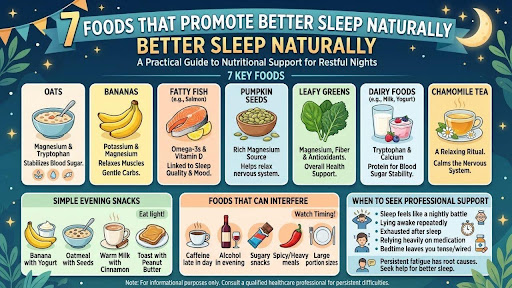
1. Oats
Oats are warm, gentle on digestion, and naturally calming. They contain magnesium and a small amount of tryptophan, which the body converts into sleep hormones. Just as importantly, they help keep blood sugar steady through the night. A bowl of oats in the evening, particularly in cooler months, can be more nourishing than a lighter dinner.
2. Bananas
Bananas contain potassium and magnesium, both of which help muscles relax – useful for anyone who experiences leg cramps, tension, or restlessness at night. They also provide gentle carbohydrates, which help the brain use tryptophan more effectively. A banana after dinner is a simple, underrated wind-down snack.
3. Fatty fish
Salmon, sardines, and similar fish are rich in omega-3 fatty acids and vitamin D – two nutrients frequently linked to sleep quality and mood regulation. Low vitamin D levels are especially common in people who feel persistently fatigued or notice mood dips during winter. Two or three fish meals per week can make a meaningful difference over time.
4. Pumpkin seeds
Small but nutritionally dense, pumpkin seeds are one of the better dietary sources of magnesium. Modern diets – often high in processed foods and shaped by chronic stress – tend to deplete magnesium stores faster than most people realise. Keeping a small jar of pumpkin seeds in the pantry and adding a handful to yoghurt, salads, or breakfast bowls is a low-effort habit with a real payoff.
5. Leafy greens
Spinach, kale, and similar vegetables provide magnesium, fibre, and antioxidants that support overall health, including sleep. They are not dramatic, but people who increase their vegetable intake often notice improvements in both energy and sleep quality within a few weeks.
6. Dairy foods
The idea that warm milk helps you sleep is not entirely folk wisdom. Milk, yoghurt, and cheese contain tryptophan and calcium, both of which support sleep hormone production. They also provide steady protein, which helps stabilise blood sugar overnight. A small bowl of yoghurt in the evening is a more supportive choice than a sugary dessert.
7. Chamomile tea
Chamomile tea works less through specific nutrients and more through ritual. The act of making tea, sitting down, and slowing the pace of the evening signals to the nervous system that the day is ending. Pairing it with dimmed lights and a screen-free half hour can meaningfully ease the transition into sleep.
Simple Evening Snacks that work well
Going to bed hungry can be just as disruptive as eating too much. A small, balanced snack can help stabilise blood sugar and ease the body into rest. Some practical options:
- Banana with yoghurt
- Oatmeal with seeds or nuts
- Whole-grain toast with peanut butter
- A piece of fruit with a handful of nuts
- Warm milk with cinnamon
Foods that can interfere with sleep
It is worth noting what works against sleep just as much as what supports it. Common disruptors include:
- Caffeine consumed late in the day
- Alcohol in the evening
- Sugary snacks close to bedtime
- Very spicy or heavy meals eaten late
- Large portion sizes within two hours of bed
These do not need to be eliminated entirely. Timing is usually the more practical adjustment.
When it might be time to seek professional support
Sometimes people make all the right dietary changes and still struggle with sleep. That is usually a signal that something deeper needs attention – not a sign of failure.
Consider speaking with a healthcare professional or registered naturopath if:
- Sleep feels like a nightly battle rather than something that comes naturally
- You are lying awake most evenings or waking repeatedly through the night
- You feel exhausted even after what should have been a full night of sleep
- You are relying on sleep medication more often than you would like
- Bedtime leaves you feeling tense or wired rather than calm
Persistent fatigue has root causes – and with the right support, better sleep is genuinely achievable.
Final thoughts
Better sleep rarely comes from a single change. It tends to emerge from steady, supportive choices made across the day. Food is one of the simplest places to start – adding oats, leafy greens, fatty fish, seeds, and dairy gives the body the building blocks it needs to rest and recover. Small shifts, consistently applied, are where real change tends to happen.