

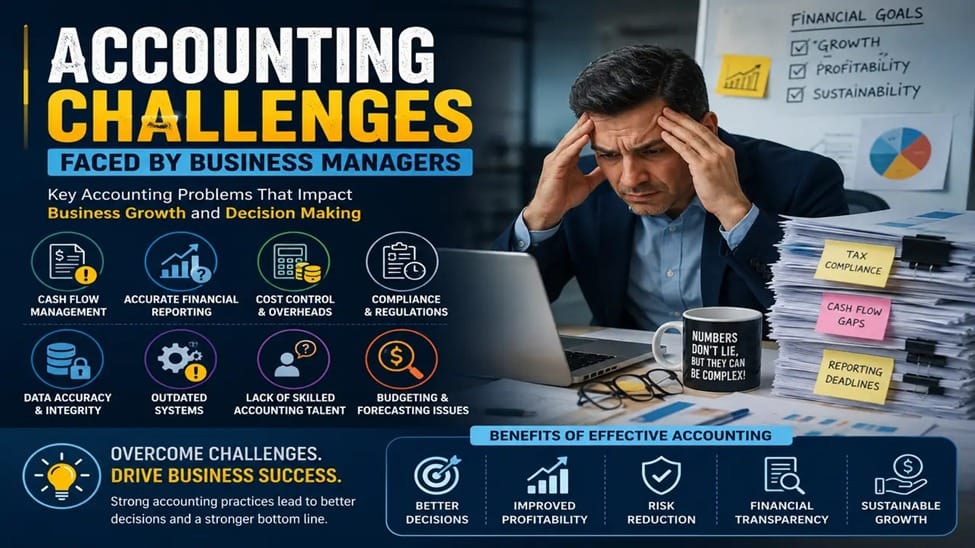
Managing the finances of a firm is a complicated task. Accounting is one of these important jobs that may either help or hurt your business. To keep their businesses financially healthy and in compliance, managers have to deal with a lot of accounting problems. The first step to overcoming these problems is to understand them. This book will help you do so by going over the main concerns you might face. If you’re a manager, you’ll learn how to deal with these challenges directly and maintain your business financially stable. The accounting challenges faced by business managers ensures a smooth entry into the subject.
It’s not enough to just keep track of the books; you also need to make sense of the numbers so you can make smart business decisions. Business managers really do have to deal with accounting problems every day, and the phrase “accounting challenges” is not just a cliché. Managers may lead their businesses to more profits and long-term success by dealing with these problems. If you have problems with cash flow or compliance, it’s important to know these basic accounting principles. A strong understanding of management accounting helps managers interpret financial data more effectively and improve business performance.
accounting challenges faced by business managers
Business managers encounter a lot of accounting problems, from making sure they follow the rules to making sure their financial reports are correct. Accounting is basically keeping track of, organizing, and summarizing money transactions. This method gives you the information you need to make smart decisions and plan for the future. For managers, knowing these basic things is very important for keeping the business stable and helping it expand. Good accounting methods assist keep track of income, control costs, and make sure that financial goals are reached. Understanding the components financial management can also support better budgeting and financial decision-making.
One of the biggest problems that business managers have to deal with when it comes to accounting is following complicated rules. There are several financial rules that any corporation must follow, and if they don’t, they could face big fines. To handle these rules, you need to know a lot about accounting and be able to change with the times. Making sure that your financial accounts are correct and follow Generally Accepted Accounting Principles (GAAP) is a big job, for example. This means keeping very detailed records and doing regular audits. Also, managers need to keep up with tax rules to stay out of trouble with the law and make sure taxes are paid on time.
Cash Flow Management
Every firm needs cash flow to stay alive. Managing cash flow well makes ensuring that a business has enough cash on hand to pay its short-term obligations. This means keeping a good financial reserve, planning for cash coming in and going out, and keeping track of what you owe and what you owe. If you don’t manage your cash flow well, you could have a liquidity crisis, which makes it hard to pay suppliers, staff, or even meet your operational costs. Managers need to keep an eye on cash flow and make changes when they need to. This could mean making credit regulations stricter, getting better terms from suppliers, or getting short-term loans. Not keeping track of cash flow might hurt a business’s finances. Effective educational management can help businesses align cash flow planning with their long-term financial objectives.
Financial Reporting Accuracy
To make smart company choices, you need to be able to trust your financial reports. It gives stakeholders a clear picture of how the company is doing financially. If you make mistakes while reporting your finances, you could make bad decisions, get fined by the government, and lose the faith of investors and creditors. Managers need to make sure that the accounting rules are followed when making financial statements. This includes checking accounts on a regular basis, making sure that transactions are correct, and meeting reporting deadlines. Tools like accounting software can help make these tasks easier and less likely to go wrong. Regular internal audits can also assist find and fix any mistakes.
Budgeting and Forecasting
For financial planning and control, budgeting and forecasting are very important. They help you make financial goals, figure out how to use your money, and guess how well your finances will do in the future. But making accurate budgets and forecasts can be hard, especially since the business world is always changing. Managers need to think about a number of things, such as market trends, the state of the economy, and their own skills. Being flexible is important. You should regularly look over and change your budgets and forecasts based on how things are going and how things change. This makes sure that the business stays on track to reach its financial goals. It’s also crucial to talk to stakeholders in a way that makes sure everyone is on the same page and has the resources they need.
Tax Compliance
Tax compliance is a complicated and always-changing field. There are a lot of tax laws and rules that businesses have to follow, which can be hard to keep track of. Not following the rules might lead to big fines and legal problems. Managers need to keep up with the newest tax rules and make sure that the company submits its tax returns on time and correctly. You might need to hire tax experts or use special tax software for this. Also, managers should seek for ways to lower the company’s tax bill, like deductions and credits. Regular tax planning can help you pay less in taxes and stay within the law.
Inventory Management
Businesses that sell real things need to keep track of their inventory. It means keeping track of stock levels, controlling stock, and making sure the proper products are available when they are needed. If you don’t keep track of your inventory well, you can run out of goods, have too much stock, and have to pay more to store it. To get the best stock levels, managers need to use good inventory management methods like just-in-time inventory. Regular inventory checks can assist find mistakes and make sure everything is correct. Using inventory management software can also make things easier and give you real-time information on how much goods you have.
Revenue Recognition
The process of recognizing revenue is figuring out when a sale’s income is recorded. This can be hard, especially for organizations that have long-term contracts or more than one way to make money. If you don’t recognize revenue correctly, your financial statements could be wrong, and you could face fines from regulators. Managers must follow rules for recognizing revenue, like those in GAAP or IFRS. This means knowing what the sales agreements say, figuring out when revenue is collected, and recording it in the right accounting period. Regularly reviewing and updating policies for recognizing revenue can assist make sure they are correct and follow the rules.
Cost Control
To stay profitable, you need to keep an eye on your costs. It means keeping an eye on and controlling operational costs to make sure they stay within budget. Managers need to find places where they can cut expenses without hurting quality or productivity. This could be getting better deals from suppliers, making greater use of resources, or using technologies that save money. Regularly looking over your budget and doing cost analyses will help you find ways to cut costs. Also, managers should create a culture of being aware of costs among their staff to make sure that everyone in the company follows cost control procedures.
Capital Investment Decisions
When you make a capital investment decision, you choose how to spend money on long-term assets or projects. These choices can have a big effect on how well a firm does financially. Managers need to think about the possible risks and rewards of putting money into capital. This means doing a lot of financial analysis, including figuring out the net present value (NPV) or internal rate of return (IRR). Also, managers should think about how well investments fit with the company’s goals. Regularly reviewing capital investment portfolios can assist make sure that money is being spent wisely and that projects are making the money they were supposed to.
Risk Management
Risk management is very important for finding and lowering financial hazards. These risks might come from a number of places, such as changes in the market, credit defaults, or problems with operations. To keep the company’s money safe, managers need to put risk management plans into action. This means figuring out what hazards might happen, how bad they could be, and making preparations for what to do if they do. You can be ready for everything by doing regular risk assessments and evaluations. Also, to lower risks, managers should think about spreading out their investments and making sure they have enough insurance.
Technology Integration
For modern accounting to work, technology must be included. It means using accounting software and tools to make processes easier, more accurate, and faster. Managers need to look at and choose the right IT solutions for their firm. This could include moving from manual accounting to automated systems or updating the software you already have. Regular training and help for staff can help make sure that technology is integrated smoothly and used well. Managers should also keep up with the latest IT advancements so they can use new tools and ideas.
Regulatory Compliance
Businesses always have to deal with regulatory compliance. It means following a number of rules and legislation that control how businesses report their finances and run their operations. If you don’t follow the rules, you could face legal problems and fines. Managers need to keep up with the current rules and make sure the organization follows them. This could mean regular audits, paperwork, and reports. Also, management should put in place internal controls and processes to make sure that compliance continues. Training personnel on a regular basis can also assist the company develop a culture of compliance.
FAQ for accounting challenges faced by business managers
What are the common accounting challenges faced by business managers?
Managing cash flow, making sure financial reports are correct, making budgets, paying taxes, and following the rules are just some of the problems that business managers face. To deal with these problems, you need to know a lot about accounting and be able to change with the times. To keep your finances healthy and help your business thrive, you need to be able to handle these problems well.
How can managers improve cash flow management?
Managers may better manage cash flow by frequently predicting how much cash will come in and go out, keeping an eye on receivables and payables, and keeping a strong cash reserve. Also, tightening credit regulations, getting better terms from suppliers, and getting short-term loans when you need them will help. The organization stays financially healthy by regularly reviewing and changing its cash flow plans.
What role does technology play in addressing accounting challenges?
Technology is a big part of how people do accounting these days. It helps make operations automatic, more accurate, and more efficient. Tools and software for accounting can make it easier to budget, report on finances, and control risk. Keeping up with the latest technology trends and giving personnel frequent training will help you make the most of these technologies.
How can managers ensure accurate financial reporting?
Managers can make sure that financial reports are correct by following accounting rules, checking transactions, and doing frequent reconciliations. You can find and fix mistakes by doing internal audits and using accounting software. Regular evaluations and adjustments to policies for financial reporting make sure they are correct and follow the rules.
What steps can managers take to address tax compliance challenges?
Managers can deal with problems with tax compliance by keeping up with the latest tax rules, engaging tax experts, and using tax software that is made for that purpose. Regular tax planning and filing your tax returns on time will help you pay less in taxes and stay in compliance. Also, finding ways to save on taxes can help the corporation pay less in taxes overall.
Conclusion
Business managers have to deal with accounting problems that can’t be disregarded. These problems, which range from managing financial flow to following the rules, need considerable thought and planning. Managers may make sure their finances are stable and help their businesses thrive by knowing and dealing with these problems. It’s important to keep up with the latest accounting rules, use technology to your advantage, and create a culture of compliance in the workplace. Regular reviews and changes to accounting methods can help you keep ahead of problems and make sure your business is successful in the long run.
This ending shows how the accounting challenges faced by business managers sharpens understanding. You are in charge of your company’s finances as a manager. Accept the challenge, stay up to date, and take efforts to handle your accounting duties before they become a problem. If you handle these problems the proper way, they can help you grow and succeed. So, get to work right away. The financial health of your firm depends on it.