

Amazon selling has slowly shifted from intuition to analysis. What used to rely on experience or trial and error now depends on how well sellers understand data, trends, and performance signals across ads, pricing, and organic sales. AI tools have stepped into that gap, not to replace decision making, but to make it clearer. Instead of guessing why something works, sellers can see patterns earlier and react with more confidence.
This article looks at Amazon AI tools from a practical angle. Some focus on advertising efficiency, others on analytics, forecasting, or automation, but the common thread is visibility. The better the data is presented, the easier it becomes to spot what actually drives growth and what simply adds noise. Rather than promising shortcuts, these platforms aim to reduce complexity so teams can spend less time digging through reports and more time making decisions that move the business forward.
1. WisePPC
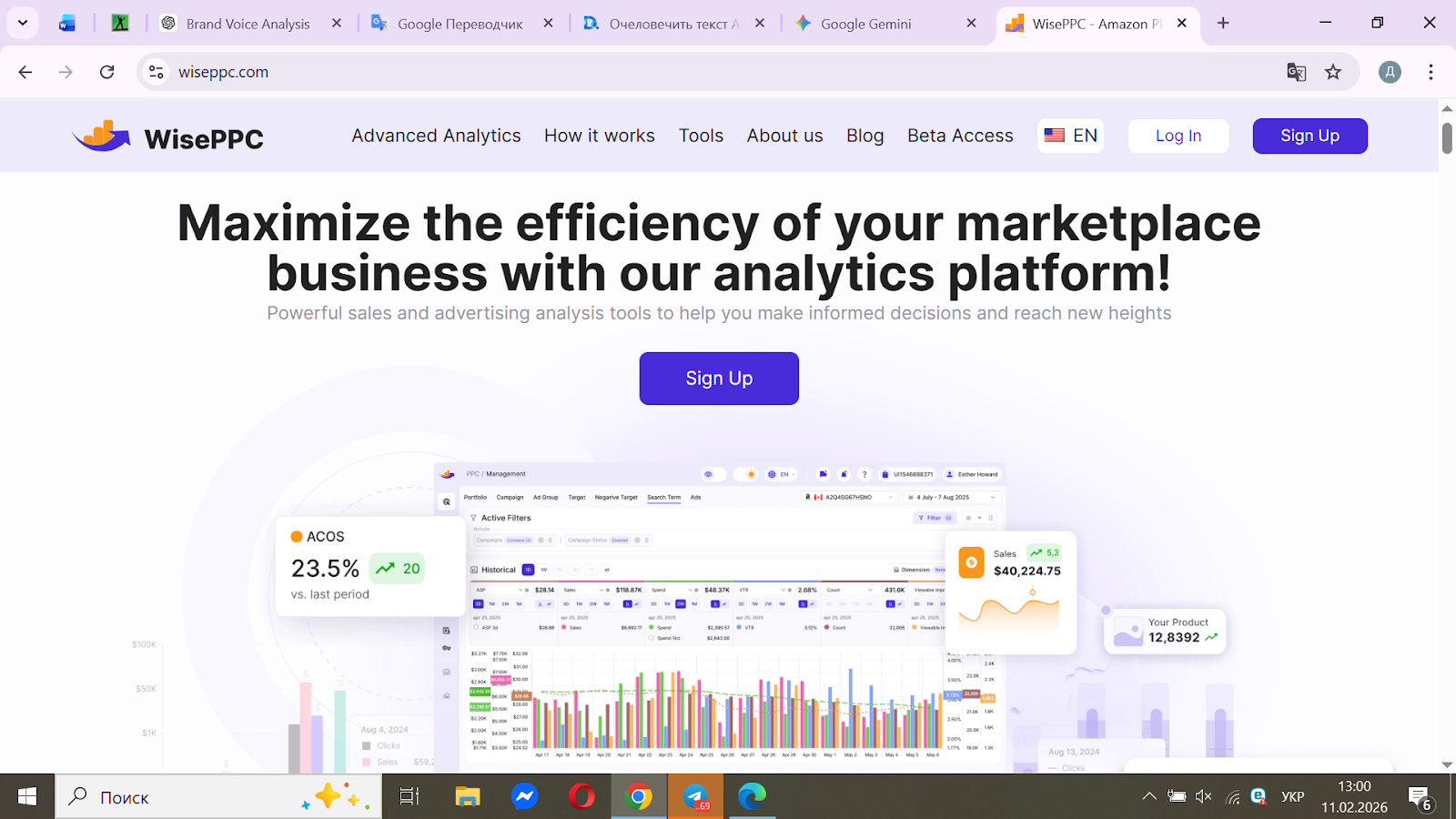
WisePPC is built around analytics and campaign management for marketplace sellers who want to understand how advertising and sales interact over time. The platform brings advertising data, sales performance, and operational metrics into one interface, allowing users to review campaign behavior without moving between multiple reports. A typical use case appears when a seller tries to understand why sales changed during a certain period – instead of checking separate dashboards, the platform keeps historical performance, placement data, and pricing signals in one place for comparison.
WisePPC focuses on reducing manual campaign work through bulk editing, filtering, and inline adjustments. Campaigns, keywords, and placements can be analyzed at different levels, which makes it easier to notice patterns such as overspending or uneven performance across targeting types. Long-term data storage also changes how analysis works, since trends and seasonality remain visible beyond the short reporting windows normally available inside Amazon.
Key Highlights:
- Centralized analytics for advertising and sales data
- Historical performance tracking across longer time periods
- Bulk campaign actions and inline editing tools
- Filtering and segmentation for detailed analysis
- Placement-level performance insights
Who It’s Best For:
- Sellers managing multiple campaigns who want clearer performance visibility
- Brands trying to understand how ads influence organic sales over time
- Teams that prefer working from data rather than separate reports
- Agencies handling multiple accounts in one workflow
Contact Information:
- Website: wiseppc.com
- Facebook: www.facebook.com/people/Wise-PPC/61573154427547
- LinkedIn: www.linkedin.com/company/wiseppc
- Instagram: www.instagram.com/wiseppc
2. Seller Assistant
The Seller Assistant tackles Amazon AI by focusing on sourcing and research. It combines product research, finding suppliers, and purchasing into one place. This cuts down on the manual work of checking out new products.For example, when sourcing wholesale or through arbitrage, you need to confirm if a product qualifies, check for limits, and verify supplier info prior to buying.
Seller Assistant has AI sourcing tools that link Amazon listings to potential suppliers using identifiers like ASINs or product models, while Amazon A+ Content Services help sellers create engaging and informative product pages that enhance brand value and improve the shopping experience. Research is done while you browse Amazon, blending analysis into your usual workflow. Plus, it keeps supplier details, purchase orders, and research notes together. This helps teams keep track when handling several products or catalogs.
Key Highlights:
- AI-assisted supplier discovery from Amazon listing Services.
- Product research directly within Amazon browsing
- Restriction and risk checks during sourcing
- Supplier and warehouse data organization
Who It’s Best For:
- Wholesale and online arbitrage sellers evaluating new products regularly
- Sellers who research products directly on Amazon pages
- Teams managing supplier relationships and purchase workflows
- Sellers trying to reduce manual sourcing checks
3. Aura
Aura platform focuses on automating pricing for marketplace sellers who do not want to constantly adjust prices by hand every time the market shifts. The platform watches listing conditions and updates prices within limits set by the seller, so pricing stays competitive without losing control over margins. This tends to matter more once a catalog grows, because manually checking dozens or hundreds of listings quickly turns into routine work that is easy to fall behind on.
Aura is built around simple workflows and clear visibility into what changed and why. Pricing history stays accessible, which makes it easier to understand how certain decisions affected results instead of guessing later. Rules can be adjusted as strategies change, rather than editing listings one by one. Reporting and integrations also connect pricing with cost data from other tools, so margin changes remain visible even when prices move frequently. In practice, pricing becomes something that runs continuously in the background rather than a task that needs constant attention.
Key Highlights:
- Rule-based pricing workflows
- Real-time price adjustment within defined limits
- Pricing activity logs and reporting
- Bulk listing updates
Who It’s Best For:
- Sellers managing large catalogs with frequent price changes
- Businesses that want pricing to adjust without constant monitoring
- Sellers balancing competitiveness with margin control
- Teams looking to automate routine repricing decisions
4. CopyMonkey
CopyMonkey focuses on helping Amazon sellers create and adjust listing content using AI assistance. The tool works around product titles, bullet points, and descriptions, using keywords and listing structure as the starting point rather than creative writing. In practice, CopyMonkey fits sellers who need to produce or update listings regularly and want to keep keyword placement consistent without manually reviewing every variation. A common situation is launching several new products at once, where writing everything from scratch slows the process down.
CopyMonkey also looks at competitor listings and keyword signals to suggest adjustments over time. Instead of treating a listing as finished after publishing, the tool approaches it as something that can be refined as performance changes. The workflow feels closer to editing than writing, with the platform generating a base version that sellers can then adjust depending on category requirements or brand tone.
Key Highlights:
- AI-assisted generation of Amazon listing content
- Keyword-focused listing structure
- Competitor-based listing analysis
- Ongoing listing optimization suggestions
Who It’s Best For:
- Sellers launching new products and needing structured listing drafts
- Brands updating listings regularly based on keyword changes
- Sellers who prefer editing generated content instead of writing from scratch
5. Seller Snap
Seller Snap is built around automated repricing, using AI to adjust prices as marketplace conditions change instead of relying only on fixed rules. Prices move within limits set by the seller, so adjustments happen automatically without constant manual checks. This tends to matter most in categories where competitors change prices often, because trying to keep up manually usually turns into something that needs attention every day.
Seller Snap also connects pricing with analytics, so it is possible to see how price changes affect sales or how quickly inventory moves. Minimum prices can be based on costs, which helps keep margins visible while strategies shift over time. In practice, pricing becomes more of a background process. The platform handles routine adjustments while sellers spend time on sourcing, ads, or other parts of the business that actually need hands-on decisions.
Key Highlights:
- AI-driven automated repricing
- Strategy-based pricing adjustments
- Minimum price calculation using cost inputs
- Pricing and sales performance visibility
Who It’s Best For:
- Sellers operating in competitive categories with frequent price changes
- Businesses managing large SKU catalogs
- Sellers who want pricing adjustments handled automatically
- Teams balancing margin control with Buy Box competitiveness
6. eDesk
eDesk is a platform designed for e-commerce sellers who handle customer chats on many marketplaces. It puts messages, order information, and customer history in one place. This way, support teams don’t have to switch between inboxes and seller dashboards to see what’s going on. For example, when a customer asks about shipping or product information, the agent can already see the order details without having to search for them.
The AI in eDesk focuses on taking care of routine support tasks instead of replacing human answers. Messages can be grouped, sent to the right person, or answered automatically if the questions are common. More complicated problems are still handled by support agents. eDesk also links pre-sale questions, live chat, and post-sale support, which helps keep communication consistent across all channels. For stores with a lot of messages, this cuts down on manual work and makes it easier to control response times.
Key Highlights:
- Centralized inbox for marketplace and store messages
- AI-assisted ticket grouping and routing
- Automated replies for common customer questions
- Chatbot support for routine inquiries
Who It’s Best For:
- Ecommerce sellers managing customer messages across multiple channels
- Support teams handling high volumes of repetitive inquiries
- Marketplace sellers wanting order context visible during conversations
7. Quartile
Quartile focuses on Amazon listing optimization and advertising automation supported by data analysis. The platform works by monitoring campaign performance and adjusting bids, keywords, and placements based on performance signals collected from Amazon advertising data sources. Instead of relying only on fixed campaign structures, the platform allows campaigns to be organized in different ways while still applying automated adjustments in the background.
Another part of Quartile involves connecting performance data with broader advertising strategy. Reporting tools help surface patterns that are not always obvious when looking at campaigns individually, especially when multiple products or channels are involved. Quartile combines automation with managed input, so campaign changes can follow predefined rules or be guided by external strategy decisions. In practice, this suits teams that want automation running continuously but still want visibility into how decisions are made.
Key Highlights:
- AI-based bid and placement optimization
- Automated campaign adjustments based on performance data
- Flexible campaign structure support
- Integration with Amazon advertising data sources
- Detailed performance reporting
Who It’s Best For:
- Brands managing large Amazon advertising accounts
- Teams that want automated optimization with strategic oversight
- Sellers running complex campaign structures across many products
- Agencies handling advertising for multiple clients
8. Perpetua
Perpetua is a platform that automates marketplace advertising, especially for PPC campaigns, reducing the need for ongoing manual work. It arranges campaigns by goals, not individual tasks, changing how the system works. Instead of manually changing bids, the system adjusts them automatically using performance data and set targets. This is helpful for managing lots of products where small manual changes can take up time.
Reporting and analytics show how advertising affects product sales over time. You can look at campaign data by product, so you can see which ones do well with advertising and which ones need a different strategy. With keyword research, automated bidding, and performance tracking all in one place, you don’t have to switch between different tools to handle your campaigns.
Key Highlights:
- Automated PPC campaign management
- Goal-based campaign optimization
- Keyword discovery and management tools
- Bid automation based on performance signals
Who It’s Best For:
- Sellers managing advertising across large product catalogs
- Brands focusing on goal-driven campaign optimization
- Teams wanting automation to handle routine PPC adjustments
- Agencies managing performance across multiple products or channels
9. Eva
Eva brings together AI automation and optional managed support for marketplace advertising and day to day operations. The setup is flexible in a practical way. Some sellers prefer to let automation handle most adjustments, while others want to keep control over strategy and only automate routine work. Eva allows both approaches, so automation can run in the background without removing the ability to step in and change direction when needed. This tends to work well for brands that want help with optimization but are not comfortable giving up full control.
Another noticeable part of the platform is how advertising, inventory, and pricing are connected instead of handled as separate tasks. Campaign activity can affect stock levels or margins, and the system tries to keep those pieces aligned so one decision does not quietly create problems somewhere else. Changes remain visible, which makes it easier to understand what actually happened rather than guessing later. Expert support can be added on top, but the core idea still revolves around automation handling repetitive adjustments while teams focus on broader decisions.
Key Highlights:
- Adjustable automation levels and workflow modes
- Visibility into optimization actions
- Alignment between advertising, pricing, and inventory
- Multi-marketplace support
- Strategy and account management options
Who It’s Best For:
- Brands wanting flexible levels of automation in advertising workflows
- Sellers managing advertising alongside inventory and pricing decisions
- Teams that want automation with the option to intervene manually
10. BidX
BidX focuses on advertising automation and campaign management for marketplace sellers working with Amazon and similar retail media channels. The platform combines campaign creation, keyword management, and bid adjustments inside one environment, which reduces the need to manage campaigns directly inside multiple advertising dashboards. In practice, the tool is often used when advertising structures become difficult to maintain manually, especially when multiple products or ad types are involved at the same time.
BidX also connects performance monitoring with automation rules, allowing campaign changes to happen continuously while still remaining visible to the user. Reporting and analytics aim to explain how campaigns behave over time rather than only showing short-term results. The workflow feels operational, closer to maintaining a system than actively adjusting campaigns every day, which can make sense for teams trying to reduce repetitive advertising tasks without losing oversight.
Key Highlights:
- Automated campaign creation and optimization tools
- AI-supported keyword research and management
- Bid and budget adjustments based on performance signals
- Rule-based campaign automation
Who It’s Best For:
- Sellers managing multiple advertising campaigns simultaneously
- Brands looking to reduce manual campaign adjustments
- Agencies handling advertising across several accounts
- Teams wanting automation with visible performance tracking
11. ZonGuru
ZonGuru Listing Optimizer enhances Amazon product listing services with AI-powered keyword organization and content optimization for better performance. The tool works by analyzing keyword relevance and listing structure, then generating or rewriting listing elements based on that data. Instead of treating listing creation as a one-time task, the platform approaches it as an ongoing process where adjustments can be made as competition or keyword priorities change.
ZonGuru also introduces scoring and comparison features that help sellers understand how a listing aligns with category expectations. This tends to be useful when sellers already have a listing live but are unsure why performance differs from competing products. The workflow feels guided rather than automated, since users still shape tone and product positioning while the tool handles structure and keyword placement.
Key Highlights:
- AI-assisted listing generation and rewriting
- Keyword-based listing optimization workflow
- Listing strength and optimization scoring
- Competitor comparison features
Who It’s Best For:
- Sellers improving existing listings rather than creating new ones from scratch
- Brands adjusting listings based on keyword changes
- Sellers learning how listing structure affects visibility
- Small teams without dedicated listing specialists
12. Pacvue
Pacvue is a platform that links advertising, sales, and business data into one view for marketplace teams. It mixes campaign automation with analytics so you can review ad performance alongside inventory, pricing, and retail data. This becomes useful when advertising choices start to change other parts of the business, like stock or how visible a product is across many stores.
Automation in the Pacvue focuses on campaign changes, bid control, and rule-based improvements, while keeping reports ready for more study. Instead of working as just an advertising tool, the platform acts as a main workspace where business data is read together. This way of doing things usually fits bigger teams where advertising choices are closely linked to wider business plans.
Key Highlights:
- Advertising automation across retail media channels
- Unified view of advertising and sales data
- Rule-based bid and campaign management
- Share of voice and market performance insights
- Custom dashboards and reporting tools
Who It’s Best For:
- Brands managing advertising across multiple marketplaces
- Teams needing advertising and sales data in one environment
- Agencies coordinating large-scale retail media campaigns
13. Intentwise
Intentwise focuses on advertising analytics and optimization through data consolidation and AI-assisted diagnostics. The platform brings together advertising, retail, and performance signals so users can understand why campaign results change rather than only seeing that they changed. A common use case appears when performance shifts suddenly and teams need to identify whether the cause comes from bidding, competition, or external factors.
Intentwise includes automation through bidding algorithms and rule-based controls, while an AI assistant helps interpret data patterns and highlight areas needing attention. Instead of requiring constant dashboard navigation, the tool emphasizes explanations and recommendations that help users prioritize actions. The experience leans toward analysis and decision support rather than full automation, which can be useful for teams that still want control over strategy.
Key Highlights:
- AI-assisted campaign diagnostics and analysis
- Automated bidding combined with rule-based controls
- Data integration across advertising and retail signals
- Share of voice and competitive analysis tools
- Custom data segmentation and reporting
Who It’s Best For:
- Brands trying to understand performance changes in detail
- Agencies managing multiple advertising accounts
- Teams working with complex advertising data sets
- Sellers wanting recommendations without losing manual control
14. Jungle Scout
Jungle Scout approaches Amazon AI from a research and decision support angle rather than focusing only on advertising or automation. The platform brings together product research, sales analytics, and listing optimization tools so sellers can understand what is happening across their catalog before making changes. In everyday use, this often shows up when a seller notices that one product slows down while another grows, and the platform helps connect those changes to pricing, reviews, or demand trends instead of leaving the user guessing.
AI features inside the Jungle Scout work mostly as an assistant layer on top of existing data. The AI Assist chat and analytics tools interpret performance data, highlight unusual patterns, and suggest areas worth checking, such as products with declining margins or listings that may need adjustments. Listing tools also use AI to help structure titles and descriptions around relevant keywords, though editing still remains part of the workflow. The overall experience feels analytical first, with automation supporting decisions rather than replacing them.
Key Highlights:
- AI-assisted sales analytics and performance insights
- Product and market research tools for Amazon sellers
- AI-supported listing creation and optimization
- Profit and performance analysis within one workspace
- Keyword research connected to listing workflows
Who It’s Best For:
- Sellers researching product opportunities before launch
- Brands reviewing performance across multiple products
- Teams that prefer data interpretation over full automation
- Sellers improving listings based on keyword insights
Conclusion
Amazon AI tools are slowly changing how sellers work, but not in the dramatic way people sometimes expect. Most of the time, the value comes from removing small, repetitive decisions rather than replacing human judgment. Writing listings, adjusting bids, replying to customers, forecasting inventory, or updating prices – these things still need oversight, but they no longer need constant attention. That shift alone changes how teams spend their time.
What stands out across different tools is that each one solves a very specific problem. Some focus on advertising, others on support, pricing, or inventory planning. There is no single platform that fits every workflow, and that is probably a good thing. Sellers tend to combine tools depending on how their business runs, and AI becomes more useful when it supports an existing process instead of forcing a new one. In practice, the real benefit is clarity. When data is easier to read and routine actions happen automatically, decisions feel less reactive. Sellers can step back, notice patterns earlier, and make adjustments before problems grow. AI does not remove uncertainty from selling on Amazon, but it does make the day to day work a little more manageable, which for many businesses is already a meaningful improvement.