

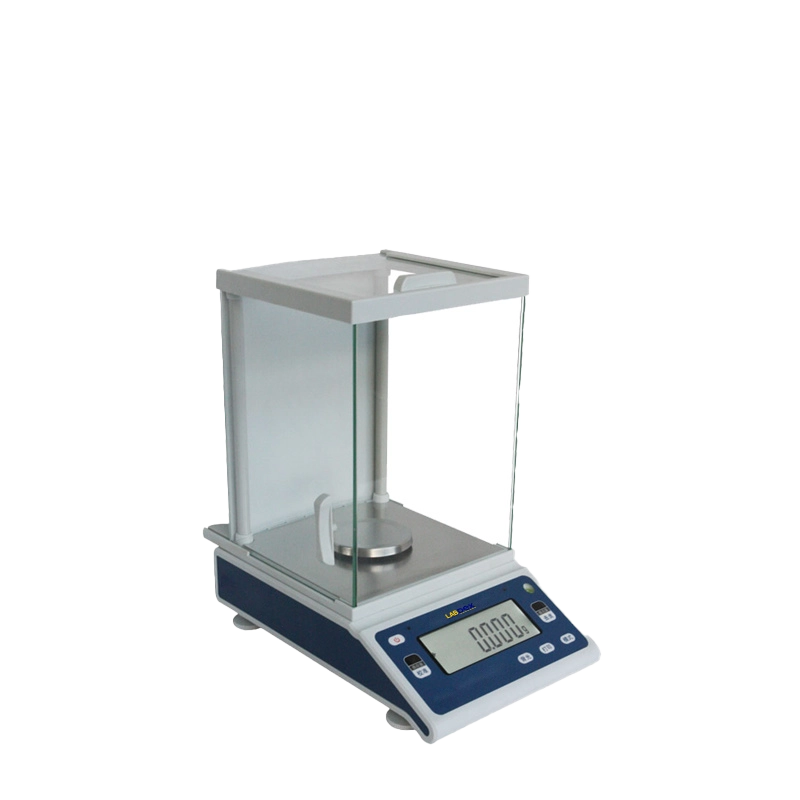
In scientific laboratories, pharmaceutical formulation facilities, and high-tech quality control rooms, the ability to measure mass with absolute precision is fundamental to success. Even a microscopic variance in substance weight can completely alter chemical reactions, invalidate research findings, or compromise consumer safety.
Consequently, standard commercial scales are entirely insufficient for high-level scientific experimentation and micro-dosing workflows. Every fraction of a milligram must be precisely accounted for under stable measurement conditions.
Isolating External Environmental Factors
To achieve sub-milligram accuracy, research facilities rely on specialized laboratory weighing instruments equipped with advanced electromagnetic force restoration technology. Top-tier analytical balance manufacturers focus on minimizing internal thermal drift and isolating external ambient vibrations to provide scientists with stable, repeatable readings down to four decimal places or greater.
These instruments isolate environmental disruptions through clever mechanical engineering and integrated software filtration algorithms. Advanced models also incorporate automatic internal calibration systems driven by built-in motorized weights.
These systems trigger automatically when the instrument detects a slight shift in ambient room temperature or after a specific period of inactivity, eliminating the need for manual calibration with external test masses. This constant self-monitoring ensures that the balance maintains absolute accuracy across shifting laboratory environment dynamics.
Material Selection for Structural Stability
The physical materials selected for the construction of analytical balances are carefully chosen for structural stability and resistance to external influences. The base chassis is usually constructed from heavy die-cast metal to provide a rigid foundation and dampen surrounding structural vibrations. The internal weighing pan is made from high-grade stainless steel to resist chemical corrosion and allow for easy sanitization.
Additionally, integrated draft shields are made of anti-static coated glass to prevent air currents or static electricity from affecting the highly sensitive weighing chamber. The electronic housing parts are often treated with specialized shielding compounds to protect the sensitive internal electromagnetic cell from radio frequency interference (RFI) and electromagnetic fields generated by neighboring laboratory equipment.
The load cells themselves are built using specialized alloys that exhibit negligible thermal expansion coefficients, guaranteeing that internal heat generation from the electronics does not skew the mass measurements during prolonged testing windows.
Metrology and Traceability Regulations
Strict manufacturing and verification standards govern the laboratory weighing industry to guarantee worldwide measurement traceability. High-end balances are manufactured in accordance with ISO 9001 systems and must comply with legal metrology standards such as OIML (International Organization of Legal Metrology) Class I requirements or NIST Handbook 44.
Furthermore, in pharmaceutical environments, these instruments support compliance with FDA 21 CFR Part 11 protocols for secure electronic data tracking and audit trails.
Micro-Dosing and Laboratory Use Cases
The practical applications for these ultra-precise instruments are diverse and deeply integrated into modern science. In pharmaceutical laboratories, they are used for the precise preparation of standard solutions and active pharmaceutical ingredients (APIs).
In materials science, researchers rely on them to measure density and changes in mass with extreme fidelity. Analytical balances also play an essential role in environmental testing laboratories for measuring particulate matter collected on air and water filtration membranes.