

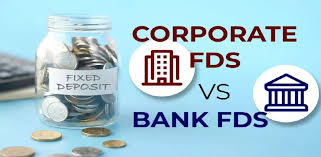
When it comes to investing, most people want two things: the safety of their money and a steady return on it. And this is where the Fixed Deposits (FDs) come into play. They are simple to understand, provide guaranteed returns and are used by millions of investors all over India.
But there is more than one kind of FD. Bank FDs are a common investment instrument, and Corporate FDs are growing popular because of their high returns.
If you’re unsure which to choose, let’s break it down.
Bank FDs: The Classic Safe Bet
Public and private sector institutions offer bank fixed deposits. You put in money for a set term, say, one to five years and receive interest. It’s easy, low-risk, and reliable.
One big advantage? The deposit insurance protection is provided by the Deposit Insurance and Credit Guarantee Corporation (DICGC). This means your deposits of up to ₹5 lakh per depositor per bank are insured. Even if a bank fails, your money is protected up to that limit.
The FD interest rates range between 5-7%, depending on the tenure and the bank. Large public sector banks may offer lower rates, while some small finance banks provide more competitive interest rates.
If you’re someone who values peace of mind, bank FDs are a dependable choice.
Corporate FDs: More Reward, More Risk
Corporate FDs work similarly; you invest a fixed amount for a fixed term. However, these are offered by non-banking financial companies (NBFCs) or private corporations.
The biggest attraction? Higher FD interest rates. Some corporate FDs offer up to 8-9% or even more, which is quite appealing compared to traditional bank FDs.
But here’s the catch: they are not insured. There’s no DICGC cover, and your returns depend on the company’s financial health. If the issuing company fails, there’s a chance you might not get your money back.
That’s why it’s important to be selective. Always look at the credit rating of the company. Companies with lower ratings might offer higher returns, but at a higher risk.
Comparing Bank and Corporate FDs
Let’s look at some key differences:
- FD Interest Rates: A bank FD gives decent rates (5-7%), and a corporate FD can give higher (7-9% and even more), depending on the company.
- Safety: Bank FDs come with deposit insurance of up to ₹5 lakh. However, this security is not extended to Corporate FDs.
- Liquidity: Premature withdrawal is usually allowed in bank FDs with a small penalty. Corporate FDs may have longer lock-in periods and stricter exit rules.
- Tenure Options: Banks offer flexibility, from a few days to 10 years. Corporate FDs generally range from 1 to 5 years.
How to Pick the Right Corporate FD?
If you are attracted to the higher returns offered on a corporate FD, don’t jump on. Here are a few things to keep in mind:
- Check the credit rating: AAA or AA ratings are signs of strong financial health. Avoid companies with no rating or poor grades.
- Do your research: Read up on the company’s performance, reputation, and whether it has a transparent track record.
- Diversify: Don’t invest all your money in a single company FD. Spread your investments across a few well-rated issuers to manage risk.
Who Might Consider Corporate FDs?
Corporate FDs are better suited for those who:
- Are comfortable with moderate risk
- Want to earn more than bank FD returns
- Can lock in funds for a fixed term
- Have time and interest in research companies.
Who Might Consider Bank FDs?
If your focus is on capital safety, bank FDs are a better fit. They’re ideal for:
- Senior citizens looking for guaranteed income
- Risk-averse investors
- Short-term savers
- Anyone who values liquidity and insurance cover
Conclusion
It is your choice to either choose a bank FD or a corporate FD based on your risk value. If you want to play it safe and have peace of mind, you can always opt for a bank FD, while if you would like to earn possibly higher returns, a corporate FD from a credible issuer would be a good way of investing.
Whatever path you choose, be informed, compare and ensure your investment style fits your requirements.