

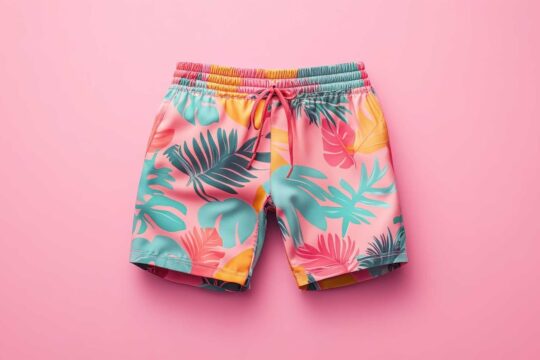
Most brands overthink the print and underthink the fabric. The pattern gets all the creative energy. Colorways go through five rounds of revision. Meanwhile, the material underneath receives a ten-minute conversation and a default selection from the factory’s stock list.
Fabric deserves more attention than that. It’s the reason your swim shorts dry in twenty minutes instead of clinging to the skin for an hour — and why your colors still look right after thirty washes. The hand-feel a customer notices the moment they pull the pair from the packaging? That comes from the base material, not the print. A striking pattern on the wrong fabric still produces a product that disappoints.
Choosing the right fabric for custom swim shorts means weighing three demands against each other: performance in water, comfort on the body, and durability across seasons of wear. Each textile handles these demands differently. Understanding what each option offers lets you prioritize based on your brand’s positioning and your customer’s expectations.
Polyester: The Industry Standard for Swim
Polyester dominates swim short production globally. It handles water better than any comparable synthetic at its price point — fast dry times and full print compatibility.
The fiber is hydrophobic. It doesn’t absorb water. Instead, moisture sits on the surface and evaporates quickly. A polyester swim short dries in 30 to 45 minutes in open air. Dry time matters most for customers who wear swim shorts as all-day resort or beach wear, not just in the water.
Sublimation printing bonds directly to polyester at a molecular level. Colors penetrate the fiber instead of sitting on top. The result is vivid, photographic-quality prints that won’t crack, peel, or fade the way surface-applied inks do over time. For brands building print-heavy collections, polyester is often the only realistic base.
Common weights for swim applications:
- 90–110 GSM: Lightweight, fast-drying, slightly translucent. Best for unlined styles or warm-climate use. Be careful here — anything under 100 GSM risks sheerness complaints when wet.
- 120–140 GSM: Mid-weight, opaque, versatile. This is the range most brands land in, and unless you have a reason to go lighter or heavier, start here.
- 150+ GSM: Heavier, more structured. Feels premium but dries slower. Works for hybrid shorts worn in and out of water.
Polyester’s main drawback is hand-feel. Without additional finishing, it can feel plasticky against skin. Peach-finish or brushed treatments soften the surface and close the tactile gap with nylon.
If you’re launching your first collection and you’re not sure where to start, pick polyester. You can always upgrade the base fabric on your second run once you know what your customer responds to.
Nylon: Premium Feel and Natural Stretch
Nylon costs more per yard than polyester but rewards that investment with a softer drape and a fabric hand that feels elevated the moment you touch it.
Even without spandex blended in, nylon offers slight mechanical stretch. Add 5% to 10% elastane and you get a four-way stretch fabric that moves with the body during swimming, volleyball, or any other activity your customer uses the shorts for.
Nylon also resists abrasion better than polyester. It’s a tougher fiber at a structural level. Swim shorts that encounter rough pool edges, boat decks, or sandy surfaces hold up longer in nylon before showing wear.
The trade-offs matter though. Nylon absorbs more water than polyester. Dry time increases by 15 to 25 minutes depending on GSM. Color printing options narrow as well. Sublimation doesn’t bond to nylon the same way. Most nylon swim shorts use heat transfer, screen print, or woven label branding instead of all-over prints.
Brands positioning above $60 retail often choose nylon for its tactile advantage. If your customer values how the fabric feels over how bold the graphic is, nylon makes the stronger case.
Recycled and Sustainable Fabric Options
Sustainable fabrics aren’t niche anymore. Buyers — especially younger ones — actually factor environmental claims into what they buy now. Whether that’s ideological or performative doesn’t change the business outcome. It moves product.
REPREVE is recycled polyester made from post-consumer plastic bottles. It performs identically to virgin polyester in stretch, dry time, and print quality. The premium runs 15% to 25% above conventional poly. You get full sublimation compatibility with an environmental story attached.
Econyl is regenerated nylon sourced from reclaimed fishing nets, industrial plastic, and fabric scraps. It matches virgin nylon in softness and durability. The cost premium is steeper, often 25% to 35% above standard nylon, but eco-conscious buyers will pay that premium when the claim is credible.
Organic cotton blends exist in the swim space but serve a narrow purpose. Cotton absorbs water and dries slowly. Blended at 30% to 40% with polyester, it adds a softer feel but compromises performance. Better suited for boardshorts meant primarily for land use.
If sustainability is central to your brand narrative, confirm that your manufacturer provides certification documentation. REPREVE offers traceable fiber verification. Econyl carries its own chain-of-custody certification. Without those papers, the marketing claim lacks proof and risks consumer skepticism.
How Stretch Content Affects Fit and Function
A fabric’s stretch percentage changes how a swim short fits across different body types and how much mobility it allows during active use in or around water.
Two-way stretch moves in one direction, usually width. It accommodates hip and thigh variation across your size run. Most standard polyester mesh carries slight two-way stretch naturally from its knit construction.
Four-way stretch moves in both width and length. It allows unrestricted movement during squatting, climbing, and swimming strokes. Achieving this requires blending elastane (spandex/Lycra) into the base fiber, usually between 5% and 15%.
Higher stretch content changes your grading decisions. A four-way stretch fabric at 12% elastane forgives a tighter cut. You can run slimmer through the thigh without restricting movement. A rigid fabric with no stretch needs more ease built into the pattern to achieve the same comfort level.
Request stretch-and-recovery testing from your mill or manufacturer. Good stretch fabric returns to its original shape after being pulled. Poor recovery leads to bagging at the knees and seat after repeated wear. Customers notice the sagging fast, and it shows up in reviews within weeks. A pair that bags out by the fifth wear means they don’t buy from you again.
UV Protection and Colorfastness Ratings
Two technical specs separate serious swim fabric from cheap alternatives: how well it blocks UV radiation and how stubbornly it holds color after repeated exposure to chlorine, salt, and sun.
UPF rating measures ultraviolet protection factor. A UPF 30 fabric blocks 97% of UV rays. UPF 50+ blocks over 98%. Darker colors and tighter weaves naturally rate higher. If your brand sells to outdoor-active buyers or sun-conscious parents purchasing for children, UPF certification adds real value and a marketable feature.
Colorfastness is graded on a scale. ISO 105 testing measures color retention after specific exposures. For swim shorts, the relevant tests cover:
- Chlorinated water resistance
- Saltwater resistance
- Sunlight exposure (lightfastness)
- Wash cycle repetition
Ask your fabric supplier for colorfastness ratings across these categories. A score of 4 or higher (out of 5) on each test means your colors will hold through a full summer of regular use. Anything below 3 signals fading within weeks that your customers will notice and complain about.
Investing in fabric that tests well here reduces returns and protects reviews. A $0.50 per yard upgrade on colorfastness costs far less than processing returns and responding to complaints about faded prints all July.
Choosing Fabric Weight for Your Market
GSM weight affects drape, opacity, dry time, and how expensive the product feels in hand. The right weight depends on your product positioning and how your customer intends to wear the shorts.
Lighter fabrics below 100 GSM feel airy and dry almost instantly. They also tend toward translucency when wet. If you’re producing an unlined style, stay above 110 GSM to avoid sheerness complaints. Lined styles can use lighter shells because the mesh interior provides coverage.
Mid-range weights between 120 and 140 GSM hit the sweet spot for most brands. They feel substantial without heaviness. They dry within 45 minutes. They hold structure on a hanger and photograph well for e-commerce listings.
Heavier weights above 150 GSM create a boardshort feel. More structured. More land-oriented. Dry time pushes past an hour. These work for hybrid lifestyle shorts that cross between beach and casual streetwear contexts.
Effective Sportswear helps brands select the right fabric weight and composition for their custom swim shorts based on intended use, retail positioning, and target climate. Their team provides swatch kits and wash-tested samples so you can evaluate performance before committing to a production run.
Making Your Final Fabric Decision
Your fabric needs to serve your customer’s use case first and your design ambitions second. Getting that order right prevents the most common mismatch in swim production: a gorgeous print on a textile that underperforms in actual water.
Map your priorities before requesting samples:
- Print-driven brand with bold graphics? Polyester gives you sublimation access and fast dry time.
- Competing on premium feel at a higher price point? Nylon delivers the hand and drape that justify the tag.
- Environmental story anchoring your marketing? Recycled fibers with certification give that claim teeth.
- Active performance for sport-focused buyers? Four-way stretch at low GSM keeps weight down and mobility up.
Order swatch samples in your top two choices. Wash them five times. Stretch them. Leave them in direct sunlight for a week. The fabric that still looks and feels right after that abuse is the one that will perform for your customers across a full season of wear.