

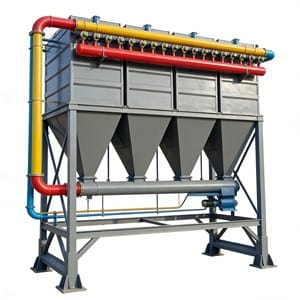
A wood processing factory dust collector is a heavy-duty, factory-scale system engineered to remove tons of sawdust, chips, and shavings per hour from an entire production line — not a single machine. Unlike shop-level dust collection, it combines balanced multi-point ductwork, pulse-jet or cyclone filtration, pneumatic conveying to a storage silo, and combustible dust safety features (explosion relief, spark detection, NFPA 664 / ATEX compliance) to keep a continuously operating mill safe, code-compliant, and productive. Suppliers such as QD Equipment design these systems around a plant’s actual machine layout rather than shipping a generic, one-size-fits-all unit.
Why Wood Processing Plants Can’t Use Shop-Scale Dust Collectors
Anyone researching wood processing factory dust collector systems has usually already outgrown something smaller. A single-stage cyclone or a small baghouse built for a cabinet shop simply cannot keep pace with a sawmill, plywood plant, or furniture manufacturing complex running multiple shifts.
At factory scale, the dust load changes in kind, not just in size:
- Volume. A mid-size mill can generate over a ton of chips, planer shavings, and fine sander dust per hour — far beyond what a shop-grade unit is rated to convey.
- Distribution. Instead of one or two machines, a factory floor may have 10 to 130+ simultaneous pickup points across saws, planers, sanders, edge-banders, and CNC routers, all pulling from the same duct network at once.
- Risk profile. Fine, airborne wood dust is a recognized combustible dust hazard. Codes like NFPA 664 exist specifically because undersized or improperly engineered systems have caused real plant fires and explosions.
- Economics. At high volume, sawdust and shavings are not just waste — they’re a fuel or feedstock resource if the collection system is engineered to convey them to a silo instead of a dumpster.
This is exactly the gap that industrial wood chip collection systems and dedicated wood mill dust extraction platforms are built to close — and it’s why procurement and plant engineering teams researching this category need to evaluate suppliers differently than they would a shop-tool accessory.
What Defines a True Factory-Scale System
A genuine wood processing factory dust collector is engineered around continuous, multi-shift operation from the start. Key characteristics buyers should look for include:
- Continuous rotary airlocks and heavy steel construction rated to move 1–15+ tons of wood waste per hour without choking.
- Balanced duct velocity — typically 20–25 m/s — across every branch line, so heavier chips don’t settle and clog trunk ducting.
- Modular airflow capacity, scaling from roughly 8,000 m³/h for a small single-line mill up to 130,000+ m³/h for an integrated industrial complex.
- Combustible dust safety hardware: explosion relief panels, spark detection and suppression, high-speed abort gates, and back-draft isolation valves engineered to NFPA 664 / ATEX expectations.
- Pneumatic conveying to a silo or bin, turning collected material into a usable byproduct rather than a disposal cost.
- PLC-based monitoring of static pressure, airflow, and filter condition across the entire network — not just at the collector housing.
This is the specification tier that companies like QD Equipment design to with their Wood Processing Factory Dust Collector (QD-WPC Series) — a platform built specifically for large-volume sawdust control across sawmills, panel plants, and furniture manufacturing complexes, rather than adapted from smaller equipment.
Core Components of a Factory Dust Collection System
| Component | Function |
|---|---|
| Main Collector Unit | Central fan, motor, and filtration stage anchoring the whole processing line |
| Duct Network | Engineered trunk and branch lines connecting every machine pickup point |
| Cyclone Pre-Separator | Removes heavier chips before the filter stage in most factory configurations |
| Pneumatic Conveying System | Moves collected material to a storage silo or bin automatically |
| Control Panel | PLC-based monitoring of pressure, airflow, and filter condition network-wide |
Each of these stages has to be sized together, not independently — undersizing the duct network or the pre-separator is one of the most common reasons a factory-scale system underperforms even when the main collector unit itself is adequately rated.
Sizing Reference: Matching Airflow to Plant Scale
Correct sizing is the single biggest factor in whether an industrial wood chip collection system performs reliably at full production volume. The table below reflects the kind of tiered configuration used in QD Equipment’s QD-WPF model range, and is a useful starting reference point for scoping a project before final engineering calculations.
| Model | Airflow (m³/h) | Motor Power (kW) | Main Duct (mm) | Recommended Pickup Points | Best For |
|---|---|---|---|---|---|
| QD-WPF-8000 | 8,000 | 7.5 | 250 | 8–12 | Small mill, single line |
| QD-WPF-18000 | 18,000 | 15 | 315 | 18–25 | Mid-size mill |
| QD-WPF-35000 | 35,000 | 22 | 400 | 35–45 | Multi-line production facility |
| QD-WPF-60000 | 60,000 | 37 | 500 | 60–80 | Integrated sawmill and planing |
| QD-WPF-100000 | 100,000 | 55 | 630 | 100–130 | Large-scale MDF or OSB facility |
| QD-WPF-130000 | 130,000 | 75 | 710 | 130+ | Industrial-scale wood processing complex |
These figures are reference points, not substitutes for a site-specific airflow simulation. Actual sizing depends on the number of simultaneous pickup points, duct run length, and machine type — which is why reputable manufacturers run a duct-network airflow simulation before finalizing a quote rather than selling off a spec sheet alone.
Combustible Dust Compliance: A Non-Negotiable Requirement
Fine wood dust suspended in air is a legitimate explosion hazard, and this is one area where procurement teams should never treat compliance as optional or “nice to have.” A properly engineered wood mill dust extraction system should be built around:
- NFPA 664 and/or ATEX-aligned design, depending on the facility’s jurisdiction.
- Explosion relief panels sized to the collector’s volume.
- Automated spark detection and suppression at the duct inlet, before hot particles ever reach the filter media.
- High-speed abort gates and back-draft isolation valves to contain an event before it propagates through the duct network.
- Engineered duct velocity (typically 20–25 m/s) to prevent dust settlement, which itself is a secondary explosion risk.
Any supplier proposing a factory-scale system without addressing these points directly should be treated as a red flag during vendor evaluation — this is a life-safety and asset-protection issue, not just a performance spec.
What to Ask Before You Buy
For B2B buyers scoping a wood processing factory dust collector, a short but rigorous RFQ checklist should include:
- How many simultaneous pickup points does the duct network need to support, and has the supplier run an airflow simulation across all of them?
- What waste output capacity (tons/hour) is the system rated for at your facility’s actual production volume?
- Is the explosion relief and spark detection package engineered specifically to your local fire code, or is it a generic add-on?
- Does the collected material get conveyed pneumatically to a silo, and can that material be resold or reused as fuel/feedstock?
- What is the filter media life, and is replacement stock kept available for ongoing maintenance?
- What warranty and lead time apply, and does the supplier provide on-site installation and commissioning support?
Suppliers such as QD Equipment address these points as standard practice — offering custom duct-network engineering, dynamic fan balancing, CE/ISO 9001 quality audits, and a 12–24 month warranty with documented 30–45 day delivery windows on factory-scale systems.
Physical & Mechanical Specifications Reference
| Property | Typical Range |
|---|---|
| Housing & Duct Material | Q235 carbon steel, abrasion-resistant lining on high-wear sections |
| Static Pressure Capability | Up to 4,000 Pa |
| Filtration Efficiency | 99% – 99.9% (particles ≥ 1 μm) |
| Recommended Duct Velocity | 20–25 m/s in branch lines for chip transport |
| Noise Level | ≤ 80 dB(A) at the main collector unit |
| Duty Cycle | Rated for continuous multi-shift factory operation |
Explore Our Full Product Range with QD Equipment
Browse more dust and fume extraction equipment from QD Equipment: CLICK ON THE ITEM YOU LIKE.
Visit our site for more details : https://www.qdequipment.com/
Grinding & Downdraft Tables
| Grinding Dust Table | Downdraft Grinding Table | Grinding Dust Extraction Table |
| Woodworking Sanding Dust Extraction Table | Wet Grinding Table |
Welding Fume Extractors
Industrial Dust Collectors
Industrial Exhaust Gas Equipment
| Spray Tower Scrubber | PP Industrial Wet Scrubber |
Final Takeaway
Sourcing an industrial heavy-duty wood processing factory dust collector is fundamentally a systems-engineering decision, not a single-product purchase. The right partner will size airflow to your actual production volume, engineer duct velocity and explosion protection to code, and back the system with real after-sales support — not just sell a collector unit and leave duct design to your team.
Manufacturers such as QD Equipment specialize in this exact category, offering the Wood Processing Factory Dust Collector as a factory-direct, custom-engineered solution for sawmills, panel plants, and furniture manufacturing complexes worldwide — backed by ISO 9001 and CE certification, factory-direct pricing, and a dedicated engineering support team for duct network design and combustible dust compliance.
For facilities evaluating a large-volume sawdust control upgrade, requesting a site-specific airflow simulation and sizing quote is the recommended first step before comparing vendors on price alone.