

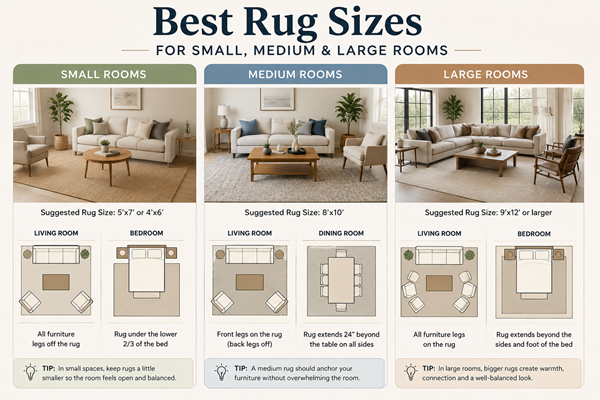
You can completely change how a room feels just by choosing the right rug size. Too small and the space looks disconnected. Too large and the room starts feeling crowded even when it is not.That is where most people get stuck.They spend hours looking at colors and patterns while ignoring the one thing that actually decides whether the rug will work in the room at all. Size.If you plan to Buy rugs Online you have probably already noticed how difficult it is to picture dimensions from product photos alone. A rug may look perfect on a website then feel awkward the second it arrives at your home.
The good news is that rug sizing is not random. Once you understand a few layout rules the process becomes much easier.
The Size Mistake Almost Everyone Makes
Most people buy rugs that are too small.It happens because shoppers focus on fitting the rug into the room instead of anchoring the furniture around it. A tiny rug floating in the middle of a living room can make even expensive furniture look disconnected.
Here is the general rule that works in most homes:
- Rugs should connect furniture together
- Front legs of major furniture pieces should usually sit on the rug
- Leave visible flooring around the edges of the room
That last point matters more than people realize.A rug pressed wall to wall often makes the room feel tighter. Leaving around 12 to 18 inches of exposed floor creates breathing space and gives the layout a cleaner look.Honestly this one surprises people every time because they assume bigger is always better.It is not.The goal is balance.
Small Rooms Need Smarter Rug Placement
Small rooms are tricky because every inch matters. A wrong rug size can make the room feel cramped within seconds.
For bedrooms offices or compact apartments these sizes usually work best:
- 5×7 rugs
- 6×9 rugs
- Round rugs for tight corners
- Runners for narrow layouts
Here is where people often go wrong. They push a tiny rug under a coffee table and leave all the furniture outside the rug area. That instantly shrinks the room visually.Instead try this:In a small living room place the front legs of your sofa and chairs on the rug. Even partial contact creates a more connected layout.In bedrooms position the rug so it extends beyond the bed sides. Nobody enjoys stepping onto cold flooring first thing in the morning.
One more thing.Light colored rugs usually help smaller rooms feel more open while dark oversized patterns can visually close the space in.That does not mean you cannot use bold styles. Just balance them carefully with the rest of the room.
What Actually Works in Medium Sized Rooms
Medium sized rooms give you more flexibility which sounds great until you realize it creates more choices.This is where homeowners often overthink everything.
For average living rooms and dining areas these rug sizes tend to work best:
- 8×10 rugs
- 7×9 rugs
- Medium rectangular layouts
- Layered rugs for texture
The layout matters just as much as the measurements.
For example:
An 8×10 rug under a standard sofa setup usually allows the front legs of all seating pieces to sit comfortably on the rug while still leaving visible floor space around the room edges.That creates structure without making the room feel heavy.Dining rooms need extra attention though.You want enough rug space so chairs remain on the rug even when pulled out. Otherwise the chair legs catch on the rug edge constantly and it gets annoying fast.Most guides skip this part but it matters a lot in everyday use.
Large Rooms Can Handle More Than You Think
Big rooms often feel empty even after furniture is added.That is usually a rug problem.Large spaces need rugs that visually ground the room instead of getting lost underneath furniture. This is where oversized options like 9×12 rugs become incredibly useful.In open concept homes especially a large rug helps define separate zones without adding walls or dividers.
For example:
- A large rug can separate the living area from the dining area
- It helps oversized sectionals feel intentional
- Hardwood floors look warmer and less echoey
- Furniture arrangements feel more complete
Here is the part nobody tells you upfront.A large room with a small rug often feels colder than an empty room with no rug at all.
Why?
Because the scale feels off.When the rug is too small the furniture appears disconnected and floating. A properly sized large rug brings everything together visually.If you are decorating a spacious family room or open floor plan do not be afraid of oversized dimensions. They usually look better than people expect once installed.
Stop Choosing Rugs by Color Alone
People naturally shop visually first. That makes sense.But color without proper sizing rarely works.You have probably seen those beautiful showroom photos online where every rug looks perfect. What many shoppers do not realize is that professional room styling depends heavily on proportion not just design.
A patterned rug in the wrong size still feels wrong.
Before selecting texture color or material ask yourself these questions:
- Where will the furniture sit?
- How much visible floor should remain?
- Will the rug define the room or just decorate it?
- Does the room already feel crowded?
Those answers matter more than matching cushion colors.Natural fiber rugs work well in relaxed interiors but they stain easier. Plush rugs feel softer but need more maintenance in high traffic areas. Low pile rugs are easier for dining spaces because chairs move smoothly across them.Every choice comes with tradeoffs.That is normal.
The Living Room Formula That Rarely Fails
There is a simple layout approach interior designers use constantly because it works in almost every home.Front legs on. Back legs off.That means the front legs of sofas and chairs sit on the rug while the back legs remain on the flooring.This setup creates balance without requiring an oversized rug that covers half the room.
Here is an example:
- Small living room: 5×7 or 6×9
- Medium living room: 8×10
- Large living room: oversized 9×12 or larger
Sectional sofas usually need bigger rugs than standard sofas because they occupy more visual space.If your rug disappears under the coffee table visually then it is probably too small.Simple test.Stand at the doorway and look at the room as a whole. Your eyes should see one connected arrangement not separate furniture pieces floating independently.
Bedrooms Follow Different Rules
Bedrooms feel more personal which means comfort matters more than symmetry.A rug should support how you move through the room.For queen beds an 8×10 rug usually works well because it extends beyond the bed edges and creates softness around the walking area.King beds often need larger dimensions especially in spacious bedrooms.Some people place runners on each side instead of one large rug. That can work in narrow spaces but it does not create the same unified feeling.
There is also a practical side people forget.Large rugs under beds collect less visible dust around exposed floor edges which can make the room feel cleaner overall.One mistake worth avoiding:Do not place a tiny rug only at the foot of the bed unless it is purely decorative. It often looks disconnected from the rest of the room.
What Looks Good vs What Actually Works
Instagram rooms are not always practical rooms.That matters when shopping online.A thick shag rug may look amazing in photos but becomes difficult in homes with pets kids or heavy foot traffic. White rugs photograph beautifully but show stains quickly in busy spaces.Real homes need realistic choices.That does not mean sacrificing style. It just means thinking beyond appearance.
In open-plan living rooms with hardwood floors medium pile rugs usually offer the best balance between comfort and maintenance. Flatweave rugs work better in dining spaces because chairs slide more easily.
If you plan to Buy rugs Online always check:
- Exact measurements
- Material details
- Cleaning requirements
- Room photos from customer reviews
- Thickness or pile height
Customer review images honestly tell you more than polished studio photos ever will.
The Rug Size Decision Gets Easier Once You Stop Guessing
Most rug problems are really proportion problems.Once you understand how rugs interact with furniture the process becomes much less stressful. You stop buying based only on appearance and start choosing pieces that actually support the room layout.And that changes everything.The right rug does not just decorate a room. It quietly makes the entire space feel more comfortable more connected and more intentional.
That is the difference people notice immediately even when they cannot explain why.
FAQs
How do I know if my rug is too small?
If your furniture completely sits outside the rug area or the rug looks isolated in the center of the room it is probably too small. Rugs should visually connect furniture not float separately.
Are oversized rugs better for living rooms?
Usually yes especially in open layouts. Larger rugs help anchor furniture and make the room feel more complete instead of fragmented.
Do all furniture legs need to sit on the rug?
Not always. In many living rooms only the front legs need to rest on the rug. That creates balance without requiring extremely oversized rugs.
Is it okay to use a 9×12 rug in a medium room?
Sometimes yes. It depends on furniture placement and available floor space. A slightly oversized rug often looks better than one that feels too small.
Should rugs match wall colors exactly?
No. Matching everything perfectly can make the room feel flat. Rugs should complement the space while adding texture contrast or warmth naturally.