

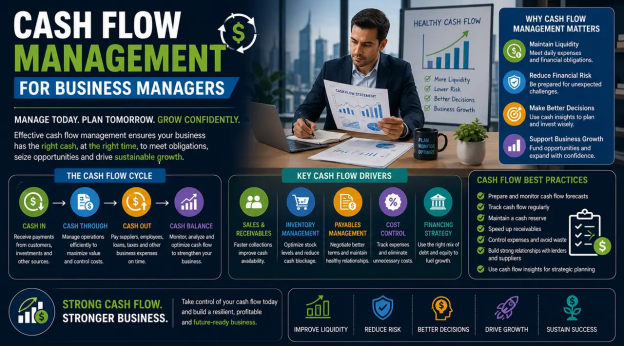
Managing cash flow is very important for the financial health of any firm. It makes ensuring that a business has adequate cash on hand to pay its short-term debts and reach its financial goals. Business managers who know how to handle cash flow well can make the difference between doing well and just getting by. This tutorial will teach you the basics of managing your cash flow and give you useful tips and tricks to help your business stay on sound financial feet. The cash flow management for business managers brings focus to the topic right away. Strong middle level management practices help ensure that cash flow decisions are effectively implemented across departments.
For business managers to handle cash flow well, they need to keep an eye on cash coming in and going out all the time. This practice helps you find possible problems and chances to progress. Managers need to know that managing cash flow isn’t just about keeping track of money; it’s also about making smart choices that help the organization grow. Understanding the types of planning in management can further improve how managers forecast and control cash flow.
Cash flow management for business managers
Tracking, evaluating, and predicting how cash moves around in a business is what cash flow management is all about. It’s about making sure you always have enough money on hand to pay your bills, invest in growth, and deal with unexpected charges. Businesses can prevent liquidity problems, stay solvent, and plan for their future financial needs by managing their cash flow well. Managers may make smarter choices about spending, investing, and borrowing money if they maintain a careful check on cash flow.
Cash flow management is very important for business managers because it gives them a clear picture of how the firm is doing financially. Managers can see patterns, deal with problems early, and take advantage of chances when they know where the money is coming from and where it’s going. For instance, noticing that you always have extra cash can mean that it’s time to buy new equipment or grow your business. Insights from investment management frameworks can also help managers develop better financial decision-making skills.
Understand the basics of cash flow
The flow of cash into and out of a business is what cash flow is all about. There are three basic types of activities: operating activities, investment activities, and financing activities. Sales and expenses are examples of operating activities that happen every day in a firm. Buying or selling long-term assets, such real estate or equipment, is part of investing. Financing activities include getting loans, paying them back, and selling or buying back stock. Managers can better keep track of and analyze cash flow if they know these categories.
Create a cash flow statement
A cash flow statement is a financial record that illustrates how much money comes in and goes out over a certain amount of time. It’s broken down into the same three groups as before: operating, investing, and financing activities. Making a cash flow statement lets managers see how much cash they have on hand at all times. It’s an important tool for developing plans, setting budgets, and making smart financial choices. Updating this statement regularly makes sure that managers always have an accurate picture of the company’s cash flow.
Forecast cash flow
Forecasting is the process of using past data and current trends to guess how much money will come in and go out in the future. It helps management plan for possible cash shortages or surpluses. Forecasting is very important for making plans and big decisions. For instance, if a manager thinks that there will be a financial gap in the next quarter, they can find ways to get more money or decrease costs that aren’t essential. To make accurate predictions, you need to keep up with market trends and look over your financial data on a regular basis.
Monitor accounts receivable
Accounts receivable are the amounts of money that consumers owe a business for goods or services that have been supplied. Keeping an eye on accounts receivable is important for keeping cash flow strong. Customers who don’t pay on time might cause cash flow problems, so managers need to keep an eye on unpaid bills and follow up right away. Setting explicit payment terms and giving incentives for early payments can help people pay on time and increase cash flow. Checking aging reports on a regular basis helps find delinquent accounts and take action.
Manage accounts payable
Accounts payable is the money that a business owes to its suppliers and vendors. You may boost cash flow by extending payment terms without hurting your relationships with suppliers if you know how to handle accounts payable well. Businesses can keep funds longer and improve their liquidity by negotiating longer payment periods. But it’s also crucial to keep excellent connections with suppliers while doing this. If you pay on time, you can get better terms and discounts in the future. Managers can remain on top of anticipated payments and prepare ahead by regularly examining accounts payable.
Control inventory levels
Managing your inventory is very important for managing your cash flow. Too much inventory takes up cash that may be used for other things in the business. On the other hand, not having enough stock might cause stockouts and lost sales. Finding the correct balance is really important. Managers can find things that aren’t selling well and change their buying habits by regularly checking inventory levels. Using just-in-time inventory methods can also help your cash flow by freeing up money that was tied up in inventory. Good inventory management makes sure that the business has adequate product to meet demand without spending too much money.
Budget wisely
Making a budget and sticking to it is an important part of managing cash flow. A budget helps managers figure out how much money they can spend and stop them from going overboard. It’s crucial to look over the budget often and make modifications as needed to keep up with developments in the corporate world. For instance, if sales go up, managers may need to change the budget to account for greater manufacturing expenses. Good budgeting makes sure that the business has adequate money to pay its bills and invest in development prospects. It also helps find places where expenditures can be decreased without changing how things work.
Build a cash reserve
A cash reserve is a pile of money you keep on hand for unplanned costs or chances. Having a cash reserve acts as a safety net for businesses, allowing them to deal with unforeseen costs or downturns in the economy. Try to save enough money to cover your operational costs for three to six months. You can build this reserve over time by saving a part of your monthly profits. Having some extra cash on hand makes sure that the firm can keep running efficiently, even when times are rough. It also gives managers peace of mind to know that they have a financial safety net.
Optimize cash collection processes
To keep your cash flow strong, you need to have good ways to collect money. This means making sure the payment terms are clear, delivering invoices on time, and checking in on accounts that are past due. Using electronic invoicing and payment systems can make it faster to collect money. Customers may also be more likely to pay quickly if you offer discounts for early payments. Regularly checking and upgrading the collection procedure makes sure that the business gets paid on schedule, which helps cash flow. Collecting cash effectively helps keep the business liquid and cuts down on the requirement for outside funding.
Negotiate better terms with suppliers
Getting improved terms from suppliers can make a big difference in cash flow. This could mean giving customers more time to pay, getting discounts for paying early, or bargaining for cheaper costs. Over time, having good relationships with suppliers might help you get better terms. Checking supplier contracts on a regular basis will help you find chances to negotiate. Good negotiating makes sure that the business receives the best available terms, which helps cash flow and lowers costs. It also helps keep excellent ties with suppliers, which can be advantageous in the long run.
Invest in technology
Putting money into technology can make it easier to manage cash flow. For instance, accounting software can do a lot of the work that goes into keeping track of and evaluating cash flow. This cuts down on mistakes and saves time, which lets managers focus on making big decisions. Using payment processing solutions can help you collect cash faster and make your job easier. Investing in technology can also give managers useful information about financial data, which can help them make smart choices. Businesses can use technology to better monitor their cash flow and overall financial health.
Regularly review financial reports
Financial reports give a full picture of how well a business is doing financially. Managers may keep an eye on cash flow trends and spot problems before they happen by looking at these data on a regular basis. The cash flow statement, balance sheet, and income statement are some of the most important reports to look over. These reports give information about how much cash the company has, how much debt it can pay off, and how much money it makes. Regular evaluations give managers the information they need to make smart choices and fix problems as they come up. To keep a healthy cash flow and reach long-term financial goals, it’s important to record your finances correctly.
Seek professional advice
It’s a good idea to have professional help with cash flow management from time to time. Accountants and financial consultants can give you useful advice and information that is particular to your business’s needs. They may help you find ways to improve, propose ways to make your cash flow better, and provide you advice on how to arrange your finances. When you’re under financial stress or making big investments, getting professional guidance can be quite helpful. Businesses can manage their cash flow better and get better financial results by using the knowledge of experts.
FAQ for Cash flow management for business managers
What is the difference between cash flow and profit?
Cash flow and profit are both essential financial indicators, but they look at distinct parts of a business’s financial health. Profit is the amount of money that is left over after all costs are taken out of income. It shows how profitable the business is as a whole. Cash flow, on the other hand, is the flow of money in and out of the business. It indicates how much cash the business has on hand at all times. If a business doesn’t handle its cash inflows and outflows well, it can still make money but have trouble with cash flow.
How often should I review my cash flow statement?
How often you should look at your cash flow statement depends on how big and complicated your business is. Monthly reviews are usually plenty for small businesses. If a business is bigger and has more complicated operations, it may need to look at its cash flow figures every week or perhaps every day. Regular reviews help you see patterns, find problems before they happen, and make smart financial choices. Regular monitoring makes sure that the organization keeps a steady cash flow and can quickly fix any difficulties that come up.
What are some common mistakes in cash flow management?
Some common mistakes people make when managing their cash flow are not saving enough money, not planning for expenses, and not making enough money. Another mistake is not looking at financial data on a regular basis, which can mean missing chances to make things better. If you don’t keep an eye on your accounts receivable and payable, you could also have cash flow concerns. Another problem is not keeping track of your budget and not managing your inventory well. Managers can avoid these typical mistakes and enhance their cash flow management by being aware of them.
How can technology improve cash flow management?
By automating procedures, cutting down on mistakes, and giving useful information, technology can make managing cash flow a lot easier. For example, accounting software can help you keep better track of and evaluate your cash flow. Payment processing systems can help you get your money faster by speeding up the process of collecting it. Technology can also give managers real-time financial data, which helps them make quick, informed decisions. Businesses can use technology to make their cash flow management easier and get better financial results.
What should I do if I forecast a cash shortage?
If you think you won’t have enough money, do something right away to fix the problem. This could mean decreasing costs that aren’t essential, getting better terms from suppliers, or getting more money. Having a financial reserve might also assist you deal with deficits. By regularly assessing and updating your forecasts, you may plan for and deal with possible cash constraints before they become serious. Good planning and taking action ahead of time can help the business get through hard times and be financially stable.
Conclusion
Managing cash flow is an important part of running a successful business. It makes sure you have the cash on hand to pay your short-term debts and put money into development prospects. You may make smart choices that help your business grow by learning the principles of cash flow, making accurate statements, and predicting what you’ll need in the future. To keep your cash flow healthy, you need to regularly look over your financial records, keep track of your accounts receivable and payable, and keep an eye on your inventory levels.
This wrap-up supports confident takeaways through the cash flow management for business managers. It’s not enough to merely keep track of your money when you manage your cash flow well. You also need to make smart choices that help you reach your business goals. There are various ways to improve how you manage your cash flow. You might negotiate better terms with suppliers, buy new technology, or get professional guidance. You can make sure that your business does well in the long run by keeping proactive and knowledgeable. Always remember that managing your cash flow is a process that never ends and needs your constant attention and adaptability.