

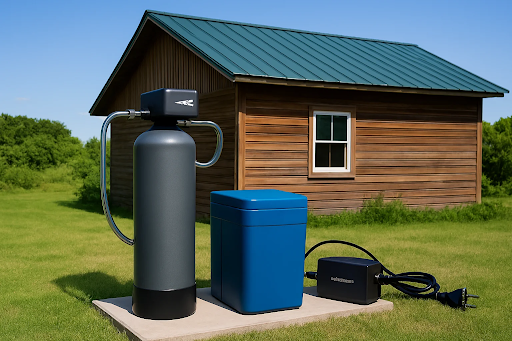
Choosing the best water softener for city water is not as simple as picking the first system with good reviews. Municipal water is treated differently than other water sources, and while that treatment makes it safe to drink, it can also create challenges for homeowners. Hard minerals such as calcium and magnesium remain in many city water supplies, while disinfectants like chlorine or chloramines can gradually reduce the lifespan of some water softening systems. A smart buying decision starts with understanding these conditions and selecting equipment that is designed specifically for municipal water.
Across the United States, hard water is a common issue. According to the USGS, water hardness varies significantly from one region to another, and many cities regularly deliver moderately hard to very hard water. For example, Phoenix, AZ commonly measures 18–24 GPG, while Las Vegas, NV often falls between 16–20 GPG. Even cities such as Dallas, TX can experience hardness levels of 12–18 GPG, making a properly sized water softener an important investment for homeowners.
Before purchasing any system, homeowners should review their local Consumer Confidence Report (CCR). Every municipal water supplier in the United States is required by the EPA to publish this annual report, which explains the water source, treatment methods, chlorine or chloramine usage, and other water quality information. Although the CCR does not always provide a complete hardness reading, it offers valuable insight into the overall characteristics of your city’s water supply.
Understanding water hardness begins with GPG (grains per gallon), the standard unit used to measure dissolved calcium and magnesium. As GPG levels increase, scale buildup becomes more noticeable inside plumbing fixtures, water heaters, washing machines, dishwashers, and household appliances. Soap also becomes less effective because hard minerals react with cleaning products, leaving behind residue on dishes, clothing, sinks, and shower doors.
Many homeowners begin searching for the best water softener for city water after noticing these everyday problems. However, solving hard water requires more than simply removing minerals. Municipal water contains disinfectants that continuously pass through the softener, meaning chlorine resistance becomes an equally important consideration.
Why City Water Requires a Different Type of Water Softener
Unlike untreated water sources, city water undergoes extensive treatment before reaching homes. Utilities commonly use chlorine or chloramines to eliminate bacteria and maintain water quality throughout the distribution system. While these disinfectants improve public health, they also create a harsher operating environment for standard softening resin.
Traditional ion exchange resin can gradually break down after years of chlorine exposure. Once the resin begins to deteriorate, softening efficiency decreases, regeneration becomes less effective, and homeowners may notice hard water returning sooner than expected.
This is why experienced water treatment professionals often recommend choosing a chlorine resistant water softener instead of focusing only on grain capacity. The durability of the resin has a direct impact on long-term performance and ownership costs.
One system frequently mentioned during independent product evaluations is the SoftPro Elite Water Softener, manufactured by Quality Water Treatment (QWT). The company was founded by Craig Phillips, widely recognized as “Craig the Water Guy.” Rather than relying on conventional resin, this model uses 8% crosslink ion exchange resin, specifically designed to tolerate continuous exposure to municipal disinfectants.
According to the published product specifications, this resin can withstand up to 2 PPM continuous chlorine while maintaining an expected service life of 15–20 years under normal city water conditions. For homeowners planning to stay in their homes long term, this extended durability may significantly reduce replacement costs over the lifetime of the system.
Understanding How Ion Exchange Softens Municipal Water
The process behind every best ion exchange water softener for municipal water is called ion exchange. Although the technology has existed for decades, not every system applies it with the same efficiency.
Inside the mineral tank are millions of resin beads carrying sodium ions. As hard water flows through the tank, calcium and magnesium attach to the resin while sodium is released into the water. This exchange removes the minerals responsible for scale buildup and allows softened water to flow throughout the home.
Eventually, the resin reaches its capacity and must regenerate. During regeneration, a concentrated salt solution washes through the resin bed, removing accumulated hardness minerals and restoring the resin for continued use.
While this basic principle remains the same across most water softeners, regeneration design can dramatically affect salt consumption, water efficiency, and overall operating costs. This is one of the most important factors homeowners should evaluate before making a purchase.
Modern homeowners are increasingly looking beyond basic softening performance. They want systems that deliver consistent water quality while reducing maintenance, conserving resources, and operating efficiently over many years. Features such as advanced regeneration technology, intelligent metering, and high-quality resin can make a significant difference in long-term ownership experience.
Why Upflow Regeneration Is More Efficient for City Water
When comparing today’s premium softening systems, one feature that deserves close attention is the regeneration method. Most traditional water softeners rely on downflow regeneration, a process that has been used for many years. While effective, it often consumes more salt and water than necessary because it cleans the resin from top to bottom regardless of how the resin bed has actually been used.
A modern upflow water softener city water system approaches regeneration differently. Instead of forcing brine through the resin in a downward direction, it regenerates from the bottom upward. This allows the resin bed to regenerate more evenly, helping maintain efficiency while reducing unnecessary waste.
The SoftPro Elite Water Softener uses Upflow Regeneration, making it an attractive option for homeowners who want to lower operating costs over time without sacrificing performance. According to the published specifications, this regeneration method can provide up to 75% salt savings vs. downflow and up to 64% water savings vs. downflow.
These savings become especially valuable for families who use large amounts of water every day. Over several years, reduced salt purchases and lower water consumption can help offset a portion of the system’s operating costs while supporting more efficient household water use.
Demand-Initiated Metering: Regenerating Only When Needed
Another important feature to consider when selecting the best water softener for city water is how the system decides when regeneration should occur.
Older water softeners often regenerate on a fixed timer. Whether a household uses very little water or a great deal, the system follows the same schedule. This can lead to unnecessary salt usage, excess water consumption, and increased operating costs.
Modern systems use Demand-Initiated Metering, which measures actual household water usage. Instead of following a preset timer, the softener regenerates only when the resin has nearly reached its capacity.
For homeowners, this provides several important advantages:
- Better salt efficiency
- Lower water usage
- More consistent soft water
- Reduced operating expenses
- Less unnecessary regeneration
This intelligent approach is particularly useful for households where water consumption changes throughout the year, such as during vacations, holidays, or when guests visit.
Why Chlorine Resistance Matters More Than Many Buyers Realize
Many first-time buyers focus almost entirely on grain capacity, assuming a larger capacity automatically means better performance. While proper sizing is important, the durability of the resin is equally critical for municipal water systems.
Most city utilities maintain chlorine residuals throughout their distribution networks. Some municipalities instead use chloramines, which remain stable for longer periods inside water pipelines. Both disinfectants help maintain safe drinking water, but continuous exposure places additional stress on water softener resin.
Because of this, choosing a chlorine resistant water softener becomes an important long-term decision.
The SoftPro Elite Water Softener addresses this challenge by using 8% crosslink ion exchange resin, engineered for municipal water conditions. According to its specifications, the resin is designed to tolerate up to 2 PPM continuous chlorine while providing an estimated 15–20 years of service life under normal city water conditions.
For homeowners, this can mean fewer maintenance concerns and more consistent softening performance over the years.
Flow Rate: Why It Matters for Busy Households
A water softener should not only remove hardness minerals—it should also keep up with your home’s water demand.
Flow rate becomes especially important during busy times of the day. Multiple showers, laundry, dishwashing, and kitchen use may all occur simultaneously. If the system cannot provide enough softened water, pressure drops and untreated hard water may bypass the resin bed.
The SoftPro Elite Water Softener is rated for a 15 GPM continuous flow rate and an 18 GPM peak flow rate.
For many average and large households, these flow rates are sufficient to support multiple water-using appliances and fixtures operating at the same time while maintaining consistent soft water delivery.
Selecting the proper grain capacity is equally important. The system is available in multiple options:
- 32K
- 48K
- 64K
- 80K
- 110K
Choosing the correct size depends on several factors, including household size, daily water consumption, and local hardness measured in GPG (grains per gallon).
For example, a family living in San Antonio, TX, where water hardness commonly ranges from 15–20 GPG, may require a different capacity than a homeowner in Denver, CO, where hardness generally falls between 6–14 GPG.
Understanding local water conditions before purchasing helps ensure the system operates efficiently without being undersized or unnecessarily oversized.
High Hardness Removal Performance
The primary purpose of any city water hardness softener is to remove calcium and magnesium effectively.
According to the manufacturer’s published specifications, the SoftPro Elite Water Softener provides 99.6%+ hardness removal under normal operating conditions.
High removal efficiency helps reduce:
- Scale buildup inside plumbing
- White spots on dishes
- Soap residue on bathroom fixtures
- Mineral deposits in water heaters
- Reduced efficiency of household appliances
Softened water may also improve soap performance, allowing detergents and shampoos to lather more effectively while making routine household cleaning easier.
Planning for Long-Term Reliability
Purchasing a water softener is typically a long-term investment rather than a short-term purchase. For this reason, homeowners should evaluate features that contribute to reliability over many years of operation.
The SoftPro Elite Water Softener includes a 15% reserve capacity, helping maintain soft water availability before the next regeneration cycle begins. It also features a 15-minute emergency regen cycle, which can quickly restore softening capacity if unexpected water usage occurs.
These features are designed to support consistent performance, particularly in households with changing water demands.
Why Certifications Matter When Choosing the Best Water Softener for City Water
When investing in a water softener, homeowners should look beyond marketing claims and focus on independent certifications. Third-party certifications help verify that a product meets recognized industry standards for safety and manufacturing quality.
One important certification to look for is NSF 372, which confirms compliance with lead-free material requirements for drinking water system components. Buyers searching for an NSF 372 certified water softener often view this certification as an added level of confidence when comparing products.
The SoftPro Elite Water Softener carries NSF 372 certification and is also IAPMO certified. These certifications indicate that the system has been evaluated against established industry standards, providing homeowners with additional assurance regarding product quality and compliance.
Organizations such as NSF International and the Water Quality Association (WQA) have long played important roles in promoting product testing, education, and best practices within the water treatment industry. While certifications should never be the only factor in a buying decision, they are valuable indicators that a manufacturer has invested in meeting recognized performance and safety standards.
Convenience Features That Improve Everyday Ownership
A water softener is expected to operate continuously with minimal homeowner intervention. Modern systems that include intelligent features can simplify ownership while maintaining reliable performance.
One such feature is Vacation Mode. The SoftPro Elite Water Softener automatically refreshes the resin every 7 days when little or no water is being used. This automatic refresh helps keep the resin conditioned during extended periods away from home, eliminating the need for manual adjustments before or after a vacation.
Another useful feature is the built-in self-charging capacitor, which provides 48-hour settings retention during temporary power outages. Instead of requiring homeowners to reprogram the system after every short interruption, important settings are preserved, making recovery quick and convenient.
Although these features may seem small individually, together they contribute to a more user-friendly ownership experience and reduce routine maintenance concerns.
Choosing the Right Grain Capacity for Your Household
Selecting the correct grain capacity is just as important as choosing the right model. A system that is too small may regenerate more frequently, increasing salt and water consumption. On the other hand, a significantly oversized system may not operate as efficiently for some households.
The SoftPro Elite Water Softener is available in the following grain capacities:
- 32K
- 48K
- 64K
- 80K
- 110K
The appropriate size depends on several factors, including:
- Household size
- Number of bathrooms
- Daily water usage
- Local water hardness measured in GPG (grains per gallon)
For example, homeowners in Minneapolis, MN, where hardness commonly ranges from 13–17 GPG, may have different sizing needs than families in Tampa, FL, where municipal water often measures 10–16 GPG. Reviewing your local Consumer Confidence Report (CCR) and obtaining a current hardness test can help ensure that the selected system matches your home’s actual water conditions.
A Practical Buying Checklist
Before purchasing any water softener for hard municipal water, homeowners should evaluate more than just the initial purchase price. A well-informed decision considers long-term efficiency, operating costs, and system durability.
Here are several key questions worth asking:
- Is the resin designed for continuous exposure to chlorine or chloramines?
- Does the system use Demand-Initiated Metering instead of a basic timer?
- Does it include Upflow Regeneration to improve water and salt efficiency?
- Are recognized certifications such as NSF 372 and IAPMO included?
- Is the flow rate sufficient for the home’s peak water demand?
- Are multiple grain capacities available to match different household sizes?
- Does the manufacturer provide a strong warranty?
Evaluating these factors together provides a more complete picture than focusing on a single specification.
Independent Assessment of the SoftPro Elite Water Softener
Based on its published specifications and feature set, the SoftPro Elite Water Softener offers several characteristics that homeowners looking for the best water softener for city water may find appealing.
Its use of 8% crosslink ion exchange resin addresses one of the most common concerns associated with municipal water—continuous chlorine exposure. The combination of Upflow Regeneration and Demand-Initiated Metering is designed to improve efficiency by reducing unnecessary salt and water use. Published specifications indicating up to 75% salt savings vs. downflow and up to 64% water savings vs. downflow further support this focus on long-term operating efficiency.
The system also offers a 15 GPM continuous flow rate, 18 GPM peak flow rate, 99.6%+ hardness removal, 15% reserve capacity, and a 15-minute emergency regen cycle, making it suitable for households with varying water demands.
Additional features such as NSF 372 certification, IAPMO certification, Vacation Mode, 48-hour settings retention, and a Lifetime warranty on valve and tanks contribute to its overall value proposition for municipal water applications.
While every homeowner’s needs are different, evaluating these features alongside local water conditions and household water usage can help determine whether this system is an appropriate fit.
Conclusion
Finding the best water softener for city water involves much more than comparing grain capacities or prices. Municipal water presents unique challenges due to hardness minerals, chlorine, and chloramines, making durability, efficiency, and intelligent regeneration equally important considerations.
Homeowners should begin by reviewing their local Consumer Confidence Report (CCR), understanding their water hardness in GPG, and identifying the specific conditions affecting their home. Comparing systems based on resin quality, regeneration technology, certifications, flow rate, and long-term operating costs provides a more informed basis for making a purchasing decision.
From an independent perspective, the SoftPro Elite Water Softener combines several features that align well with the needs of municipal water users, including 8% crosslink ion exchange resin, Upflow Regeneration, Demand-Initiated Metering, NSF 372 certification, and multiple grain capacity options. Its published performance specifications suggest a strong balance between efficiency, durability, and everyday usability.
Ultimately, the right city water hardness softener is one that matches your household’s water usage, local hardness level, and long-term expectations. Taking the time to compare specifications and understand how different technologies work can help homeowners choose a solution that delivers reliable soft water for many years.