

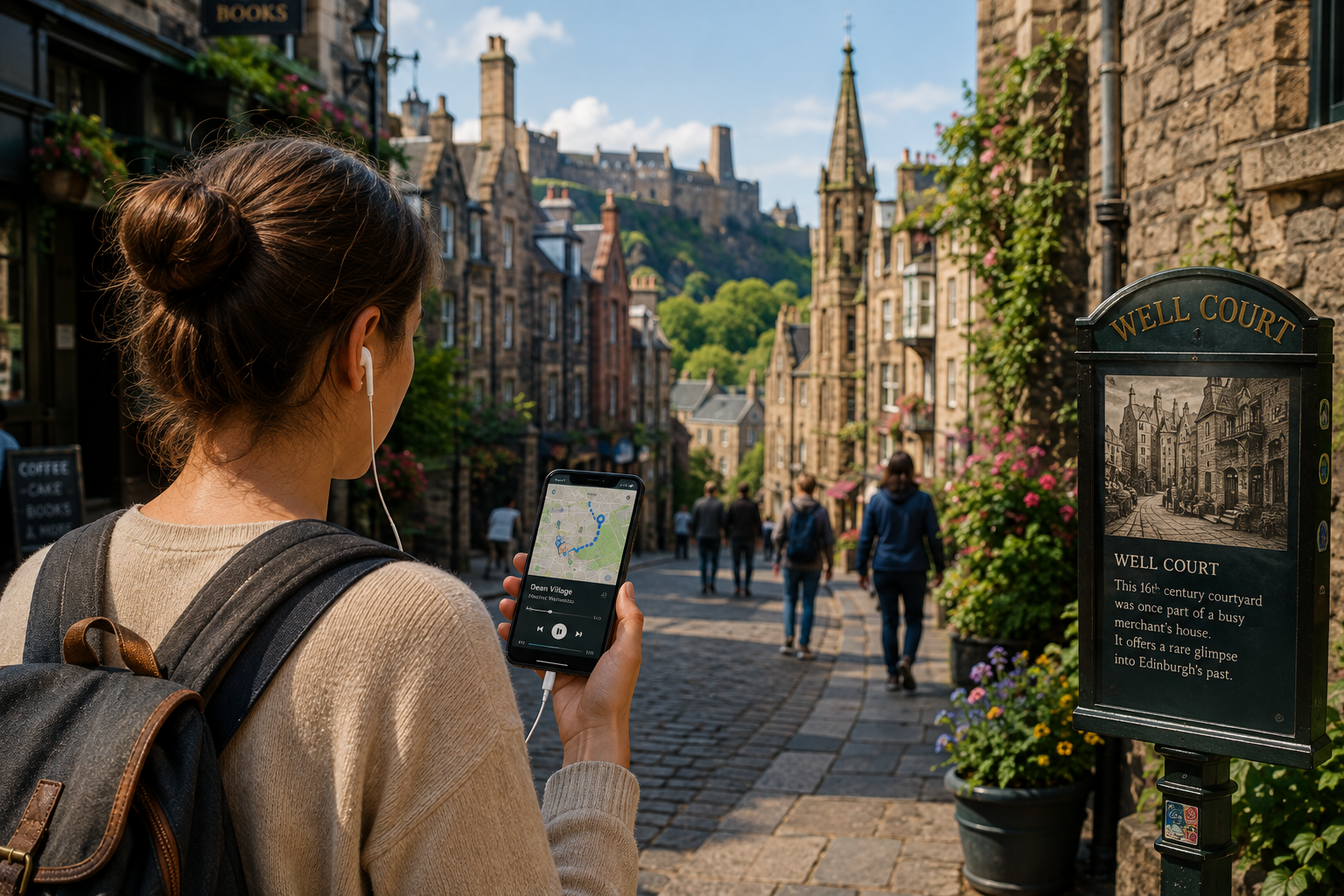
Most first-time visitors begin with the same list of attractions. In Paris, they may head towards the Eiffel Tower and the Louvre. In Edinburgh, the castle and the Royal Mile dominate many itineraries. In Barcelona, attention often centres on the Sagrada Família and the historic core.
These landmarks deserve their reputation, but they represent only part of a destination. Behind the familiar highlights are residential neighbourhoods, local memorials, independent museums, former industrial buildings, public artworks and historic streets that rarely appear on standard “top ten” lists.
Digital travel tools are making these places easier to find. Instead of relying entirely on a printed guidebook or a fixed itinerary, travellers can now discover nearby locations while they are already exploring. The result can be a broader and more personal understanding of a city.
The Limitations of the Standard Tourist Checklist
Popular attractions provide an obvious starting point. They are usually well documented, easy to locate and supported by transport links, visitor facilities and established tourism infrastructure.
However, an itinerary built entirely around headline sights can create a narrow impression of a place. Visitors may move from one famous landmark to another without understanding how local neighbourhoods developed or how ordinary residents experienced the city.
Many destinations are shaped as much by smaller locations as by their most prominent monuments. A former marketplace may explain the growth of a district. A modest memorial may reveal a significant political event. An old railway structure may reflect the industrial history of the area. A street name may preserve the memory of a trade, family or institution that has otherwise disappeared.
These places may lack large signs or visitor centres, but they often provide the context that connects the better-known attractions.
Discovery Is Becoming More Location-Based
Traditional travel planning normally begins before arrival. Visitors search for attractions, save a list and organise them into a schedule.
Location-based tools introduce a different approach. Rather than asking only, “What are the main things to see in this city?”, travellers can ask, “What is interesting near me right now?”
That small change can significantly affect what they discover.
Someone walking between two major landmarks may be close to:
- A historic courtyard hidden behind a main street
- A small museum connected to a local industry
- A public sculpture with an unusual story
- A former religious building adapted for a different use
- A viewpoint known mainly to residents
- The birthplace or workplace of an important local figure
- A surviving section of an older city boundary
- An independent cultural venue
Digital maps already show many of these places, but specialist travel tools can add an important layer: an explanation of why the location matters.
A pin on a map identifies a place. A useful travel guide provides context.
Smaller Stories Can Explain the Larger Destination
Major attractions often tell the official or most visible version of a city’s history. Lesser-known places can reveal how that history affected everyday life.
For example, a grand civic building may represent political authority, while nearby workers’ housing shows the social conditions of the period. A famous church may dominate the skyline, but a small burial ground can introduce the lives of writers, merchants, campaigners or craftspeople connected with the area.
This type of discovery helps travellers understand that cities are not collections of isolated monuments. They are layered environments shaped by migration, commerce, conflict, religion, architecture and social change.
Digital audio and location-based descriptions are particularly suited to these smaller stories. Not every location requires a long museum-style explanation. Sometimes a short account of what happened there, what remains visible and why it is relevant is enough to transform an ordinary-looking place into a meaningful stop.
Technology Can Encourage Visitors to Explore More Widely
When most tourism information promotes the same small group of attractions, visitors naturally concentrate in the same areas.
Digital discovery tools can encourage people to explore beyond the busiest streets by showing that other districts also contain worthwhile places. This does not require sending travellers to remote or inconvenient locations. Even a short diversion from the main route may lead to a quieter square, an overlooked building or a neighbourhood with a distinct identity.
A more widely distributed visitor flow may also benefit smaller organisations and local businesses.
Someone who explores a less central area may visit:
- An independent café
- A local gallery
- A community museum
- A specialist bookshop
- A neighbourhood market
- A small heritage attraction
- A family-run restaurant
The purpose should not be to turn every residential street into a tourist destination. Responsible travel technology must distinguish between publicly accessible places and locations that should remain private or undisturbed.
Used carefully, however, digital discovery can help visitors spend more time in places that receive less attention from conventional tourism marketing.
Artificial Intelligence Can Assist With Selection
The challenge is not simply finding more places. A city may contain thousands of mapped locations, many of which will not be relevant to a particular visitor.
Artificial intelligence can help organise this information by considering factors such as distance, available time, method of travel and personal interests. A visitor interested in architecture may receive different suggestions from someone focused on literature, gardens or industrial heritage.
One example is Votura app, which uses location-based discovery and AI-created routes to help travellers identify places around them and organise selected stops into self-guided experiences.
This type of technology is most useful when it reduces information overload. Travellers generally do not need a list of every possible attraction. They need a manageable selection of places that fit the time and context of the journey.
More Recommendations Do Not Always Mean Better Recommendations
There is a risk that digital travel platforms can prioritise quantity over quality.
A map filled with markers may look useful, but it can make planning more difficult. Some locations may be duplicated, incorrectly categorised, permanently closed or unsuitable for public access.
A responsible discovery tool should consider several questions:
- Is the location genuinely accessible?
- Is there enough reliable information to explain it accurately?
- Is it relevant to the traveller’s interests?
- Does it fit naturally into the route?
- Is the suggested visit realistic within the available time?
- Could increased attention disturb residents or sensitive sites?
Local knowledge remains important. Automated systems can identify patterns and organise information, but they may not understand every access restriction, cultural sensitivity or neighbourhood concern.
For this reason, digital recommendations should be treated as informed suggestions rather than unquestionable instructions.
Accuracy Matters More for Lesser-Known Places
Famous landmarks are usually supported by extensive documentation. Smaller places may have fewer reliable sources, increasing the risk of repeating inaccurate stories.
Local legends can be valuable parts of a destination’s culture, but they should not automatically be presented as established historical fact. A responsible description should distinguish between documented events, traditional stories and disputed interpretations.
Travellers can also check important details through:
- Official heritage organisations
- Museum websites
- Local authority records
- Historic environment databases
- Academic publications
- Information displayed at the site
Technology makes obscure places more visible, but visibility should be accompanied by careful research.
Discovery Should Leave Space for Curiosity
A digital route can provide structure, but it should not control every moment of the journey.
The value of independent travel often lies in noticing something unexpected: an architectural detail, an unusual shopfront, a small garden or a street leading towards an interesting view.
The best digital tools support curiosity rather than replacing it. They can explain nearby locations and suggest a sensible direction, while still allowing travellers to stop, change course or ignore a recommendation.
This creates a different relationship with the destination. Instead of moving through a checklist, the visitor begins to recognise connections between places.
Looking Beyond the Obvious
Famous attractions will continue to shape travel itineraries. They often represent major achievements in architecture, art, engineering or history, and they remain important reasons why people choose to visit a destination.
But a city is rarely understood through its major landmarks alone.
Digital maps, audio guides and AI-supported discovery tools can help travellers notice the less obvious places that surround them. When the information is accurate and the recommendations are responsible, these tools can introduce local stories that would otherwise remain hidden.
The result is not necessarily a longer list of attractions. It is a more connected view of the destination—one that includes neighbourhoods, everyday heritage and the smaller places that help explain how a city became what it is.