

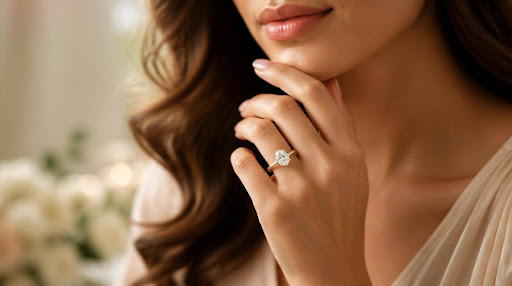
An engagement ring can feel dynamic before the hand even moves. A band that sweeps, narrows, or passes around the center diamond creates a sense of motion that changes the familiar bridal silhouette.
The Ritani Curve Engagement Ring Collection explores that idea through five sculptural settings named Lunelle, Amaya, Iris, Minali, and Nivara. Oval, pear, and marquise center shapes extend the lines of the designs, giving each ring a graceful presence from the top, side, and angled views.
The collection offers a more expressive direction within Ritani engagement rings. Some curves remain soft and fluid, while others create stronger contrast through bypass lines, tapered bands, or framed center stones.
Curves Change the Familiar Ring Silhouette
Many engagement rings follow a straight band that meets the center setting from either side. A curved design loosens that structure by allowing the metal to rise, bend, or travel around the diamond.
The eye naturally follows that path. The ring therefore feels active rather than static, even when the overall design remains clean and centered on one stone.
Ritani uses curvature as more than a small decorative detail. Across the collection, the shape of the band determines how the ring approaches the diamond and how the full silhouette extends across the finger.
That emphasis gives the metal a visible role in the design. The center stone remains prominent, but the band contributes its own sense of direction and character.
Elongated Diamonds Carry the Eye Forward
Oval, pear, and marquise diamonds already create movement through their longer proportions. Pairing them with curved settings allows the center shape and the surrounding metal to reinforce one another.
An oval provides a continuous, balanced flow without a sharp endpoint. Its rounded outline can make a sweeping band feel especially smooth and composed.
A pear diamond introduces one rounded side and one tapered point. That asymmetry gives the setting a natural direction, particularly when the band appears to travel toward or around the pointed end.
Marquise diamonds create the most pronounced line of the three shapes. Their two tapered points can give a bypass or curved solitaire a sharper, more dramatic profile across the hand.
Bypass Designs Create Visual Momentum
A bypass band approaches the center from two directions without meeting in a conventional horizontal line. The two sides appear to move past one another, creating both tension and balance around the diamond.
The Amaya and Iris designs bring this structure into the Ritani Curve Collection. Both are available with oval, pear, and marquise center shapes, allowing the elongated diamond to continue the direction established by the band.
The Amaya uses a prong-set center, leaving much of the diamond’s outline visible. The Iris uses a bezel-set center that adds a defined metal edge within the flowing bypass composition.
Despite sharing a general structure, the two rings create different impressions. The Amaya feels more open around the center, while the Iris brings a clearer frame to the point where the curves converge.
The Lunelle Turns a Solitaire Into a Wave
A solitaire can remain focused on one center stone without relying on a completely straight band. The Lunelle introduces movement through a wave-shaped design that travels around a bezel-set diamond.
The curve gives the setting a sculptural quality without surrounding the center with additional stones. Its character comes from the relationship between the wave, the diamond shape, and the visible metal border.
This creates a ring that still reads clearly as a solitaire. The setting simply gives the familiar format a more fluid outline.
The Lunelle also demonstrates how subtle movement can transform a restrained design. A single bend in the band can influence the entire way the ring appears on the hand.
The Minali Makes the Band More Prominent
The Minali takes a bolder route by giving the curved band greater visual weight. Its form broadens near the top and tapers as it travels around the finger, creating a sculpted setting for a prong-set pear center.
That changing width draws attention to the metal as well as the diamond. The ring feels substantial near the center, then becomes lighter as the band narrows.
The pear shape works naturally with this structure because its pointed end continues the directional quality of the design. Diamond and band appear to belong to one continuous composition rather than two separate elements.
This stronger silhouette suits someone who wants the setting itself to make an impression. The center remains the focal point, but the curved metal gives the ring an unmistakable profile.
Metal Color Makes the Curves More Visible
Curved settings place more attention on the path of the band, so metal color becomes an important visual element. It influences how clearly the curve stands apart from the center diamond and the wearer’s hand.
Ritani Curve Collection settings are available in selected options across gold and platinum, with availability varying by design. White metals can create a cool, continuous appearance around a white diamond.
Yellow gold gives the band greater contrast and makes each sweep or taper more noticeable. Rose gold brings warmth to the curved structure and can soften the relationship between the setting and an elongated center shape.
The choice can follow the jewelry you already wear or establish a new direction for the bridal set. Each metal allows the same general curve to take on a different mood.
The Side View Adds Another Layer
An engagement ring is rarely seen from only the top. It appears from the side and at changing angles as the hand rests, turns, reaches, and gestures.
Curved designs make those views especially engaging. A band that looks gently arched from above may reveal a more pronounced sweep from the side, while a bypass structure can show open space between its approaching lines.
Ritani presents individual Curve Collection settings through several product angles, helping the full shape of the band come into view. These perspectives show how the metal travels around the center and how the ring rises from the finger.
The result is a design with more than one defining view. Its appearance shifts naturally with the hand instead of depending on a single front-facing pose.
Negative Space Keeps the Design Light
Curves can create open areas around the center diamond, particularly in bypass and wave-shaped settings. That negative space prevents the metal from feeling visually heavy and gives the movement room to register.
The open areas also separate the band from the stone in deliberate ways. A small gap can make the center appear more prominent, while a closer curve creates a more integrated silhouette.
This balance allows a sculptural ring to retain a sense of lightness. Even designs with stronger bands can feel graceful when the space around the diamond is used thoughtfully.
Oval, pear, and marquise shapes respond differently to these openings. Their varied curves and points change the size, direction, and rhythm of the surrounding space.
A Wedding Band Can Echo the Movement
A curved engagement ring creates several possibilities for the wedding band. The second ring can follow the contour, introduce a contrasting line, or leave part of the engagement setting’s shape visible.
A contoured band can continue the movement established by the engagement ring. A straighter style may create a deliberate contrast between a sculpted center ring and a simpler companion.
The pairing does not need to conceal the original curve. A small opening between the two rings can preserve the distinctive silhouette and make the negative space part of the completed bridal set.
Some curved engagement rings also have enough presence to stand confidently on their own. The choice depends on whether you prefer a closely integrated pairing, a layered effect, or one strong sculptural ring.
Curves Can Feel Gentle or Dramatic
Curved engagement rings do not represent one fixed aesthetic. The strength of the movement depends on the diamond shape, band width, metal, center setting, and amount of open space.
An oval diamond with a gentle wave can feel fluid and understated. A marquise center within a bypass design creates a more pointed and dramatic direction across the finger.
Pear diamonds sit between those expressions, combining a rounded base with a tapered end. The shape can look soft in one setting and much more directional in another.
The five Ritani Curve Collection designs give these elements different emphasis. Their shared quality is movement, but each ring establishes its own balance between softness, structure, and visual impact.
Bridal Style Finds a More Sculptural Direction
Curves bring energy to an engagement ring without removing the traditions that make the category recognizable. A center diamond, precious metal, and solitaire structure can remain familiar while the band introduces a fresher outline.
The Ritani collection uses waves, bypass lines, tapering, negative space, and elongated diamonds to create that sense of motion. Each design gives the center stone a setting that feels considered from more than one angle.
This sculptural direction can suit someone drawn to bridal jewelry with a clear visual identity. The ring remains romantic and refined, but its movement gives it a character that extends beyond a conventional straight band.
Explore the Ritani Curve Engagement Ring Collection and see how the Lunelle, Amaya, Iris, Minali, and Nivara interpret movement. The shape that first catches your attention can lead you toward a curve that feels fluid, bold, or distinctly your own.
Frequently Asked Questions
What is a curved engagement ring?
A curved engagement ring uses a band that bends, sweeps, tapers, or passes around the center diamond rather than following a completely straight line. Ritani explores these forms through wave-shaped solitaires, bypass settings, and broader sculpted bands.
Which diamond shapes appear in the Ritani Curve Collection?
The current Ritani Curve Engagement Ring Collection centers on oval, pear, and marquise diamond shapes. Their elongated outlines complement the collection’s flowing bands and directional silhouettes.
Which designs are included in the Ritani Curve Collection?
The Ritani Curve Collection currently includes five designs named Lunelle, Amaya, Iris, Minali, and Nivara. Each setting interprets movement differently through waves, bypass lines, tapering, framing, or sculpted metal.
Does Ritani offer both prong-set and bezel-set curved engagement rings?
Ritani uses both setting styles within the Curve Collection. The Amaya and Minali feature prong-set centers, while the Lunelle, Iris, and Nivara use bezel-set treatments.
Can a curved Ritani engagement ring be paired with a wedding band?
A curved engagement ring can be paired with a contoured band that follows its silhouette or a simpler band that creates contrast. The preferred combination depends on whether you want a close fit, visible negative space, or a more layered bridal set.