

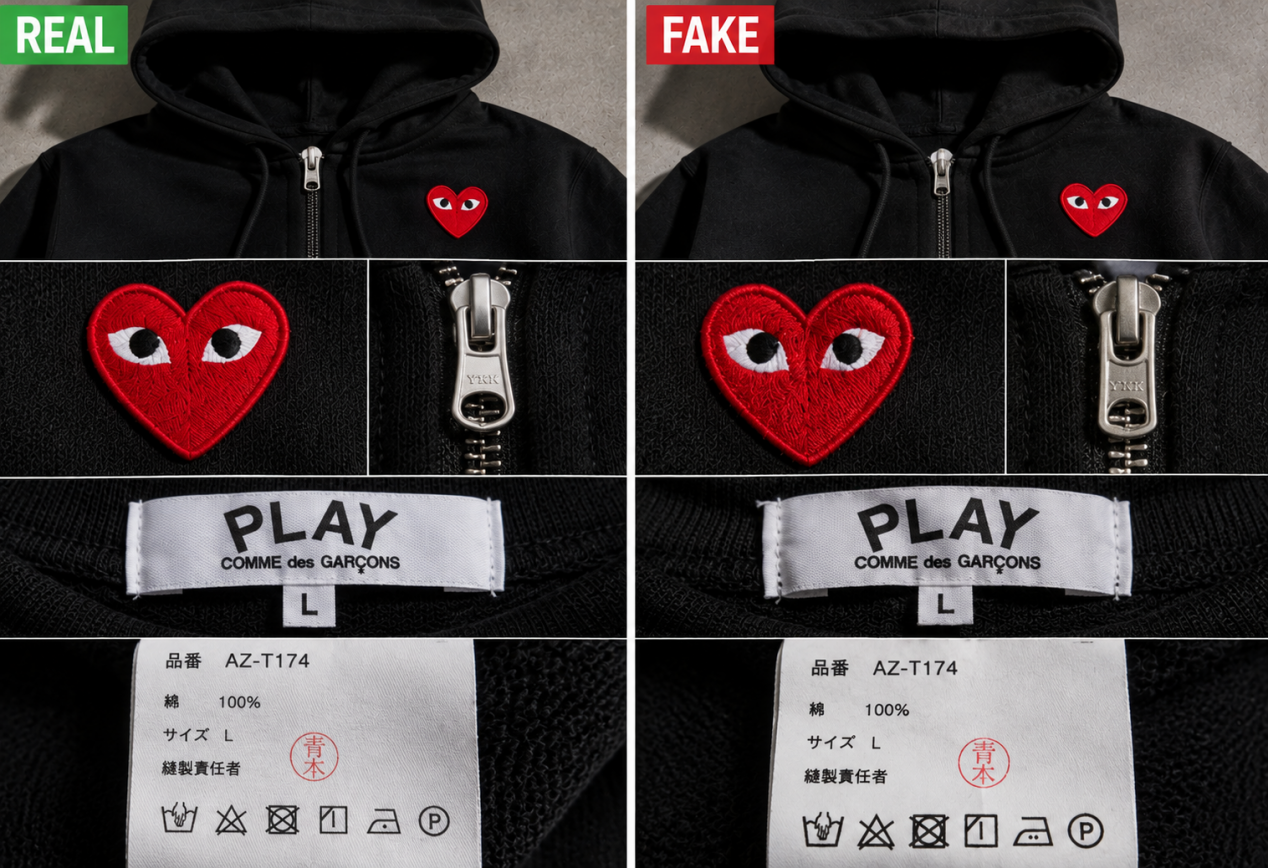
The heart logo is one of the most copied marks in streetwear, and that’s a problem for anyone buying secondhand or off an unfamiliar site. Fakes have gotten good. A blurry photo and a low price used to be the giveaway, but now the copies look close enough to fool a quick glance. That’s exactly how people get burned.
The good news is that the real ones still give themselves away if you know where to look. The heart, the stitching, the tags, and the fabric all carry small tells that fakes struggle to nail. This walks through those checks one by one, so you can tell a genuine piece from a copy before your money leaves your account. No expert eye needed, just a few things to look at closely. Learn these and you’ll never second-guess a heart tee again.
Start With the Heart Itself
The logo is the first place to look, because it’s the hardest thing to fake perfectly. On a real piece the heart is clean and symmetrical, with the two eyes evenly spaced and sitting at the right height. Fakes often get the proportions slightly wrong, so the eyes look too big, too close, or set at an odd angle.
Look at how the heart is applied, too. Genuine pieces use either a crisp flat print or a neatly stitched woven patch. The edges are clean either way. Copies tend to have fuzzy print edges, uneven color, or a patch with loose, messy threads around the border.
Color matters as well. The classic red should be a solid, even shade, not patchy or slightly off-tone. Hold it in good light and check for any bleeding around the edges.
Here’s a simple habit. Compare the heart against an official product photo on your phone while you inspect it. Line them up side by side. Nine times out of ten a fake heart looks just a little off once you have the real one next to it, and once you see it you can’t unsee it.
Read the Tags and Labels Closely
Tags are where a lot of fakes fall apart, because the details are fiddly to copy. Check the neck label first. On a genuine piece the text is printed cleanly and evenly, with correct spelling and proper spacing. Fakes often have slightly blurry text, wrong fonts, or spacing that feels cramped.
Look for these tag details on the real thing:
- Clean, sharp printing: no smudging or fuzzy edges
- Correct spelling throughout: copies often slip on wording
- Proper care symbols: laid out neatly, not squashed together
- A brand and line label: matching the piece you think you have
The wash and care tag inside the seam is worth a look too. Genuine tags list materials and washing instructions in a clean, readable format. A tag that’s crooked, thin, poorly cut, or printed off-center is a red flag.
Don’t rely on tags alone, though. Sophisticated fakes can copy a label convincingly, so use this as one check among several. If the tags look off, that’s usually enough to walk away, but tags that look fine don’t automatically prove it’s real. Stack this check with the others.
Feel the Fabric and Check the Stitching
Once the logo and tags pass, get hands on the material. A genuine comme des garcons shirt uses a midweight cotton that feels substantial without being heavy. Fakes often use a thinner, cheaper cotton that feels flimsy or overly stiff, and you can usually tell the difference the moment you pick it up.
Stitching is a huge tell. On real pieces the seams are even, tight, and clean, with no loose threads hanging off. Turn the shirt inside out and check the hems and collar. Copies frequently show sloppy, uneven stitching or threads poking out where they shouldn’t.
A few fabric and construction checks:
- Weight feels right: substantial, not paper-thin or cardboard-stiff
- Even stitching: straight seams, no loose threads
- Neat collar and hems: clean finish, no wobble
- Soft but structured: cheap copies feel scratchy or plasticky
The collar is a good focus point. A real tee has a well-constructed neckline that holds its shape, while fakes often have a thin, floppy collar that stretches out fast. Small construction details like these are expensive for counterfeiters to get right, which is exactly why they’re worth checking.
Judge the Seller, Not Just the Shirt
Sometimes the fastest authenticity check has nothing to do with the shirt. It’s the seller. Where you’re buying from tells you a lot before you even see the product in person.
The safest route is always the brand’s official channels or well-known authorized stockists. Buying comme des garcons direct or from a trusted retailer removes almost all the risk. You pay for the peace of mind, and it’s usually worth it.
For resale and secondhand, look at the seller’s history and reviews. A seller with a long track record, real photos, and honest descriptions is far safer than a brand-new account with stock images. Ask for extra photos if the listing only shows one blurry shot.
Watch the price too. A big discount on a supposedly genuine piece is a classic warning sign. If a deal feels too good to be true, it usually is, because real pieces rarely sell for a fraction of their normal price without a reason. Trust your gut on this one. A slightly higher price from a reliable source beats a bargain that turns out to be plastic.
The Photos and Packaging Tell a Story
When you’re buying online and can’t touch the piece, photos become your main tool. Push for detail. A genuine seller will happily send clear, well-lit shots of the heart, the tags, the stitching, and any flaws.
What to ask for and look at in listing photos:
- Close-up of the heart: check symmetry and clean edges
- Both neck and care tags: readable, correctly printed
- Inside seams and stitching: even and tidy
- Any wear or flaws: honest sellers show them
Be suspicious of listings that only use official stock images. A real reseller has the item in hand and can prove it with their own photos. Stock-only listings are a common cover for fakes or for stock that doesn’t exist.
Packaging can add a small clue, though it’s not decisive. Genuine pieces often arrive with clean branded tags still attached and tidy presentation. That said, packaging is easy to fake and easy to lose, so treat it as a minor bonus check rather than proof. The shirt itself always matters more than the bag it came in.
Where These Checks Fall Short
Being honest, no single check is foolproof, and it’s important to know that. High-quality fakes exist that copy the heart, tags, and stitching convincingly enough to pass a casual inspection. Anyone who tells you there’s one guaranteed trick is overselling it.
The real protection is stacking checks together. One thing looking slightly off might be lighting or a photo angle. Three or four things looking off is a clear pattern. Judge the whole picture, not a single detail in isolation.
There’s also a limit to what photos can show. Fabric feel, true weight, and collar quality are hard to judge from a screen, so online buys always carry a little more risk than in-person ones. That’s just the trade-off of shopping remotely.
And even careful buyers get caught occasionally, because counterfeiting keeps improving. If authenticity matters to you above all, buying from official or clearly authorized sources is the only near-certain route. These checks tilt the odds heavily in your favor, but the safest move is removing the risk at the source.
Final Words
Spotting a fake Comme des Garcons piece comes down to knowing where the copies slip. Start with the heart, since the proportions and clean edges are the hardest thing to fake. Then read the tags, feel the fabric, check the stitching, and weigh up the seller. No single one is proof, but together they paint a clear picture.
The strongest protection is still buying from official or trusted sources, where the risk mostly disappears. For everything else, slow down and run through these checks before you pay. A few minutes of looking closely saves you the frustration of a copy landing at your door. Once you’ve trained your eye on a real one, the fakes get easier to spot every time, and you’ll shop with a lot more confidence.
How can you tell if Comme des Garcons is real?
Check that the heart logo is clean and symmetrical, the tags are sharply printed with correct spelling, and the stitching is even with no loose threads. Buying from official or trusted sellers is the surest way to guarantee it’s genuine.
Do fake CDG hearts look different?
Yes, fake hearts often have the eyes spaced wrong, fuzzy print edges, or an off-shade of red. Comparing the logo against an official product photo usually reveals the difference quickly.
Is a cheap Comme des Garcons piece automatically fake?
Not always, but a heavy discount on a supposedly genuine item is a strong warning sign. Real pieces rarely sell far below their normal price without a clear reason, so treat big bargains with caution.
Can you spot a fake from photos alone?
You can catch many fakes from clear photos of the heart, tags, and stitching, but photos can’t show fabric weight or feel. Ask the seller for detailed close-ups and be wary of listings using only stock images.
Where is the safest place to buy authentic CDG?
The safest option is the brand’s official channels or well-known authorized retailers, where authenticity is guaranteed. For resale, stick to sellers with strong reviews, a long history, and their own real photos.