

Romance readers often hit a wall when stories recycle the same character types. The standard protective, dominant male lead is a familiar formula, leaving many fans looking for characters with more emotional range. A great workplace romance needs chemistry, but it also requires people who act like real adults with complex lives.
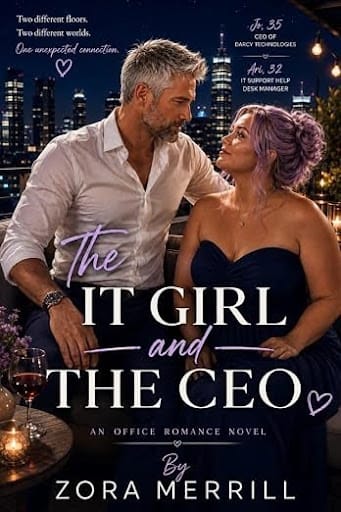
Author Zora Merrill decided to write exactly what she wanted to read. Her debut novel, The IT Girl and the CEO: She was one ticket from falling for the boss, offers a story built on quick banter and genuine connection. We spoke with Merrill about character building, the value of deep friendships, and how she updates the office romance.
Q: You mentioned starting this book because you were tired of seeing the same type of male lead in romance novels. What specific traits did you want your characters to have instead?
Zora Merrill: I was reading a CEO romance novel. I was getting so frustrated with how the male lead treated the female lead. It was all physical, no emotional depth, and it was never about her. I wanted my male lead to be emotionally attentive, not overbearing, funny, charismatic, and growth-oriented. Of course, my female lead is not dependent on the male. That was very important to me.
Q: Ari meets the CEO by chance on a terrace while trying to leave an office party early. How does this case of mistaken identity set the tone for their relationship?
Zora Merrill: I used to watch a bunch of classic movies. My favorite things about them are the meet-cute and one Shakespearean play built on mistaken identity. That yes, she is leaving, but now she has found someone who matches her energy. I didn’t want to stretch out her not knowing who Jo is.
Q: Your male lead, Jo, balances being thoughtful with moments of confidence. How difficult was it to write a character who breaks the standard protective hero mold?
Zora Merrill: A lot of Jo’s character traits come from my own partner. He is confident, funny, and thoughtful. He is protective when it matters. Always asks how he can better support me. It was a lot of fun to write to him.
Q: The book highlights friendship and chosen family alongside the central romance. Why was it important to give Ari and Jo deep connections outside of each other?
Zora Merrill: I have always believed that having relationships outside your romantic partnership is important. That they have someone they can talk to, get advice from, etc.
Q: Banter plays a huge role in the story, especially during Ari and Jo’s first meeting. How do you approach writing dialogue that feels natural and humorous?
Zora Merrill: One of my favorite classic movies, The Thin Man, had leads who always had the best banter, and everything flowed naturally. I wanted to create something similar to that. That these two people can just be themselves and not make it seem forced.
Q: As a debut author turning your frustration with genre rules into a creative project, what advice do you have for other writers looking to rewrite familiar character types?
Zora Merrill: I would just say go for it. I rewrote the first three chapters of my books, I don’t know, many times. More than I can say. Once I found my groove, I couldn’t stop typing. I know it’s cliché. Yes, it is frustrating. Write what you know. Best of luck to all the new writers out there.
Merrill shows that the romance genre can deliver far more than basic attraction. By focusing on humor and layered personalities, she gives readers a story that feels grounded. Her characters step outside narrow boxes to act like real people.
As audiences keep asking for better character development in fiction, novels that challenge old formulas will stand out. Merrill proves that breaking the rules makes for a much better read.
To learn more, visit https://www.amazon.com/dp/B0HF1XW14T