

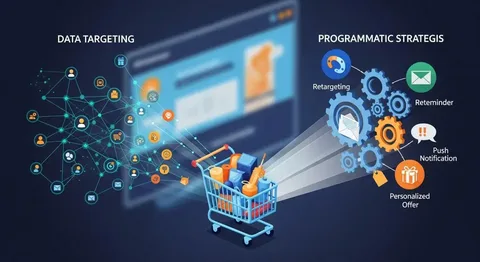
Have you been losing customers, especially abandoning carts at checkout process? Been wondering how to reduce cart abandonment and get customers to finish the checkout process. The article shares strategies to optimize your checkout, get customers to continue to complete the process, make purchases, and grow your brand revenue.
-
Include different payment options
Your customers have different payment preferences. It is essential to ensure that you offer multiple options for your customers to choose from when making a payment.
Many customers abandon a cart if they can’t find their preferred payment option. To make it easy for potential customers, make the payment secure and fast, as customers share their details with the digital wallets: PayPal, Google Pay, Apple pay when making the payments, not the retailers or business owners. A report by Adobe and PYMNTS Intelligence shows that 70% of buyers consider the availability of their preferred payment option a key factor in completing a purchase from a brand.
-
Make shorter forms to fill
Customers hate having to give lots of information at checkout. Asking for too much from customers will scare them away. To simplify the process, keep the forms as short as possible. You can also use auto-filling to shorten the time a customer takes to fill out the form.
Even better, offer a guest checkout option, so customers don’t have to create an account at checkout. It simplifies the process, making it easy for customers to finish the payment process.
I spoke to Amit Agrawal, founder of Cyber Infrastructure, and here is what he told me ‘’The majority of the top-performing checkouts prioritize ease and speed over data collection, which we consistently see. Today, the average checkout consists of more than eleven fields to fill out and is over five steps long. The top-performing checkouts in our portfolio tend to be much simpler than that.’’
-
Having hidden costs
Customers will abandon a cart if they encounter unexpected charges during the checkout process. Be transparent from the start and let the customer know all the expenses within the payment process. Stop hiding required costs until the last moment because this practice damages trust and immediately devalues the customer relationship. Says Jon Morgan, co-founder of Venture Smarter
-
Have a faster loading website
You can lose many customers if your site is slow or poorly designed. Many customers now use mobile devices to search for products and make payments. If they can’t access your checkout page on their mobile devices, and with faster loading speeds, you may lose them to your competitors.
Another thing that pisses off buyers is the constant interruption of ads during the checkout process.
When you optimize your checkout process, you respect your customers’ time and cognitive abilities. When you deal with distractions and the technical delay with slow speeds, you are building trust through efficiency.
-
Keep your checkout button optimized
Customers need clarity on the checkout page. One best ways is to make sure your checkout buttons are clear with visible colours. They should be large enough to avoid users struggling during the payment process.
Sometimes, you get customers who have disability challenges. To consider that these people implement ADA compliance implementation not optimize it for people with disabilities. Have screen reader optimization to make it easy for users who have disabilities when they want to purchase something from your ecommerce store.
-
Use exit-intent popups
As part of marketing, you can use exit-intent pop-ups. These can re-engage a user before leaving your site. They act as FOMO triggers, and you can get these to engage with more products from your store. Social proof timing shows pop-ups that build trust and prove your product value. If a customer wanted to leave your site and they see more proof of what your products offer, they can be convinced to re-engage and even make purchases they wou;d have abandoned.
I spoke with Jay Yap, Founder of SimplyMedia. This is what he said: A tactic we implement is a targeted exit-intent offer for abandoning users. A simple pop-up offering 10 percent off recovers between 8 and 12 percent of otherwise lost sales for our affiliate sites. This is not about devaluing the product but about closing the deal when a customer is on the fence. The key is to make the offer immediate and easy to apply so it does not add more friction to the process.
-
Have trust signals on your page
Two reasons people don’t buy from you, they don’t trust you or have questions about your products, and they can’t get answers. When customers don’t feel secure on your website or when giving their personal details, they will abandon their cart, even if you have wonderful products.
To win their trust, use trust signals on your page. Let them feel secure and trust your brand that their personal and financial details are secure.
Here is what Angel, owner of Wanderlust Portraits, says ‘’We also added trust signals: real-time customer chat support and testimonials about the booking experience. One client wrote, “The checkout process was so easy and transparent, I immediately felt comfortable booking my family session.” Since rolling these out, our cart abandonment rate dropped below 15%, compared to the previous 28% average.’’
-
Have great customer support
Customers may need some clarification or have concerns that need to be addressed. They need answers immediately and can leave a checkout page if they don’t get these answers. To avoid this, have a live chat on the page to handle customer concerns immediately.
It’s also important to have a customer care representative that customers can engage with in case they need some help during the checkout process.
A 2024 Global Growth Insights study shows that the conversational commerce market is expected to climb to $15.53 billion by 2034. This shows more brands are investing in making conversations better for customers.
-
Personalize customer experience
Use purchase history or search behaviour to personalize the checkout process. Give product recommendations that align with the customers. Can use AI product-driven recommendations at checkout.
Personalizing your checkout experience makes customers feel you care and want to give the best solutions they can have to their challenges. Your customers came to your store to get solutions to their pains, and if you provide answers to those pains personalized to their test you win them.
-
Lack of a clear return policy
When customers are purchasing some products, they want to know the return policy terms from your store. They want to have an idea of what they will do if they want to return the products after a purchase. Lack of transparency in return policies can make these customers shy away from your store and look for a brand that has a clear terms of return policy.
Conclusion
The checkout process is the most important part of the customer journey to complete their purchase journey. If they encounter friction in the process, they will leave the store and look for another to make the purchase.
Don’t lose customers because of some things that can easily be fixed. Apply the strategies in this article, see what you’ve been missing, and optimize your checkout process to make it easy for customers to order, make a payment, and reduce cart abandonment.