

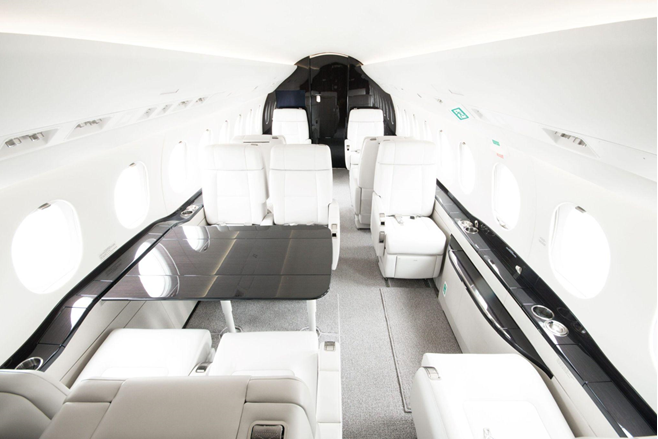
Ever wonder what happens when a private jet finishes dropping off its passengers in Calgary and needs to get back to Toronto, with no one on board? Spoiler alert: that’s not just an empty plane. It’s an opportunity.
Empty-leg flights (aka “deadhead” legs) are one of private aviation’s best-kept secrets, an unspoken hack that can save your company 40%–75% off standard charter rates. And yet, most executives don’t even realize they exist. That’s about to change.
What Exactly Is an Empty-Leg Flight?
Picture this: Chartright Air Group charters a jet from Toronto to Vancouver for a corporate client. The passengers disembark in YVR, but the aircraft needs to return east for its next booking. Rather than fly home empty (because that burns fuel and money), the operator lists that repositioning segment for anyone flexible enough to grab it.
That, in essence, is an empty leg flight, a pre-planned journey already happening, offered at a fraction of the usual cost. You can’t always pick your exact time, but you can definitely pick your price point.
Why Empty-Legs Are the Secret Weapon of Corporate Travel
Here’s where things get fun.
For a Canadian business traveller, especially a CFO or VP who bounces between Toronto, Montreal, and Calgary, time is currency. Commercial travel means airport security, boarding lines, delays, and wasted hours. An empty leg, on the other hand, means:
- Private-jet efficiency without full-price luxury.
- Regional reach – fly direct into airports commercial airlines ignore (think London, ON or Red Deer, AB).
- Last-minute flexibility – these flights pop up days (sometimes hours) before departure.
It’s the difference between waiting on a gate change at Pearson and taking off from Chartright’s hangar with a cappuccino in hand.
The Math Behind the Magic
Let’s run a quick example.
A one-way Toronto–Calgary charter might normally cost around $18,000.
But if that aircraft is already repositioning to Calgary, Chartright might list the same route for $7,000–$9,000.
Now, multiply that by the value of an executive’s billable time (say, $800/hour) and you’re not just saving on airfare, you’re reclaiming hours of productivity. You could fit in two extra meetings, close one more deal, or be home for your kid’s hockey game.
That’s ROI the finance department can actually measure.
How to Find and Book Empty-Leg Flights
This is where Chartright’s digital platform earns its keep. The company maintains a live Empty-Legs page, listing available routes across its Canada-wide fleet — everything from light jets to long-range Gulfstreams.
How to get in early:
- Subscribe to notifications — Chartright’s team often sends real-time alerts.
- Act fast – these deals disappear faster than airport Wi-Fi.
- Ask about flexibility — sometimes the departure time or airport can be adjusted slightly to fit your schedule.
Pro tip: Corporate assistants or travel coordinators can bookmark this page and check twice weekly — that’s often enough to catch new segments before they’re gone.
Integrating Empty Legs Into Your Corporate Travel Policy
Now, here’s the part most companies overlook. Empty-leg flights shouldn’t just be a “nice surprise.” They can be built into your corporate travel framework.
How?
- Create a small “Charter Utilization Clause” that allows booking private or empty-leg flights when the total cost (including time saved) is lower than commercial options.
- Assign one EA or operations coordinator to monitor Chartright’s listings weekly.
- Establish internal approval limits, for instance, any executive travel under $10K can use empty-leg opportunities.
Add a one-page CRA-friendly documentation template for expense reporting, and voilà — you’ve just turned a luxury into a policy-approved efficiency tool.
Limitations (and How to Outsmart Them)
Of course, this isn’t a silver bullet. Empty legs have quirks:
- Routes are pre-set.
- Dates are often short notice.
- Return flights aren’t guaranteed.
But with the right planning, these quirks become advantages. Many firms use empty legs for:
- Client site visits where one-way travel is fine.
- Last-minute relocations for project managers or consultants.
- Team retreats — split groups across two nearby airports.
Chartright’s team can even help pair multiple empty legs to create semi-round-trip itineraries if you’re flexible.
Why Chartright Has the Canadian Advantage
Let’s be real, not all operators are built for the Canadian landscape.
Chartright’s edge lies in its national footprint and local expertise.
- Bases in key regions (Toronto, Kitchener-Waterloo, Calgary, Vancouver, and beyond).
- Transport Canada-certified fleet maintenance.
- Pilots who actually know how to handle a blizzard landing in Thunder Bay.
When you’re juggling business travel during a Toronto snowstorm, that matters more than you think.
The Future: AI and Predictive Empty-Leg Matching
We’re on the verge of a new era in charter tech. AI is already creeping into route prediction — anticipating when a plane will reposition before it’s even booked. Imagine your Chartright app notifying you:
“A mid-size jet will fly Calgary–Montreal next Tuesday. Seats available at 60% off. Interested?”
That’s not sci-fi; it’s 2026. The combination of predictive analytics + private aviation is set to reshape how corporate Canada travels.
Final Approach: The Smartest Flight You’ll Never See Advertised
Here’s the truth, empty legs are the business traveller’s version of an investment tip.
Not everyone knows about them. Even fewer use them strategically.
So, next time your exec team needs to hop from Toronto to Vancouver, skip the chaos of Gate C52. Check Chartright’s Empty-Leg Listings, and see if opportunities are already wheels-up.
Because sometimes, the best deals in aviation are the ones flying home empty.