

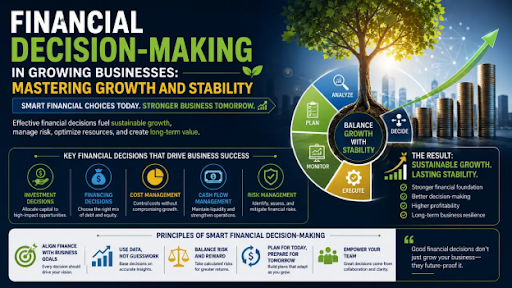
Finding your way around the world of expanding enterprises can be both exciting and scary. Making smart financial choices is important for the long-term success of a growing firm. It’s not only about keeping the accounts in order; it’s also about carefully using resources to support growth while keeping the business financially stable. If you operate a business or are in charge of its finances, knowing these rules can have a big impact on how your organization grows. Sometimes, to get back on track to producing money, you have to make big financial decisions. Making financial decisions for a developing organization can have a big impact on where your firm goes in the future. The financial decisionmaking in growing businesses presents the topic in an easy-to-follow manner. Understanding the advantages of planning can help businesses make more confident financial decisions during periods of growth.
Making financial decisions for a growing firm isn’t simply about the numbers on a spreadsheet. It’s about seeing the big picture and making decisions that help you reach your business goals. You can guide your business toward long-term growth and success by mastering these financial choices. It’s important to have a strong financial base, but bookkeeping is just the beginning. You should think about making investments, expanding your business, and planning for future growth. When making financial decisions for a developing firm, you should always be proactive instead of reactive. Effective business finance also plays a key role in allocating resources for sustainable business expansion.
Financial decision-making in growing businesses
When a firm is growing, making financial decisions means making a series of strategic choices that will affect the company’s financial health and future prospects. At its heart, it’s about using your resources wisely to reach your business goals. Every choice you make, whether it’s buying new technology, hiring more people, or entering new markets, will have an effect on your finances. For growth to be long-lasting, people need to know what these effects are and make smart decisions. It’s not enough to just have money; you have to use it correctly.
When organizations are developing, they often need to find a balance between short-term requirements and long-term ambitions in order to make smart financial decisions. For example, you could have to spend a lot of money on marketing to get more market share, but this could hurt your cash flow right away. This is when you need to start planning ahead. You need to think about a lot of things, such what is happening in the market, what your competitors are doing, and what your own strengths and weaknesses are. When a business is developing, making financial decisions means understanding the big picture and making choices that are good for the whole ecosystem. Understanding the objectives of insurance can also help businesses protect themselves against financial risks while pursuing growth.
Understanding the Basics of Financial Management
Before you start using complicated financial tactics, you need to know the basics well. This means knowing how to read financial statements, make a budget, and keep track of cash flow. Financial statements give you a picture of how your business is doing financially, and budgeting helps you plan for future costs and income. Managing your cash flow makes sure you have enough money on hand to satisfy your obligations. These basic ideas are the basis for making good financial decisions. Start with the basics and then add more.
Setting Clear Financial Goals
Setting defined financial goals is one of the first things you should do when making financial decisions. These goals should be SMART: specific, measurable, achievable, relevant, and time-bound. Having specific goals helps you make financial decisions by giving you a plan to follow. For example, you might want to raise your income by a certain amount or lower your operating costs. It also helps you decide what to do first and how to best use your resources. Use it to set a financial GPS for your firm.
The Role of Cash Flow in Decision-Making
Any firm needs cash flow to stay alive. You need to keep an eye on your cash movement in and out on a frequent basis. Having more money coming in than going out is called positive cash flow. This is important for paying bills and making investments that will help your business develop. On the other hand, negative cash flow might cause financial problems. Knowing your cash flow cycle can help you decide when to invest, when to decrease costs, and when to look for more money.
Investing in Growth Opportunities
Investing in growth prospects is one of the most exciting parts of making financial decisions. This could involve adding new products, entering new markets, or buying another business. There are different financial factors to think about for each of these choices. You need to think about how it fits into your broader strategy, the risks involved, and the possible return on investment. The best growth chances are sometimes the ones that fit with your main skills.
Managing Debt and Equity
You have two main ways to pay for growth: debt and equity. When you take out a loan, you have to pay it back with interest. Selling part of your business to investors is what equity means. There are good and bad things about each choice. You can get the money you need through debt without giving up ownership, but there is a chance that you will default. Equity might provide you more knowledge and resources, but it also entails sharing profits and the right to make decisions.
Budgeting for Uncertainty
Uncertainty is always present in the corporate sector. Changes in the economy, the market, and unanticipated events can all have an effect on your money. That’s why it’s so important to plan for the unknown. This means having extra money set away for unforeseen costs and a backup plan ready to go. It also means looking at your budget often and making changes to it as needed. Being flexible is important while making financial decisions.
The Importance of Financial Forecasting
Financial forecasting helps you see how your money will change in the future and make smart choices. You can guess how much money you’ll make, spend, and have on hand in the future by looking at past data and market trends. This information is very useful for making plans and strategies. Updating your financial estimates on a regular basis keeps you on track and lets you swiftly adjust to changes. You may think of it as your money crystal ball.
Diversifying Revenue Streams
It’s not safe to depend on only one source of income. Adding new ways to make money can help you stay financially stable and give you new chances to improve. You may do this by adding more products or services, going after new consumer groups, or looking into new markets. Every new source of income comes with its own set of financial issues, but the possible advantages might be very big. Put your money in a lot of different places, like putting your eggs in different baskets.
Tax Planning and Compliance
Taxes are a necessary aspect of running a business, but you may lower your tax bill and make sure you follow the rules with careful planning. This means knowing the tax rules, using any deductions and credits that are available, and organizing your finances in a way that will help you with your taxes. Seeing a tax professional on a regular basis might help you avoid making expensive mistakes and make tax planning easier. Keeping track of your taxes is an important aspect of making smart financial choices.
Monitoring Key Financial Metrics
You need to keep an eye on important financial measures in order to make smart financial decisions. Some of these are the gross profit margin, net profit margin, return on investment, and cash flow ratio. Each of these numbers gives you useful information about a different part of your financial health. By regularly measuring and evaluating these indicators, you can see patterns, find problems before they happen, and make decisions based on evidence. These numbers are like a dashboard for your money.
Building a Strong Financial Team
A lot of the time, making good financial decisions takes a group effort. You can get the help you need by putting together a strong financial team with a wide range of skills and knowledge. Accountants, financial analysts, and advisers who can give advice and insights should be on this team. Regular communication and cooperation among your finance team members make sure that everyone is on the same page and working toward the same goals. A good team can help you make tough financial choices.
Leveraging Technology for Financial Management
Financial management has changed a lot because of technology. There are many technologies that can help you make better financial decisions and make them easier. These include accounting software and financial planning applications. These technologies can do things like automate mundane processes, give you data in real time, and do complex analytics. Using technology can help you make judgments that are more precise and on time, which will lead to greater financial results. Think of it as your money superpower.
FAQ for financial decision-making in growing businesses
How do I prioritize financial decisions in a growing business?
When you make financial decisions, you should think about how they will affect your business goals and your financial health. First, figure out what your most important financial goals are, such keeping cash on hand, paying off debt, or putting money into growth. After that, look at each choice and see how much money it could make, how risky it is, and how well it fits with your long-term goals. As your business changes, make sure to regularly assess and change your priorities.
What are the common pitfalls in financial decision-making for growing businesses?
Some common mistakes are not planning for unexpected costs, overestimating income, and not planning for unexpected events. Also, relying too much on debt, not managing cash flow properly, and not having many sources of income can all lead to financial problems. Do a full financial analysis, keep your expectations realistic, and have a backup plan ready to avoid these problems. You can also keep on track by regularly looking over and changing your financial plans.
How can I ensure my financial decisions support long-term growth?
Focus on long-term growth instead than short-term gains when making financial decisions. This means putting money into things that will be worth more in the long run, keeping a steady stream of cash, and developing a strong financial base. You can keep on track by regularly looking over your financial goals and changing your plans as needed. Also, creating a culture of financial discipline and openness in your business might help it succeed in the long run.
What role does financial forecasting play in decision-making?
Financial forecasting gives you useful information about how the economy is likely to change in the future, which helps you make smart choices. You may guess future sales, costs, and cash flow by looking at past data and market trends. Keeping your financial predictions up to date can help you stay on track and make quick modifications when needed. This proactive strategy helps you see possible problems and chances before they happen, which lets you make smart financial choices.
How can I build a strong financial team for better decision-making?
Putting together a good financial team means finding people with a wide range of talents and knowledge. This group should have accountants, financial analysts, and advisers who can give advice and information. Your financial team will all be on the same page and working toward the same goals if you talk to and work with each other often. Also, encouraging a culture of ongoing learning and growth will assist your staff stay up to date on the newest financial trends and best practices.
Conclusion
Making financial decisions for a growing business is hard but important for making sure the business stays stable and grows over time. You can make smart choices that help your business grow by learning the basics of financial management, creating clear goals, and using technology. Keep in mind that making good financial decisions isn’t just about the numbers; it’s also about how you use your resources to reach your business goals. It’s about finding a balance between short-term demands and long-term aspirations and being ready for the unknown.
In summary, the financial decisionmaking in growing businesses delivers useful context. As your firm grows, remember that every choice you make has an effect on its finances. Your decisions affect the future of your business, whether you’re putting money into new prospects, paying off debt, or planning for development. Always keep your financial goals in mind, stay flexible, and stay up to date. Making smart financial decisions in a growing business can help you get the most out of your organization. So, take on the challenge, be proactive, and watch your business grow.