

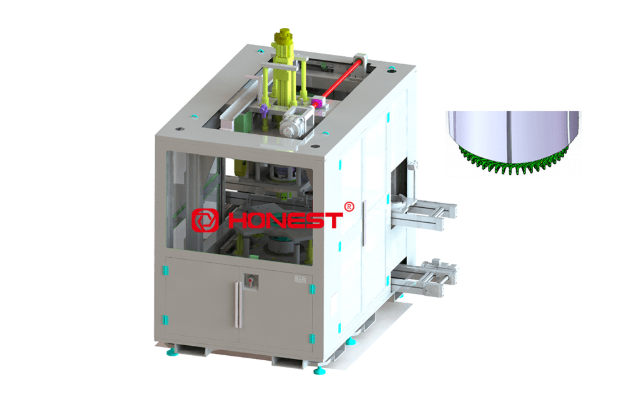
The development of electric motors has seen significant advancements in recent years, particularly with the introduction of hairpin stator technology. Coupled with hairpin motor designs, this technology has revolutionized the way motors deliver torque and efficiency. Unlike conventional round-wire stators, hairpin stators use rectangular or flat conductors that are precisely bent and inserted into stator slots. This innovative approach allows for higher current density, better thermal management, and optimized electromagnetic performance. In this article, we will explore how hairpin stators enhance motor torque and efficiency, the benefits they provide, and their applications in modern industries.
Understanding Hairpin Stators
What is a Hairpin Stator?
A hairpin stator is a type of motor stator where the copper conductors are shaped like hairpins and inserted into the stator slots. The ends of these conductors are welded or connected to form continuous electrical paths. This design allows for a more compact winding structure, which can carry higher currents with reduced resistance, contributing to greater torque generation in hairpin motors.
Difference from Traditional Stators
Traditional stators typically use round wire windings that are manually or semi-automatically wound. Hairpin stators, by contrast, utilize rectangular conductors and automated processes to ensure precise positioning and consistent performance. This difference results in better copper utilization, lower electrical losses, and improved thermal characteristics, all of which enhance the motor’s overall efficiency.
How Hairpin Stators Enhance Motor Torque
Increased Copper Fill Factor
One of the key advantages of hairpin stators is the higher copper fill factor. Rectangular conductors occupy more space within the stator slots compared to round wires, allowing more current to flow through the motor. Higher current density directly translates into increased torque output, making hairpin motors ideal for applications requiring high starting torque and strong continuous performance.
Optimized Magnetic Flux Distribution
The precise geometry of hairpin stators ensures that the magnetic flux within the motor is evenly distributed. Uniform flux reduces losses due to uneven magnetization and minimizes eddy currents. This contributes not only to higher torque but also to smoother motor operation and reduced vibration.
Reduced Electrical Losses
Hairpin stators have lower resistance and reduced electrical losses compared to traditional windings. Rectangular conductors allow for more efficient current flow, reducing heat generation and energy loss. This efficiency helps hairpin motors achieve higher torque without additional energy input, making them suitable for high-performance and energy-conscious applications.
Efficiency Benefits of Hairpin Stators
Superior Thermal Management
Thermal management is a critical factor in motor efficiency. The flat conductors in hairpin stators have a larger surface area in contact with the stator iron, improving heat dissipation. This reduces the risk of overheating, allows for continuous high-power operation, and extends the lifespan of the motor.
Reduced Copper and Iron Losses
Hairpin motors experience reduced copper losses due to the efficient use of rectangular conductors. Additionally, optimized stator slot design minimizes iron losses, further enhancing overall motor efficiency. The combination of these factors allows hairpin motors to deliver higher performance while consuming less energy.
Consistent Performance at High Speeds
High-speed motor operation often introduces losses and mechanical stresses in traditional windings. Hairpin stators maintain structural integrity and electrical consistency, even at high rotational speeds. This ensures that torque output and efficiency remain stable, making them ideal for demanding industrial and automotive applications.
Applications of Hairpin Motors
Electric Vehicles
The automotive industry is one of the primary beneficiaries of hairpin motor technology. Electric vehicles require motors that are compact, efficient, and capable of delivering high torque for acceleration. Hairpin stators enable motors to meet these requirements while optimizing battery usage and minimizing heat generation.
Industrial Machinery
Industrial motors used in robotics, automation, and manufacturing benefit from the high torque and efficiency provided by hairpin motors. Hairpin stators allow machines to operate continuously under heavy loads without sacrificing performance, reducing energy costs and downtime.
Renewable Energy Systems
Hairpin motors are increasingly used in renewable energy applications, such as wind turbines and solar tracking systems. High efficiency and torque density help these systems operate reliably in variable conditions, maximizing energy capture and conversion.
Challenges in Hairpin Stator Manufacturing
Complexity of Production
Producing hairpin stators requires precision bending, insertion, and welding of conductors. Automated machinery is essential to maintain consistency and reduce errors. While this increases initial manufacturing costs, the long-term benefits of efficiency and performance outweigh the investment.
Design Optimization
Effective hairpin motor design requires careful consideration of magnetic flux, cooling pathways, and mechanical stresses. Advanced simulation tools are often used to optimize stator geometry and ensure maximum torque and efficiency. Skilled engineers are essential to achieving optimal results.
Quality Control
Welding the ends of hairpin conductors must be precise to ensure reliable electrical connections. Quality control measures, such as inspection and testing, are critical to prevent failures and maintain motor performance over time.
Future of Hairpin Stator Technology
The adoption of hairpin stators is expected to grow as industries demand higher-performance motors with better efficiency and torque. Advances in materials, automated manufacturing, and design optimization will further enhance the capabilities of hairpin motors. These innovations will play a key role in the development of next-generation electric vehicles, industrial machinery, and renewable energy systems.
Conclusion
Hairpin stator technology is transforming electric motor design by significantly enhancing torque and efficiency. The combination of precise rectangular conductors, optimized magnetic flux, and superior thermal management allows hairpin motor to deliver higher performance, reliability, and energy efficiency compared to traditional designs. As industries continue to seek compact, high-performance solutions, hairpin stators will remain a critical component in the evolution of modern electric motors, shaping the future of transportation, industrial automation, and renewable energy applications.