

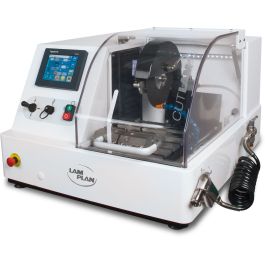
Precision is all in laboratories and commercial research centers. The accuracy of the final result depends on the sample preparation as well as on the material testing. One device, which is being used when working in various fields of expertise, is the membrane cutter. Intended to deliver repeatable, consistent cuts for membranes, films and filters, transfer time savings, minimize human error and make every sample identical.
Here are answers to these questions and reasons why it has become an indispensable tool in laboratory and industrial settings.
What is a Membrane Cutter?
Behind the science, a membrane cutter is a simply engineered tool that makes it easier to cut membranes, polymer films or filter media to the correct dimensions. Membranes are broadly utilized in fields of filtration, separation, diagnosis, and material measurement. When cutting them by hand using scissors or knives, inconsistent cuts and rough edges occur and waste the precious fabrics.
High-accuracy membrane cutters address these limitations by providing:
- Uniform cuts with exact dimensions.
- Sharp edges reduce sample contamination.
- Compatibility of membrane types including cellulose, nylon, PVDF or PTFE.
A variety of these features render membrane cutters indispensable tools both in academic research and industrial establishments.
Laboratory and Industrial Uses of Membrane Cutters
Membrane cutters have many uses. Here are some of the most frequent:
- Clinical & diagnostic labs: Conditioning membranes for assays, test strips & filtration apparatus.
- Pharmaceutical research: Cutting the membrane for controlled release experiments and diffusion measurements.
- Environmental testing: Preparing filters for use in testing water and air for pollution.
- Food and beverage industry: Consistent membrane sizing for quality control.
- Materials science: Slicing thin polymer films for tensile strength, barrier and permeability tests.
In all these fields precise cutting is essential to achieve repeatable results in compliance with regulations.
Benefits of Using High-Precision Membrane Cutters
Accuracy and Reproducibility
Compared to the manual cutting process, membrane cutters ensure the same width cut for each membrane. That level of accuracy removes unpredictability, so that tests and experiments can be repeated with certainty.
Time Efficiency
It is workable, but doing so manually is laborious and error-prone. An instrument such as an automatic or semi-automatic membrane cutter cuts down preparation time, allowing researchers and technicians to concentrate on more complicated preparations.
Reduced Waste
Membranes and films can be expensive. A high-quality membrane cutter reduces waste by allowing efficient and optimal cuts, saving time and materials.
Enhanced Safety
Hand-slicing with sharp knives can present hazards to staff. Workplace safety, while at the same time productivity, can be maintained by using a membrane cutter.
Versatility
Most cutters will process a range of sizes, shapes and materials. Whether you are using small microfilters in a lab or large membranes in an industrial setting, the cutter can be adjusted to your needs.
What to Consider When Buying the Best Membrane Cutter
While choosing a membrane cutter for your lab or industry, keep in mind the following features:
- Cutting accuracy: Ability to keep very small tolerances on shape and size.
- Compatibility of the materials: Different membrane types and thicknesses supported.
- Operation: Easy to use, plug-and-play, and straightforward functionality.
- Durability: Made of high-quality materials for long-term use.
- Throughput capacity: Ideal for both low and high production.
- Traceability and compliance: Some high-end models can even be integrated with laboratory information systems (LIS).
Application of a Membrane Cutter in Various Areas
In Biomedical Research
Membrane cutters play a crucial role in obtaining membranes for Western blot, diffusion studies and diagnostic devices. These tools increase the reproducibility of experimental results by guaranteeing uniform size.
In Environmental Testing
Both water and air quality labs rely heavily on membranes for filtering. The use of a membrane cutter helps obtain filter discs of constant size and increases reliability in comparisons between samples.
In Industrial Quality Control
Food, beverage, and pharmaceutical companies employ membranes to trace contaminants and ensure product purity. Virtually no debris is added during cutting, guaranteeing adherence to strict quality standards.
In Material Science and Engineering
Polymer films and composite membranes are often studied for their mechanical strength and permeability. Uniform cutting enables cross-examination of mechanical properties without variability caused by uneven edges.
Membrane Cutter: Why Do You Need One at Every Modern Lab?
With labs and industry under pressure to deliver faster and more accurate results, automation and accuracy are no longer optional. The membrane cutter solves major pain points— inconsistency, waste, and inefficiency—while at the same time enhancing safety.
Labs maintain the quality of their work without sacrificing time when they scale their workflow with consistent preparation of both membranes and films. For industry, membrane cutters aid in meeting international guidelines and legislation, making them necessary for market and consumer acceptance.
Conclusion
In today’s scientific and industrial worlds, precision is paramount. A high-precision membrane cutter is not a mere accessory, but a necessity in labs and industry for enhanced reproducibility, throughput, and safety.
From medical research to industrial quality control, the equipment speeds processes, lowers waste, and ensures a uniform outcome. With the advancement of technology, membrane cutters are expected to feature more automation and integration into digital lab systems.