

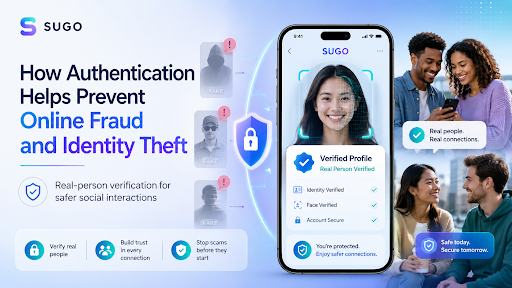
Why Trust Matters More Than Ever Online
Every meaningful online interaction begins with trust. Whether someone is joining a voice room, sending a private message, creating a profile, or exchanging gifts inside a social app, they want to know the person on the other side is genuine. Fraudsters take advantage of uncertainty. They hide behind fake names, stolen photos, throwaway accounts, and emotional manipulation to trick users into sharing money, private details, or personal access.
This is where authentication becomes a practical layer of protection. Instead of relying only on usernames and profile pictures, platforms can confirm that an account belongs to a real person. For a social platform like SUGO, real-person checks help make conversations feel safer because users are not entering a space filled with completely anonymous strangers.
Strong identity checks do not remove every risk, but they make scams harder to scale. When a platform raises the effort required to create fake accounts, bad actors lose speed, reach, and confidence.
What Authentication Means in a Social App
Authentication is the process of confirming that a user is who they claim to be. On a basic website, this may mean entering a password or receiving a login code. On a social platform, the process can go further by checking whether a profile represents a real person rather than a bot, impersonator, or repeat offender.
SUGO’s real-person authentication system is built around this idea. Users are guided through a verification process that helps the platform review account authenticity. This may include profile checks, facial confirmation, and account information review.
The goal is not to make social interaction complicated. It is to create a stronger foundation for friendly communication. When people know that other users have passed a real-person check, they can join chats, voice rooms, and social activities with confidence.
How SUGO’s Real-Person System Supports Safer Interaction
SUGO focuses on live social connection, where people meet through voice chat, video calls, rooms, and private conversations. These fast-moving spaces need protection because scammers often target platforms where trust builds quickly. A convincing profile, a warm conversation, and a sense of urgency can be enough to mislead someone.
Real-person verification adds friction. Instead of letting suspicious users create unlimited accounts with little accountability, SUGO can require a higher standard before users gain trust signals.
User verification can help:
- It discourages fake profiles created for romance or gift scams.
- It reduces impersonation by making stolen identities harder to use.
- It makes bot networks less practical because each account needs human review.
- It gives genuine users a clearer signal when choosing who to interact with.
They can spend less time worrying about whether a profile is real and more time enjoying conversations.
Authentication as a Barrier Against Common Scams
Most online fraud begins with deception. A scammer pretends to be a friend, a romantic interest, a support agent, a celebrity, or a generous stranger. Once trust is gained, the scammer may ask for money, login codes, private photos, payment details, or help moving funds.
Authentication helps break this pattern because it limits how easily someone can create a convincing false identity. A scammer who must pass real-person checks faces more risk and effort. If an account is reported and removed, returning with another fake profile becomes harder.
Users may feel comfortable quickly. Scam prevention works best when it happens before the scam reaches the user, not after damage has already been done.
By combining authentication with moderation, reporting tools, and behavior monitoring, platforms can detect suspicious patterns earlier and act before more people are targeted.
Why User Verification Builds Community Confidence
People behave differently when a community feels accountable. In anonymous environments, some users may harass others, spread misleading claims, or attempt fraud because they believe there are no consequences. Real-person verification changes that atmosphere.
When SUGO encourages verified participation, it sends a clear message. The platform values real users, respectful communication, and safer social discovery. Trust is both a technical feature and a community experience.
Verified users are more likely to be seen as credible in rooms and conversations. Hosts can feel better about who enters their space. New users can feel more comfortable joining public discussions. Even when someone does not know another person personally, a verification signal creates a useful first layer of confidence.
The strongest trust signals combine authentication, scam prevention, online safety, user verification and clear rules that guide behavior without making the app feel restrictive.
The Role of Online Safety Beyond Login Protection
Many people think security only means protecting passwords. In modern social apps, online safety is much broader. It includes identity checks, privacy controls, content moderation, scam detection, account recovery, and user education.
Authentication protects the front door, but safe design also watches what happens inside the house. A verified account can still behave badly, so platforms need layered protection. This is why real-person systems are most effective when supported by monitoring and quick reporting tools.
Users also play a role. They should avoid sharing verification codes, financial information, private documents, or sensitive images with people they just met. A verified profile is a positive sign, not a guarantee of perfect behavior. The smartest approach is balanced: use safety features, but keep personal boundaries in place.
For SUGO, the value of real-person authentication is that it raises the baseline of trust while still allowing natural social discovery.
How Verification Reduces Identity Theft Risks
Identity theft happens when someone uses another person’s information, image, or credentials to mislead others or gain unauthorized access. In social apps, this may look like a fake profile using stolen photos, a copied bio, or a name designed to imitate a real user.
Real-person authentication helps reduce these risks because it asks users to prove more than ownership of an email address. A scammer may steal photos, but passing a live verification process is much harder. If the system compares account details with human confirmation, fake or copied identities become easier to detect.
This protects both the person being impersonated and the people who might interact with the fake account. It also supports healthier platform growth. A community filled with genuine users attracts better conversations, stronger retention, and fewer trust-related complaints.
For brands and social platforms, identity protection is not only a security issue. It is part of the overall user experience.
What Users Should Still Do to Stay Protected
Even with strong platform systems, users should develop smart habits. Scammers constantly adjust their tactics, so personal awareness remains important.
Useful habits include:
- Keep login details private and never share one-time codes.
- Be cautious if someone asks for money, gifts, or urgent help.
- Report profiles that seem fake, aggressive, or manipulative.
- Use in-app safety tools instead of moving quickly to outside channels.
- Review privacy settings and limit unnecessary personal information.
These steps work best alongside platform verification. Authentication makes fraud more difficult, while user awareness makes manipulation less effective.
Building Safer Social Connections With Confidence
The internet is at its best when people can meet, talk, laugh, and connect without constantly questioning who is behind every profile. Real-person authentication helps make that possible. It gives platforms a way to reduce fake accounts, limit impersonation, support scam prevention, and create a more trustworthy environment for social interaction.
SUGO’s verification approach reflects a larger shift in digital communities. Users no longer want only entertainment. They want enjoyable spaces that also respect their security and privacy. By making identity checks part of the social experience, SUGO helps users feel more comfortable as they explore rooms, conversations, and new friendships.
No system can promise complete protection, but the right layers make a real difference. Authentication raises the cost of fraud, strengthens user verification, improves online safety, and helps genuine people connect with greater peace of mind.