

Your brand could be doing everything right and still losing people before the first conversation.
They don’t call. They don’t visit your website straight away. They Google you. And whatever shows up in those first few results, that’s the impression you leave. Not your pitch, not your product, not your best work.
This is the gap that a good PR strategy is designed to close. It’s not about going viral or chasing press for the sake of it. It’s about making sure that when people look you up, what they find actually reflects who you are and what you offer. This guide breaks down how to build that presence, why your online reputation needs active attention, and which credibility signals most brands are still ignoring.
What Digital PR Actually Does for Your Brand
Most people think PR is about sending press releases and hoping a journalist picks them up. That’s not really how it works anymore.
Digital PR is about getting your brand mentioned, referenced, and linked to in places your audience already trusts. That could be an industry blog, an online publication, a news feature, or a roundup article that ranks on the first page of Google. Every mention builds a trail, and that trail is what makes your brand feel legitimate to someone who’s never heard of you.
The practical side of digital PR services includes building relationships with publishers, creating content that earns coverage, and placing your brand in conversations that are already happening in your space. It’s less about pushing a message out and more about making sure your brand shows up where decisions are being made.
For growing businesses, this matters because organic credibility is hard to fake. Paid ads disappear the moment you stop spending. A well-placed feature or a backlink from a trusted source stays. Over time, that’s what builds authority, not just traffic.
If you’ve been putting all your energy into content and social media but not seeing the brand recognition you expected, digital PR is usually the missing piece.
Your Reputation Needs More Than Good Reviews
Getting press coverage and building visibility is one part of the equation. The other part is controlling what people find once they start digging.
A few bad reviews, an outdated news mention, or a negative comment ranking on the first page of Google can quietly cost you clients without you even knowing it. Most businesses only think about their reputation after something goes wrong. By that point, the damage is already done.
ORM services deal with exactly this. Online reputation management is the ongoing process of monitoring what’s being said about your brand, addressing anything that misrepresents you, and making sure the positive, accurate narrative stays visible. It’s not spin, it’s maintenance.
Think of it this way. Your digital PR work earns you coverage and builds credibility. ORM makes sure that credibility holds up when someone goes looking. Reviews, search results, social mentions, and forum threads all of it shapes how your brand is perceived before a potential client even reaches out.
The brands that grow consistently online aren’t just creating good content. They’re paying attention to their full digital footprint and managing it with intention. That’s what separates a brand that looks trustworthy from one that actually is.
What Makes a Brand Look Legit Online
Good press coverage. Clean search results. Positive reviews. All of that matters, but there’s one thing that quietly sits above it all when it comes to how credible your brand looks online.
A Wikipedia page.
When a journalist is researching a brand for a feature, an investor is doing a quick background check, or a potential partner wants to verify you’re the real deal, Wikipedia is usually one of the first places they land. It’s not just an encyclopedia. It’s third-party validation that your brand has enough of a presence to be documented independently.
Why it’s harder to get than you think
Getting on Wikipedia isn’t as simple as signing up and writing about yourself. The platform has strict standards around notability. Your brand needs to have been covered by credible, independent sources before a page can even be considered, which is also why it carries so much weight. Anyone can build a website. Not everyone makes it onto Wikipedia.
That’s exactly where Wikipedia page creation services come in, helping brands navigate those standards, structure the content correctly, and get it approved without it being taken down.
Why it matters for your brand specifically
For brands already investing in digital PR and managing their online reputation, a Wikipedia presence ties it all together. It gives journalists a reference point, shows up in Google results, and adds a layer of authority that no ad or social post can replicate.
If your brand is being covered, talked about, and recognised, this is worth looking into.
How These Three Actually Work Together
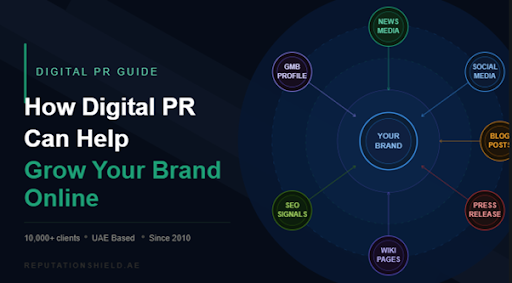
Here’s the thing: digital PR, ORM, and a Wikipedia presence aren’t three separate services you pick from a menu. They’re three parts of the same brand strategy, and each one makes the others stronger.
Think of it as layers:
- Digital PR builds your visibility, coverage, backlinks, and mentions in places people already trust.
- ORM services protect that visibility, making sure what people find when they search you actually holds up.
- Wikipedia adds permanence, giving journalists, investors, and partners a credible reference point that no competitor can replicate.
The order matters too. Your PR work creates the coverage that Wikipedia needs to validate a page. Your ORM work keeps everything surrounding that page clean and consistent. One feeds the other, and when all three are aligned, your brand doesn’t just look credible online. It stays credible.
Most brands focus on one of these and wonder why things aren’t clicking. The answer is usually that none of them work as well in isolation as they do together.
Visibility gets you found. Reputation keeps you trusted. Authority makes it last.
That’s really what growing a brand online comes down to.
Frequently Asked Questions
What are digital PR services?
A way to get your brand featured in trusted online publications and platforms, building authority and search visibility over time.
What do ORM services cover?
Monitoring and managing what shows up when someone searches for your brand: reviews, mentions, and search results.
Does every business need a Wikipedia page?
Not every business qualifies. Wikipedia has strict notability standards, but for brands with credible media coverage, it’s a strong trust signal worth pursuing.
Final Thoughts
Building a brand online takes more than just showing up. It takes showing up consistently, in the right places, with something credible behind your name.
Digital PR, reputation management, and the right credibility signals won’t transform your brand overnight, but they compound over time. The brands that invest in these things early are the ones that look established when it matters most during a pitch, a partnership conversation, or a simple Google search.
Start with what’s missing. Build from there.