

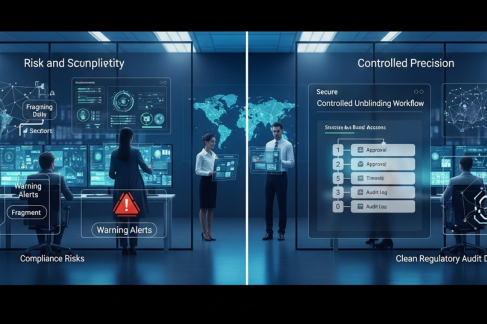
Blinding is one of clinical trials’ most powerful methodological tools. It eliminates bias, ensuring treatment comparisons are fair and results credible. But implementing blinding correctly—and managing unblinding when it becomes necessary—is complex and error-prone.
Modern IRT clinical trial tools have become essential for managing blinding integrity and controlled unblinding. These systems prevent unintentional unblinding, document unblinding decisions comprehensively, and maintain the scientific integrity that blinded studies require.
The Challenge of Maintaining Blinding Integrity
In a perfectly blinded trial, no one involved in treatment decisions knows which treatment patients receive until the study ends. In reality, blinding breaks happen.
Adverse events may necessitate knowing a patient’s treatment. Emergency situations require treatment information. Sometimes accidental unblinding occurs when someone carelessly reveals treatment.
Each unblinding event creates compliance documentation requirements and threatens scientific integrity if not managed properly. The challenge is allowing necessary unblinding while preventing unnecessary exposure and documenting everything for regulatory review.
How IRT Systems Enable Controlled Unblinding
Interactive Response Technology tools provide secure, documented processes for managing unblinding requests. Rather than calling a pharmacist or searching for printed codes, users submit requests through the system.
The system maintains complete records of who requested unblinding, when, why, and who approved it. This documentation is essential for regulatory inspections and demonstrates that unblinding was controlled, not accidental.
Properly designed systems support different unblinding types. Emergency unblinding for safety events differs from elective unblinding for other reasons. The system documents these distinctions.
Preventing Accidental Unblinding
Unintentional unblinding often occurs carelessly—a conversation overheard, information visible on a computer screen, a paper file left unattended.
Modern IRT tools minimize these risks through role-based access controls. Site staff see only information necessary for their roles. A monitor doesn’t see treatment codes. A supply manager doesn’t see randomization assignments.
On-screen display is carefully controlled. Treatment information appears only when specifically requested, not as background information visible to multiple people.
Documentation That Satisfies Regulatory Expectations
Regulatory agencies scrutinize blinding processes during inspections. They want evidence that blinding was maintained, that unblinding events were justified, and that decisions were documented.
Comprehensive audit trails within IRT systems provide exactly this documentation. Every unblinding request generates records showing:
- Who requested unblinding
- When the request was made
- The justification provided
- Who approved the request
- When approval was granted
- Whether emergency procedures were used
This level of documentation demonstrates regulatory compliance and management of blinding integrity.
Managing Emergency Unblinding Efficiently
Some situations require immediate treatment knowledge. A patient experiences a life-threatening adverse event requiring knowing their treatment to guide care.
Effective IRT systems support rapid emergency unblinding procedures. Users access treatment codes immediately through secure processes, with the understanding that documentation occurs simultaneously.
The system allows fast action while maintaining records and audit trails. There’s no trade-off between speed and documentation.
Supporting Multiple Blinding Strategies
Modern trials often employ sophisticated blinding approaches. Double-blind designs. Blinded pharmacists with unblinded dose calculations. Partially unblinded monitoring for safety while maintaining treatment blinding.
IRT tools support these varied approaches through flexible configuration. The system enforces the specific blinding strategy your protocol requires, preventing users from accidentally violating it.
This flexibility enables blinding approaches that would be impractical with manual processes.
Real-Time Monitoring of Blinding Status
Effective IRT systems track blinding status in real-time. Administrators see immediately when unblinding occurs, who was involved, and whether it was authorized.
This visibility enables addressing unblinding issues quickly. If unblinding occurs without authorization, you know immediately and can take corrective action.
Portfolio-level monitoring shows blinding integrity across all your active studies, identifying concerning patterns that might warrant intervention.
Integrating Blinding with Randomization
Blinding and randomization are inseparable. The randomization process assigns treatments, and blinding prevents knowing those assignments.
Integrated IRT systems maintain this connection seamlessly. When randomization occurs, the system simultaneously creates blind-controlled access to treatment information. Unblinding requests interact with the randomization system to verify patient identities and retrieve correct treatment codes.
This integration prevents errors where treatment information is mismatched to patients.
Training and Compliance Support
Complex blinding processes require user training and ongoing compliance verification. Modern IRT systems support training through built-in guidance and help functions.
The system enforces compliance by preventing users from accessing information their role shouldn’t access and alerting when unusual unblinding patterns suggest protocol violations.
Conclusion
IRT clinical trial tools transform blinding management from a manual, error-prone process to a controlled, documented system. They enable necessary unblinding while protecting blinding integrity, maintain comprehensive documentation, and support regulatory compliance.
For any blinded study—especially global trials with complex blinding requirements—modern IRT tools are essential infrastructure. They protect your study’s scientific integrity while ensuring that unblinding can occur quickly when necessary.