

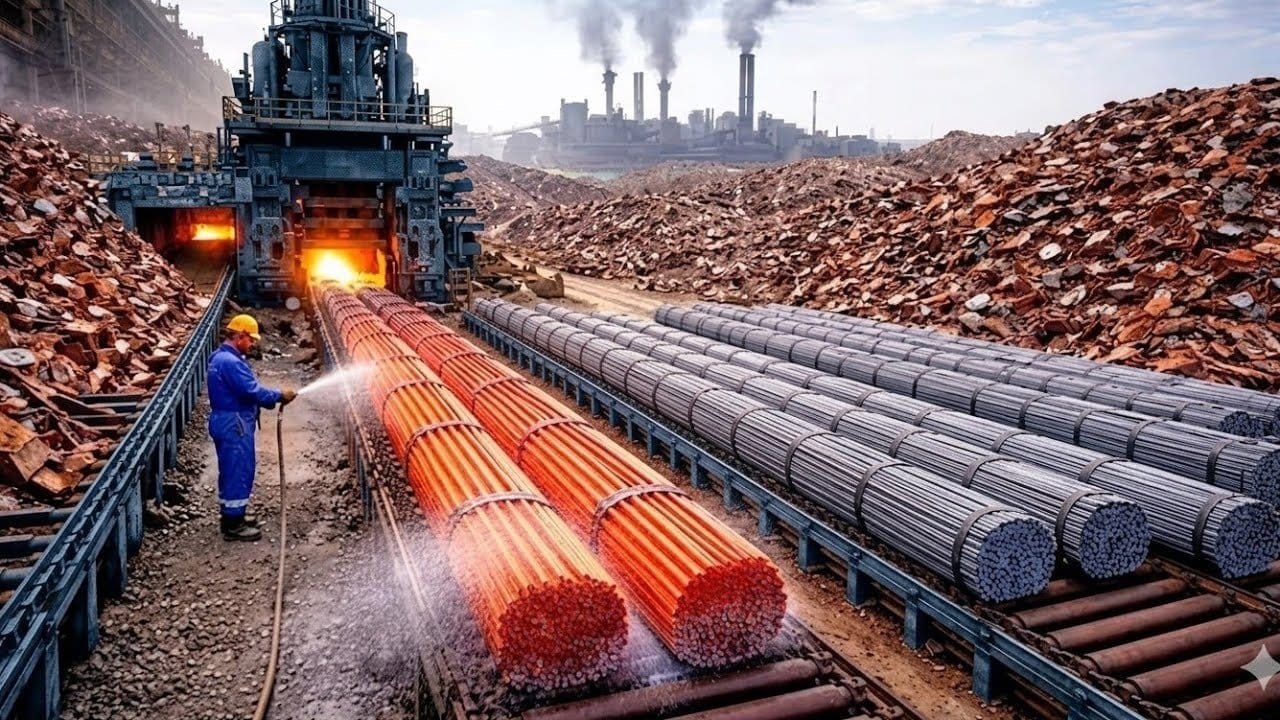
Metalworking operations generate large quantities of chips, turnings, swarf and other metal scrap during machining, cutting, grinding and fabrication processes. While this material may initially appear to be little more than manufacturing waste, it can often retain considerable recycling value when it is handled and processed correctly.
The challenge is that freshly generated metal scrap is rarely convenient to manage. Long turnings can become tangled, loose chips can occupy significant floor space, and machining scrap is often covered with coolant or cutting oil. These conditions can increase storage requirements, create housekeeping concerns, complicate transportation and reduce the value of recyclable material.
Modern metal chip processing equipment can automate several stages of scrap handling, including size reduction, fluid separation and compaction. By treating scrap as a recoverable manufacturing resource rather than simply waste, manufacturers can improve material handling while reducing some of the costs associated with disposal and recycling.
Why Metal Chips and Turnings Need Processing
Not all machining scrap has the same physical characteristics. Different manufacturing processes produce different forms of metal waste, and each type may require a particular handling method.
Short chips are generally easier to transport because they can move through conveyors and processing equipment without becoming heavily entangled. Long, stringy turnings are more difficult because they can form large bundles that occupy substantial amounts of space.
Swarf typically consists of smaller metal particles or fine chips created during machining or grinding. Depending on the manufacturing process, swarf may contain significant quantities of coolant, cutting fluid or oil.
Wet chips present another challenge. When machining scrap leaves a machine tool, substantial amounts of valuable coolant can remain attached to the metal. Sending these wet chips directly to a recycling container can result in lost fluid and heavier scrap loads.
Bundled turnings can be particularly difficult to manage because their irregular shape makes them difficult to convey, store and process.
Processing the material before it reaches the final scrap container can therefore make the entire recycling process more efficient.
Reducing Long and Tangled Metal Turnings
One of the first steps in many scrap processing systems is size reduction.
Long metal turnings can wrap around equipment, bridge across containers and create large tangled bundles. Their irregular shape also means that they contain substantial amounts of empty space, which increases the amount of storage volume required.
A metal turnings shredder reduces long, tangled turnings into smaller, free-flowing chips that are easier to convey and process.
Instead of attempting to move large nests of metal throughout the facility, manufacturers can create smaller pieces that travel more predictably through conveyors, wringers and other downstream equipment.
PRAB offers both standalone and system-integrated shredders designed for metal scrap processing applications. Depending on the material and operating conditions, shredding systems can reduce the volume of metal turnings by as much as four times.
Volume reduction can have an immediate effect on storage requirements. Smaller scrap occupies less space in bins and containers, which can allow manufacturers to store more recyclable material before arranging transportation.
The more consistent material size can also improve the performance of downstream scrap processing equipment.
Removing Cutting Fluid From Processed Chips
After metal turnings have been reduced to manageable sizes, the material can be processed to remove residual cutting fluid.
Machining fluids represent an operational expense, and allowing large quantities of coolant or oil to leave the facility with metal scrap can create unnecessary waste.
Chip wringers and similar separation systems are designed to remove fluid from metal chips through mechanical separation. The recovered fluid may then be collected for treatment, filtration or potential reuse, depending on the requirements of the manufacturing process.
Removing fluid from chips provides several advantages.
Drier scrap is generally easier to transport and recycle. It can also reduce the amount of liquid entering scrap storage containers and improve housekeeping around scrap handling areas.
Coolant recovery can provide additional financial benefits because reusable fluid does not have to be replaced as frequently.
The combination of shredding and fluid separation can therefore transform large quantities of tangled, wet machining scrap into smaller and significantly drier recyclable material.
Compressing Chips Into Dense Briquettes
Manufacturers that generate substantial volumes of loose chips may take processing one step further by compressing the material.
Loose chips contain considerable amounts of air between individual pieces. As a result, scrap containers may become full even though the actual weight of metal inside them is relatively low.
For operations producing significant quantities of loose chips, a metal chip briquetter can compress processed material into dense, uniform briquettes that are easier to store, transport and recycle.
Briquetting equipment applies high pressure to metal scrap, creating compact blocks that contain substantially less empty space than loose chips.
PRAB’s DualPak briquetting equipment uses hydraulic compression to form dense briquettes while also extracting residual fluid from the material. The combination of compaction and fluid recovery can improve the overall efficiency of scrap handling.
Dense briquettes can require considerably less storage space and may allow more metal to be transported in each scrap shipment.
They can also make material easier for scrap recyclers to handle. PRAB states that its metal scrap processing and briquetting systems can increase scrap value by up to 25%, depending on material and processing conditions.
Building an Integrated Chip Processing System
For manufacturers producing metal scrap continuously, individual machines can be combined into an automated processing system.
A typical configuration may follow a workflow such as:
Machine Tool → Conveyor → Shredder → Wringer → Briquetter → Scrap Container
The conveyor collects chips from machining equipment and transports them toward the processing system.
Long turnings can then pass through a shredder, where they are reduced to a more manageable size.
The smaller chips can move through a wringer or fluid separation system that removes coolant or oil.
If additional volume reduction is required, the processed chips can then be compressed into briquettes before entering the final scrap container.
Not every manufacturing operation requires every stage. System configuration depends on several factors, including the type of metal being machined, the form of the scrap, production volume, desired throughput and the amount of fluid contained in the chips.
Operations generating primarily short, relatively dry chips may require a simpler system, while facilities producing large quantities of wet, stringy turnings may benefit from a more comprehensive processing line.
Benefits of Automated Metal Scrap Processing
Automating metal scrap handling can provide benefits throughout a manufacturing facility.
Lower Transportation Costs
Reducing the volume of loose chips and turnings allows more metal to fit into each scrap container. This can potentially reduce the number of collections required.
Reduced Storage Requirements
Shredded chips and compressed briquettes occupy less space than tangled turnings, helping manufacturers use production floor and scrap storage areas more efficiently.
Increased Scrap Value
Cleaner, drier and more densely processed scrap may be more attractive to recycling facilities than loose material contaminated with machining fluids.
Cutting Fluid Recovery
Separating coolant and oil from metal chips can reduce fluid losses and allow suitable fluids to be recovered for additional processing or reuse.
Reduced Manual Handling
Automated conveyors and scrap processing systems reduce the need for employees to manually move heavy or tangled metal scrap between containers.
Improved Housekeeping
Keeping chips contained within conveyors and processing systems can reduce the amount of loose metal and fluid accumulating around production areas.
Easier Recycling
Consistent, processed material is generally easier to store, transport and prepare for recycling.
Reduced Production Disruptions
Automated chip handling can reduce the amount of time employees spend emptying small containers or dealing with overflowing scrap bins, helping manufacturing operations remain focused on production.
Turning Manufacturing Scrap Into a Recoverable Resource
Metal chips and turnings are an unavoidable result of many machining operations, but they do not have to be treated simply as industrial waste.
Shredding can transform difficult bundles of turnings into manageable chips. Fluid separation can recover valuable coolant while producing drier scrap. Briquetting can further reduce material volume and create dense, transportable blocks of recyclable metal.
When these technologies are combined into an integrated scrap processing system, manufacturers can create a more controlled path from the machine tool to the recycling container.
The result can be reduced storage requirements, easier material handling, improved fluid recovery, fewer scrap transportation requirements and potentially greater recycling value.
By investing in an efficient metal chip processing strategy, manufacturers can turn a difficult waste-management problem into a more organized and potentially valuable part of the production process.