


You should do an annual sediment flush every single year, and a complete water flush every four years. Those two simple rules can be the difference between a boiler that lasts four decades and one that quietly destroys itself from the inside out.
I know that sounds dramatic, but after learning everything I could about outside wood stove maintenance, I genuinely believe flushing is one of the most overlooked yet most important things you can do for your system. Most people load their wood, enjoy the heat, and never think twice about what is happening inside that water jacket. That is exactly how problems start.
Let me break this down in a way that actually makes sense, so you know exactly what to do and when to do it.
What Happens If You Never Flush Your Outside Wood Stove?
Think of the water inside your outside wood stove like the oil in your car. You would not run your engine for years without an oil change, right? The same logic applies here.
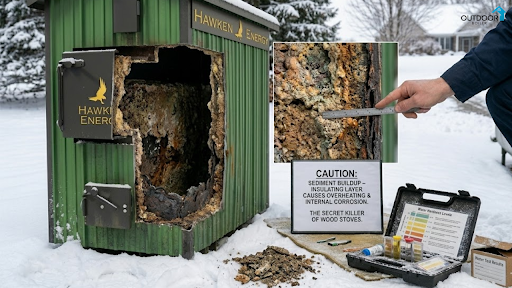
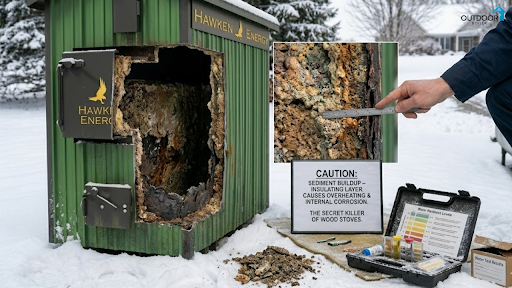
Over time, sediment, minerals, and rust particles settle at the bottom of your boiler’s water jacket. That buildup does not just sit there harmlessly. It insulates the steel from the water, causing the metal to overheat. It also accelerates corrosion from the inside, which is almost impossible to see until it is too late.
Experts at OutdoorBoiler.com have a name for it: sediment is the “secret killer” of outside wood stoves. It is silent, it is invisible, and if left unchecked, it will cut the life of your boiler significantly shorter than it should be.
The good news is that flushing is genuinely easy. You do not need a plumber, special tools, or a full weekend. Once you know the routine, it takes just a few minutes a year.
What Are the Two Types of Flushes You Need to Know?
There are two different flushes, and they serve different purposes. Mixing them up or skipping one entirely is a common mistake.
The Annual Sediment Flush
This is the quick one. Once a year, every year, you simply open the rear drain valve on your outside wood stove for about five seconds, or until the water runs clear. That is it. The water might look murky for a moment, like muddy river water, but it should clear up fast. If it does not run clear within five seconds, keep going until it does.
The best time to do this is right before you collect your water sample for testing. Never collect your water sample before doing the sediment flush, because the sample will not accurately reflect the condition of your water.
If you own a GX Series model, make sure to flush both rear drains, not just one.
The Complete Water Flush
This is the deeper clean. Every four years, you drain the boiler completely, refill it with fresh water, and start fresh. A helpful trick for remembering the schedule is to tie it to the presidential election cycle. Every time there is a new election year, it is time for a complete flush.
If you have owned your outside wood stove for more than four years and have never done a complete flush, stop reading and go do it now. Seriously. The longer sediment sits undisturbed, the harder it becomes to remove and the more damage it causes.
When Do You Need to Flush Sooner Than Expected?
The four-year schedule assumes you have been keeping up with your maintenance consistently. But there are situations where you need to flush your outside wood stove immediately, regardless of when you last did it.
You need to flush right away if:
You have not properly treated your boiler water with a quality corrosion inhibitor in the last 12 months. Untreated water is acidic enough to eat through steel. Without proper water treatment, sediment builds up faster and corrosion accelerates.
You have ever used a cheap or off-brand water treatment product. This one surprises a lot of people. Some water treatments that seem fine are actually damaging to boiler steel. Corrosion that comes from poor-quality treatments tends to happen below the waterline, meaning you will not see it until it has already caused serious harm.
You have used automobile antifreeze, also known as ethylene glycol, in your system. This is not safe or appropriate for outside wood stoves. If this has been added to your system, it needs to be removed and disposed of properly right away.
You have gone more than four years without a complete flush, no exceptions.
Your annual sediment flush produced water that did not run clear, even after draining for an extended period. That is a sign that sediment has built up significantly and a complete flush is necessary.
Does Water Quality Affect How Often You Need to Flush?
Yes, it absolutely does. This is something that does not get talked about enough.
If your local water is hard, meaning it contains high levels of calcium and magnesium, mineral deposits will build up inside your system faster than they would with softer water. According to Dean’s Home Services, homes in hard water areas may need more frequent maintenance attention to prevent those deposits from reducing efficiency and causing damage over time.
This is one of the reasons why annual water testing is so valuable. It takes the guesswork out of the equation entirely. If your water test results come back marked “satisfactory” and you have been treating your water consistently, you are on track. If results come back “unsatisfactory” two tests in a row, you may need to do a partial drain, refill with fresh water, and retest before committing to a full flush.
The bottom line: do not skip your water testing. It is free through certain services and it tells you exactly what is going on inside your boiler before problems get out of hand.
What Is the Step-by-Step Process for a Complete Flush?
If you are ready to do a full flush on your outside wood stove, here is the general process to follow:
Allow the fire to burn out completely and wait for the water jacket temperature to drop to around 80 degrees or lower. Never drain a boiler that still has fire, coals, or hot ash inside.
Remove all firewood, coals, and ash from the firebox. While you are in there, take a few minutes to scrape out any ash or creosote that comes off easily. This is also a good time to clean your filter cartridge and inspect it for wear.
Connect a garden hose to the drain valve at the bottom rear of your boiler. Direct the hose somewhere safe for the water to drain.
Turn off the circulating pump, then open the drain valve. Let the water drain completely. You will notice the water looks cloudy at first, but it should clear within seconds. If it takes longer or stays murky, take note of how long it runs dirty. That information helps you evaluate the condition of your system.
Once fully drained, close the drain valve and refill with fresh water. Do not bypass through a water softener during this step, and do not add water treatment during the initial refill.
After the system is full and running again for at least 24 hours, take a water sample and send it in for testing. Add your water treatment according to the proper specifications after you have confirmed the refill went well.
How Does Flushing Connect to the Rest of Your Maintenance Routine?
Flushing does not exist in a vacuum. It works best when it is part of a broader annual maintenance habit. A few other things that make a real difference:
Keeping your water jacket temperature above 140 degrees during operation. When temperatures drop below that threshold, creosote builds up rapidly, and your efficiency drops.
Using creosote remover sticks weekly to keep the firebox and flue cleaner between annual chimney cleanings.
Following the dry burn method, which reduces moisture inside the system and extends the life of your boiler significantly.
Doing a summer shutdown checklist every year, including removing all ash before the off-season. Dry ash is harmless, but ash that absorbs summer humidity turns into a caustic paste that will corrode through steel.
Think of each of these habits as working together. No single step protects your outside wood stove on its own, but when they all happen consistently, your boiler has a real shot at lasting 40 years or more.
FAQs
How long does an annual sediment flush actually take? About five seconds of draining at the rear valve. From start to finish, including walking out to your boiler and back, you are looking at under two minutes if everything goes smoothly. It is one of the fastest maintenance tasks you will ever do.
What if my water does not run clear during the annual flush? Keep draining until it does, even if that means the entire water jacket empties. If it still does not clear, that is a sign you need to move straight to a complete flush. Do not put it off.
Can I use regular antifreeze in my outside wood stove during winter? No. Automobile antifreeze, or ethylene glycol, is not safe for use in outside wood stove systems. If someone added it to your boiler previously, it needs to be removed immediately and disposed of properly. Call a professional if you are unsure how to handle this.
Does it matter what time of year I do the complete flush? Most people schedule it during the summer shutdown when the boiler is not in active use. That timing works well because you already have the fire out and the system cooling down. However, technically, you can do it anytime as long as the boiler is completely cooled and has no active fire inside.
How do I know if my water treatment is actually working? The best way is through regular water testing. Sending a water sample in for lab analysis will tell you whether your water chemistry is where it needs to be, whether your treatment is effective, and whether any early signs of corrosion are developing. Most reliable outside wood stove suppliers offer free water testing with water treatment purchases.
What happens if I flush the boiler but skip the water testing? You will have cleaner water, but you will be guessing about the chemistry. Testing closes the loop and confirms whether your treatment is working properly. Without it, you may have untreated or under-treated water sitting in your system for months without knowing it.
Is there a difference between flushing an older boiler versus a newer one? The frequency guidelines are generally the same, but older boilers may show more sediment buildup faster, especially if they were not flushed regularly in the past. If you are inheriting an outside wood stove that has a questionable maintenance history, do a complete flush right away rather than waiting for the four-year mark to roll around.
Conclusion
Flushing your outside wood stove is one of those maintenance tasks that feels optional right up until the moment your boiler fails. The annual sediment flush takes five seconds. The complete flush every four years takes an afternoon. Together, they protect an investment that should be heating your home for decades.
The more you understand about how your outside wood stove works, the better you can protect it. And when you have questions or need guidance on parts, water treatment, or anything else related to your system, the team at OutdoorBoiler.com has the answers. Do not wait until something goes wrong. Contact them today and get the expert support your boiler deserves.