

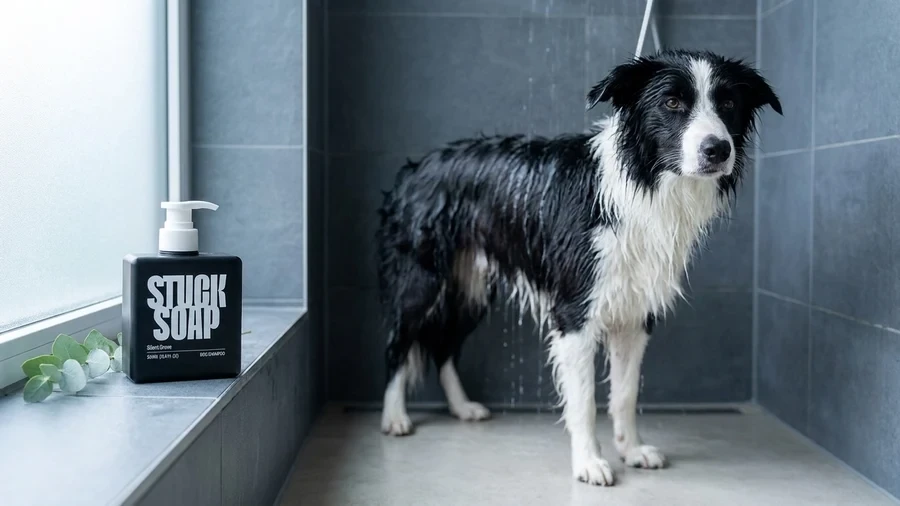
Tuesday: your Lab spends two glorious hours retrieving a bumper off the dock, comes home, shakes twice, and falls asleep on the porch still damp. Thursday: she’s gnawing at a spot under her ear like it owes her money. Friday morning there’s a raw, oozing patch the size of a silver dollar, and it smells faintly like a wet gym bag. You didn’t do anything wrong, exactly. You just skipped the ten minutes that matter most.
I’ve groomed water dogs for years, and this sequence plays out every summer. The swim is never the problem. The drying is.
The Short Answer
- Hot spots after swimming come from trapped moisture, not the water itself. Damp skin under a dense coat is a bacterial greenhouse.
- Rinse with plain water after every swim to clear lake gunk or pool chlorine, then towel and (ideally) blow-dry on cool until the skin at the roots feels dry.
- Focus on the hidden zones: under the ears, armpits, groin, tail base, and between the toes.
- Bathe with a soothing shampoo every 3–4 weeks during heavy swim season, or sooner if the skin looks irritated.
- Call the vet if a spot is spreading, weeping, or painful. Established hot spots usually need clipping and medication, not just a bath.
Why Wet Dogs Get Hot Spots (and Dry Dogs Mostly Don’t)
A hot spot, known to your vet as acute moist dermatitis, needs three ingredients: moisture, warmth, and something itchy enough to start the licking. From there the dog’s own mouth does the damage. Saliva keeps the spot wet, teeth abrade the surface, normal skin bacteria colonize the broken tissue, and a patch the size of a dime at breakfast can be the size of your palm by dinner. Owners tell me it “appeared overnight,” and they’re barely exaggerating.
Swimming season supplies the first two ingredients on repeat. A double-coated dog (a Golden, a Newfoundland, an Aussie) can hold water against the skin for hours after a swim, especially in humid weather. Short-coated Vizslas and pointers mostly self-dry in half an hour; it’s the plush-coated swimmers who get in trouble. Lake water adds a third ingredient: algae, silt, and a livelier microbial population than any chlorinated pool, which is why the classic post-lake hot spot shows up under an ear or at the tail base two or three days after a wild swim.
None of this means the dock diving stops. It means you build a ten-minute routine and run it every time.
The Post-Swim Routine, In Order
Step 1: Rinse with plain water, every swim, no exceptions. Lake water dries into the coat and leaves grit and organic residue on the skin; pool water leaves chlorine, which is irritating in its own right. A two-minute hose-down with lukewarm water flushes most of it out. No shampoo for a routine rinse: daily lathering strips the coat oils that protect the skin, trading one problem for another.
Step 2: Let the dog shake. Seriously. A good shake removes more water than your first towel pass will. Step back and let physics work.
Step 3: Towel with pressure, not friction. Press the towel into the coat and squeeze, section by section. Vigorous rubbing tangles a long coat and irritates skin that’s already primed to itch. For a big double-coated dog, plan on two towels; a single soggy one just relocates water.
Step 4: Chase the hidden moisture. This is the step people skip, and it’s where hot spots are born. Work your fingers down to the skin in each zone:
- Under and behind the ears, the number-one spot on floppy-eared breeds like spaniels, Labs, and Goldens
- Armpits and chest, where the front legs pinch the coat against the body
- Groin and tail base, where the fur is densest and airflow is worst
- Between the toes and pads, slow to dry and easy to forget
Step 5: Blow-dry the dense coats. For a thick or double coat, a dryer on a cool setting, held eight to twelve inches away and kept moving, finishes what towels can’t. Human dryers on hot can burn skin through fur before the dog reacts, so cool only. Ten minutes of drying beats three days of the cone.
The finish-line test: press a finger to the skin in the armpit and behind the ear. If the roots feel even slightly cool and damp, you’re not done. Dry to the skin, not to the surface.
Bathing: How Often, With What, and For How Long
Plain rinses handle the day-to-day. But every 3–4 weeks during heavy swim season, or immediately the first time you notice scratching, a proper bath with a soothing shampoo resets the skin. Look for oatmeal or aloe for general irritation, and chlorhexidine if your vet has flagged recurring bacterial trouble. Skip anything heavily perfumed; fragrance does nothing for the skin and plenty for the itch.
Choose wrong and the bath backfires: a harsh formula dries the skin and invites the very scratching you’re trying to prevent. If you’re comparing labels, this rundown of dog shampoo for hot spots covers what’s on the market and which ingredients matter. Whatever you pick, technique counts as much as the bottle: lather down to the skin, let it sit for the full contact time on the label (usually 5–10 minutes for medicated formulas, which feels like forever with a wet dog staring at you), then rinse until the water runs completely clear. Leftover residue is an irritant all by itself. Finish with the full drying routine above; a soothing bath followed by lazy drying is a wasted bath.
Catch It Early: What a Starting Hot Spot Actually Looks Like
After drying, spend sixty seconds on an inspection. The early signs of a hot spot are subtle, and this is when they’re easiest to stop. Part the fur in the trouble zones and check for:
- A patch of pink or red skin, often warmer than the surrounding area
- Fur that stays damp or matted in one small circle while everything around it is dry
- A sour, yeasty smell coming from one specific place
- Your dog returning to lick or chew the same spot repeatedly
The decision rule is simple. Pink but unbroken skin: dry it thoroughly, keep it dry, check it twice a day. Red, moist, losing fur, but smaller than a coin: bathe, dry, and physically block the licking; a hot spot that can’t be licked usually stalls. Spreading, oozing, crusted, or clearly painful, or your dog won’t leave it alone: call the vet today, not Monday. Established hot spots typically need the fur clipped away, professional cleaning, and medication, sometimes under sedation. That’s not a stage you can shampoo your way out of, and waiting only makes the clipped patch bigger.
FAQ
Can swimming actually cause hot spots?
Not directly — trapped moisture afterward does. A dog who’s rinsed and dried to the skin after every swim can be in the water daily without trouble. The risk lives in the dense coat that never fully dries between swims, especially on double-coated breeds in humid weather.
How long should I keep my dog out of the water after a hot spot?
Until the skin is fully healed (dry, closed, fur growing back), typically one to two weeks for a spot caught early, longer if it needed clipping and medication. Putting a healing hot spot back in lake water invites a repeat. If your dog is on treatment, ask the vet for the green light.
Should I put anything on a hot spot at home?
For a small, early spot, gentle cleaning and relentless drying beat most things in your medicine cabinet. Skip hydrogen peroxide, which damages healing tissue, and skip human creams unless your vet says otherwise. Anything greasy traps moisture, and anything licked off ends up in the dog. When in doubt, text a photo to your vet’s office.
Keep the Swimming, Lose the Sores
Your water dog doesn’t need less lake. She needs ten disciplined minutes after it: rinse, shake, towel with pressure, dry the hidden zones to the skin, and run a fingertip inspection while you’re there. Add a soothing bath every few weeks, and keep the vet’s number handy for the spot that gets ahead of you. Do that, and the only thing your dog brings home from the water is the smell. Even that comes out in the wash.