

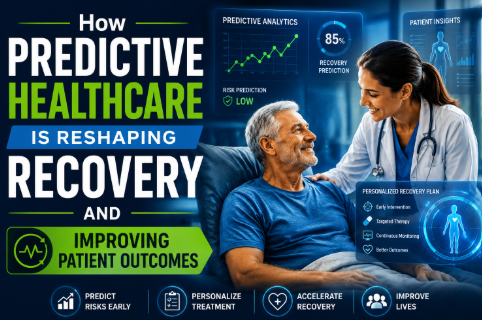
Healthcare is becoming smarter and more focused on prevention. Instead of waiting for health problems to get worse, doctors and healthcare providers can now use technology to spot risks early and create better treatment plans. This approach is helping patients recover faster and receive care that fits their specific needs.
Advances in healthcare technology have made the use of predictive health data increasingly important in modern patient care. By analyzing information such as medical history, lifestyle habits, and treatment results, healthcare providers can identify potential risks earlier and gain a clearer understanding of a patient’s future needs. This helps them create more personalized recovery plans and take preventive action before minor concerns develop into more serious health issues.
What Is Predictive Healthcare?
Predictive healthcare uses data, artificial intelligence (AI), and advanced technology to identify possible health risks before they happen. It helps doctors make informed decisions and provide care based on a patient’s unique situation.
For example, if a patient is recovering from surgery, predictive tools can help doctors identify signs that may lead to complications. This allows healthcare teams to respond quickly and provide extra support when needed.
Rather than reacting to problems after they appear, predictive healthcare focuses on preventing them whenever possible.
Personalized Recovery Plans
Every patient is different. People have different medical histories, lifestyles, and recovery needs. Because of this, a treatment plan that works well for one person may not work as well for another.
Predictive healthcare helps doctors create personalized recovery plans based on individual patient data. These plans can consider factors such as age, health conditions, activity levels, and previous treatments.
When care is tailored to the individual, patients often feel more supported and may recover more effectively.
Finding Problems Earlier
One of the greatest benefits of predictive healthcare is early detection. By analyzing health data, doctors can identify warning signs before a condition becomes more serious.
For example, a healthcare provider may notice patterns that suggest a patient is at risk of developing complications during recovery. Early action can then be taken to reduce that risk.
This not only helps improve patient safety but can also reduce hospital visits and shorten recovery times.
Supporting Recovery Beyond Treatment
Recovery does not stop when a patient leaves the hospital. In many cases, the healing process continues for weeks or even months.
Predictive healthcare helps providers monitor progress and identify challenges that could slow recovery. This allows patients to receive guidance and support throughout their healing journey.
Patients can also receive recommendations related to exercise, nutrition, sleep, and other healthy habits that support long-term wellness.
The Importance of Self-Care
Technology is helpful, but recovery also depends on the choices people make every day. Healthy habits can play a major role in how quickly and successfully a person recovers.
Simple actions such as eating nutritious foods, getting enough sleep, staying active, and managing stress can make a big difference. Healthcare experts continue to emphasize the connection between these habits and better health outcomes.
When patients take an active role in their recovery, they are often more likely to achieve lasting improvements in their health.
Better Communication Between Patients and Doctors
Predictive healthcare can also improve communication. When doctors have a clearer understanding of a patient’s condition, they can explain treatment plans more effectively.
Patients who understand their health situation are more likely to follow medical advice and stay engaged in their recovery process. This creates a stronger partnership between patients and healthcare providers.
Good communication can lead to greater trust, better decision-making, and a more positive healthcare experience overall.
Challenges to Consider
While predictive healthcare offers many benefits, patient privacy remains important. Healthcare organizations must protect personal health information and use data responsibly.
It is also important to remember that technology should support healthcare professionals, not replace them. Doctors, nurses, and other medical experts still play a key role in making decisions and providing compassionate care.
The best results come from combining advanced technology with human expertise.
Final Thoughts
Predictive healthcare is changing the way patients recover and receive treatment. By using data and technology to identify risks early, healthcare providers can create more personalized and effective recovery plans.
At the same time, healthy lifestyle choices and consistent self-care remain important parts of the recovery process. Together, predictive technology and preventive care are helping patients achieve better results and enjoy healthier lives.
As healthcare continues to evolve, predictive healthcare is expected to play an even bigger role in improving patient experiences and supporting successful recoveries.