

Online publishing is no longer built around text alone.
A single idea can now appear in search results, newsletters, social feeds, and short-form video platforms. The same story might become a long-form article, a visual explainer, a vertical video, or a collection of promotional assets.
For publishers, independent creators, marketing teams, and online businesses, this means publishing is gradually moving away from producing a single piece of content and toward building multiple media assets around one core idea.
Artificial intelligence is accelerating that shift. Writing tools can assist with organization and editing, image models can turn concepts into visual assets, and generative video is beginning to enter parts of the production process that traditionally required more time, equipment, and specialist skills.
The now-available Seedance 2.5 reflects this transition. Longer video generation, multimodal references, and integrated audiovisual capabilities make it easier to think of AI video not simply as a source of experimental clips, but as one stage in a broader digital content workflow.
The more useful question, then, is no longer whether AI can produce an impressive video. It is whether generated video can become part of a repeatable online publishing process.
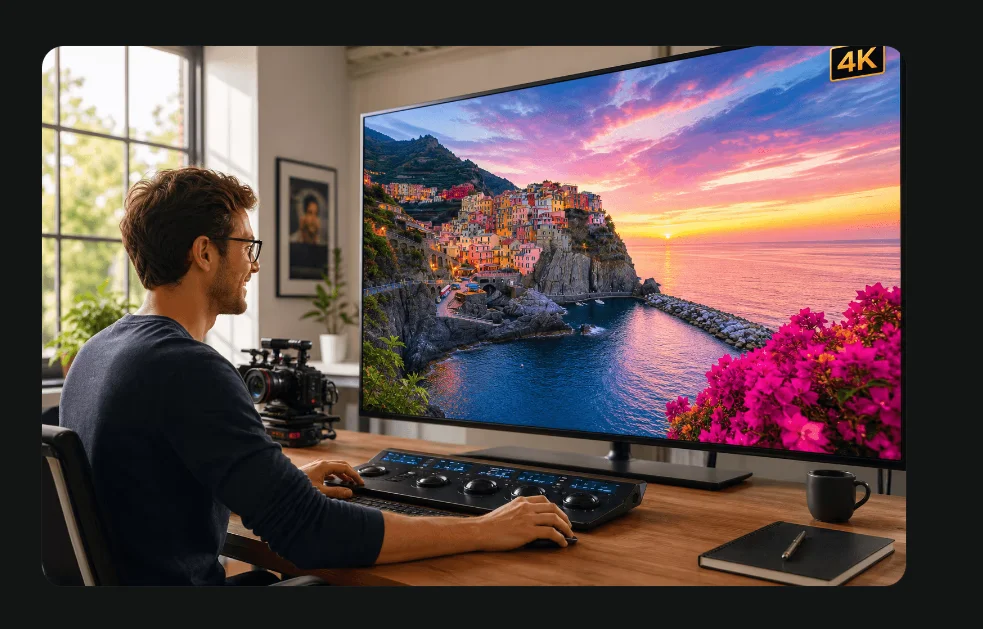
Online Publishing Is Moving From Single Pieces to Content Systems
For years, the typical digital publishing process was relatively straightforward:
Idea → Research → Writing → Editing → Images → Publishing
Today, publishing an article is often only the beginning.
A technology feature may also need a 30-second social video. A product story might require horizontal and vertical visual assets. A business report may need to be repackaged as a visual summary that is easier to distribute on social platforms.
Behind this change is an increasingly fragmented distribution environment.
Search engines, websites, newsletters, YouTube, TikTok, Instagram, and other platforms all favor different formats. Publishing teams therefore have a growing need to adapt one core story for multiple channels rather than create an entirely new piece of content for each destination.
The workflow is becoming closer to:
Idea → Research → Article/Script → Visual Assets → Video/Audio → Review → Distribution
AI is finding a place between these stages.
Its value does not necessarily come from replacing writers, editors, designers, or video producers. A more practical role is reducing some of the production work required to move a finished idea from one medium into another.
Why 30 Seconds Matters for Online Publishing
One of the practical developments associated with Seedance 2.5 is the ability to generate a continuous video of up to around 30 seconds in a single generation.
By traditional filmmaking standards, that is still a short piece of content. In digital publishing and social distribution, however, 30 seconds can carry a surprisingly complete unit of information.
A long-form article can be condensed into a short teaser. A product story can become a compact visual introduction. An educational article can turn one key concept into a brief visual explanation.
This is different from generating several unrelated short clips and stitching them together afterward.
When creators assemble multiple AI-generated clips, characters may change appearance, product details can drift, lighting may shift, and camera language can become inconsistent. Longer continuous generation does not automatically solve every continuity problem, but it can reduce the need to construct an entire sequence from disconnected fragments.
For publishing teams, that makes AI video easier to treat as a planned content format rather than simply a source of visual inserts.
Multimodal References Are Changing the Role of Prompts
Another important development is the growing role of reference material.
Real publishing teams rarely begin a video project with nothing more than a sentence.
They may already have brand imagery, product photography, character designs, previous footage, storyboards, location references, audio assets, and other approved creative materials.
When an AI video model can work with a larger collection of multimodal references, creators do not need to translate every visual requirement into an increasingly complicated text prompt.
Prompts still matter, but their role begins to change. Instead of describing everything from scratch, they can provide direction for how existing materials should be interpreted and combined.
In that sense, the workflow starts to resemble a digital creative brief.
A team can establish the central message, gather appropriate visual and audio references, plan the basic sequence, and then generate an initial version of the content.
The important point is not simply how many reference files a model can accept. What matters is whether the model has enough creative context to better understand subjects, products, environments, motion, pacing, and visual direction.
From One Article to Multiple Publishing Channels
This may be where AI video connects most directly with online publishing.
Imagine a technology publication has completed a long-form article about a new consumer product.
In the past, the team might have created a header image and shared the article link across several social platforms.
Now, the central argument of the article can also be condensed into a 20- to 30-second script. Approved product images can serve as visual references. A storyboard can establish the order of scenes, while written instructions define movement, environment, and pacing.
At the video-generation stage, a tool such as the XMK Seedance 2.5 AI Video Generator can become one part of that workflow, turning prepared references and creative direction into an initial visual draft.
But generation should not be the final step.
Review is.
Editors still need to check whether the product is represented accurately, whether the visuals support the facts in the original article, whether the audio is appropriate, and whether the model has introduced details that were not present in the source material.
After revision and post-production, the resulting video can become an extension of the original article for another distribution channel.
The same logic can be applied across publishing:
- long-form article → social video;
- educational content → visual explainer;
- product story → short-form demonstration;
- business report → visual summary;
- newsletter → social teaser;
- feature story → cross-platform promotional assets.
Seen this way, the value of AI video is not simply that it generates video. It can help an existing editorial idea travel more effectively across formats.
Audio Brings Generated Drafts Closer to Complete Content
Video publishing is not only about visuals.
Dialogue, narration, environmental sound, music, and other audio elements all influence how audiences experience a piece of content.
The broader direction of the Seedance family has been to bring audio and video more closely into the same generation process. This allows creators to think about visuals, motion, timing, and sound together earlier in production instead of treating generated footage as an entirely silent asset that must later be rebuilt in post-production.
For publishing teams, this can be particularly useful during concept development.
A more complete audiovisual draft makes it easier to judge whether a story works before deciding which parts deserve further production resources.
That does not remove the need for traditional audio work. Accurate narration, brand voice, music licensing, and professional mixing still require careful attention.
AI is better understood as helping bridge the distance between an idea and the first workable audiovisual draft.
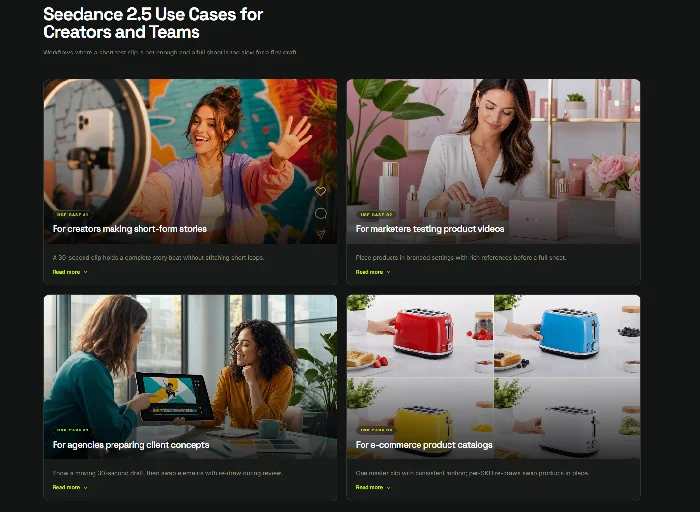
AI Video Is Moving From Demo to Workflow
Early generative video models were often judged through individual demonstrations.
Could a model generate realistic water? Could it reproduce complicated camera movement? Could a short prompt produce something cinematic?
Those capabilities still matter, but publishing introduces another standard:
Can the technology work reliably inside a production process?
For a content team, a useful generation tool needs to work with existing assets, follow creative direction, and produce material that can be reviewed, revised, and edited.
That is why a more realistic AI publishing workflow is not:
Prompt → Generate → Publish
It is:
Plan → Reference → Generate → Review → Revise → Edit → Publish
The first model emphasizes the surprise of a single generation.
The second emphasizes a controllable production process.
For publishers and brands that produce content continuously, the second is far more important.
Faster Generation Makes Editorial Judgment More Important
Lowering the barrier to video creation does not eliminate publishing risks.
In some ways, it increases them.
Publishers first need to establish whether reference images, video, audio, characters, and other materials can legally and appropriately be used.
They also need to consider whether generated material could mislead an audience.
AI can produce scenes that look convincing even when they depict something that never happened. For journalism, education, product information, and other factual content, that distinction is critical.
Synthetic footage should not be presented as documentary evidence of a real event. Generated people should not be represented as real individuals without appropriate context. If a model changes a product feature, location, or factual detail, editors need to catch the error before publication.
The faster content can be generated, the more important verification becomes.
That is why the word “assisted” remains important in AI-assisted publishing.
AI can participate in production, but decisions about accuracy, rights, editorial standards, and final publication still require human responsibility.
What Seedance 2.5 Signals for Online Publishing
The significance of Seedance 2.5 is therefore not limited to longer clips or richer reference inputs.
What matters more is the direction these capabilities suggest when considered together:
AI video is gradually moving from a standalone generation tool into the wider digital publishing workflow.
That does not mean every article needs an AI-generated video. Nor does it mean publishers should replace editors, designers, photographers, or video professionals with automated systems.
The more realistic change is that one strong idea can move between media formats more easily.
A well-researched article can remain the foundation while images, audio, short-form video, and social assets extend the same story to audiences on different channels.
In that kind of workflow, the value of AI should not be measured simply by how much content it can generate.
A better question is whether it helps a worthwhile idea move accurately and effectively into formats suited to different audiences and platforms.
As AI-assisted online publishing continues to develop, the strongest workflows may not be the most automated ones. They are more likely to be those that combine new production capabilities with human judgment and a clear editorial purpose.
From that perspective, Seedance 2.5 fits naturally into the new wave of AI-assisted online publishing—not because it replaces the publishing process, but because it makes video a more accessible part of it.