

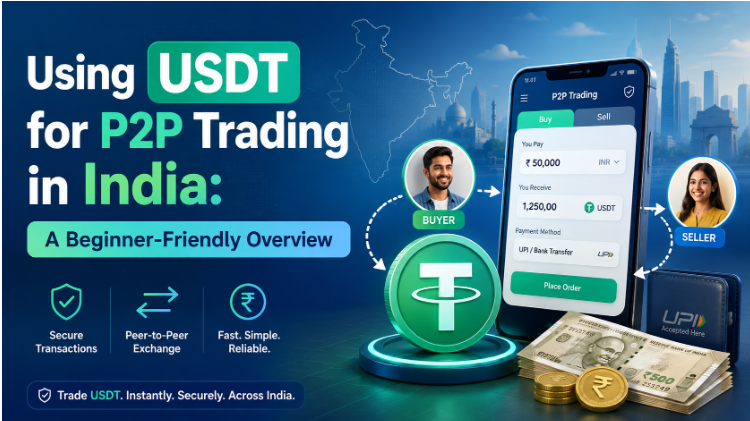
USDT has become one of the most familiar digital assets for people who want to move between cryptocurrency and traditional currency without immediately taking on the same level of price volatility associated with assets such as Bitcoin or Ethereum. For Indian users, this has made USDT an important part of the peer-to-peer trading environment.
Someone researching USDT P2P India is often trying to understand how USDT can be bought or sold using INR, why traders commonly use it, and what role it plays between different crypto transactions.
The process is not complicated once the basic concepts are understood. However, beginners should still pay attention to pricing, transaction limits, payment instructions, account security, and the difference between holding USDT and using it as part of a wider trading strategy.
Why Stablecoins Have a Distinct Place in Crypto
Stablecoins were created to serve a different purpose from highly volatile cryptocurrencies.
Bitcoin and Ethereum can rise or fall significantly in value over relatively short periods. USDT, on the other hand, is designed to maintain a value that closely tracks the US dollar.
This does not mean it is completely free from risk. Stablecoins can still be affected by market conditions, issuer-related factors, platform risks, and regulatory developments.
The main difference is that USDT is generally used as a more stable unit of value within the crypto ecosystem.
This can make it useful for people who want to move money between digital assets without converting back into traditional currency every time.
For example, someone holding Bitcoin may sell part of it into USDT and later use that balance to purchase another supported cryptocurrency.
How USDT Differs From Bitcoin and Ethereum
USDT, Bitcoin, and Ethereum may all appear inside the same crypto wallet, but they serve different purposes.
Bitcoin is often viewed as a decentralized digital asset with a fixed maximum supply. Ethereum is used both as a tradable asset and as the native currency of a blockchain network that supports smart contracts and decentralized applications.
USDT is structured around maintaining a relatively stable value linked to the US dollar.
This difference matters in P2P trading.
Someone buying Bitcoin may be doing so because they expect long-term value growth or want exposure to its market movements. A person purchasing Ethereum may be interested in both price exposure and blockchain applications.
Someone buying USDT may simply want a stable digital balance that can later be transferred, held, swapped, or sold.
Understanding these different purposes helps users choose the asset that best fits their needs.
Why P2P Users Often Trade Through Stablecoins
Stablecoins can be useful in peer-to-peer marketplaces because they provide a relatively familiar unit of value.
When users trade highly volatile assets directly, prices can move quickly. USDT can make the transaction easier to understand because its value is designed to remain closer to one US dollar.
This can be useful for both buyers and sellers.
A buyer may want to acquire USDT with INR and then use it to purchase another cryptocurrency. A seller may have previously converted a volatile asset into USDT and now want to receive INR.
This flexibility is one reason USDT frequently appears in P2P marketplaces.
It can function as a bridge between local currency and a broader range of digital assets.
The Journey From INR to USDT
A user who wants to buy USDT in India through a P2P marketplace typically begins by reviewing available seller offers.
Each offer may include information such as:
- USDT price in INR
- Available quantity
- Minimum order amount
- Maximum order amount
- Accepted payment method
- Seller conditions
- Time allowed for payment
The buyer should compare several listings before selecting one.
Once an order is created, the platform provides payment instructions. The buyer then sends the agreed INR amount using the supported payment method.
After the seller confirms that the money has been received, the USDT is released according to the platform process.
The exact steps may vary between platforms, so users should always follow the instructions shown within the active order.
Why Rates Can Differ Between P2P Offers
A common question from beginners is why different sellers offer USDT at different INR prices.
The answer is that P2P markets are driven by individual participants.
Each seller can set a price based on market demand, available inventory, transaction size, payment preferences, and personal trading strategy.
One seller may offer a competitive rate for larger transactions. Another may accept smaller orders but quote a slightly different price.
Liquidity also matters.
When many buyers and sellers are active, users may have more offers to compare. When fewer participants are available, prices and limits may vary more noticeably.
The best offer is therefore not always the one with the lowest displayed price.
Users should review the complete terms before making a decision.
What Happens to USDT After a Purchase
Once USDT is purchased, the user has several possible options depending on the platform and personal goals.
The asset may be held in a wallet, transferred to another wallet, swapped for another supported cryptocurrency, or later sold back into INR.
For someone new to crypto, holding USDT can provide time to understand how digital asset wallets and transactions work without immediately making another trade.
More experienced users may use USDT as an intermediate asset.
For example, a trader may buy USDT with INR and later swap part of that balance into Bitcoin or Ethereum when they decide to change their portfolio.
This can reduce the need to move in and out of INR for every crypto transaction.
Using Wallet Transfers and Crypto Swaps
Wallet functionality becomes important once users start managing more than one digital asset.
If a user wants to withdraw USDT to another wallet, the destination address and network must be checked carefully.
Crypto transfers can be difficult or impossible to reverse once confirmed. Sending funds to the wrong address or selecting an incompatible network can result in a loss.
Users should therefore double-check every transfer detail before proceeding.
Swaps should also be reviewed carefully.
A person holding USDT may want to exchange it for Bitcoin, Ethereum, SOL, or another supported asset.
Before confirming a swap, users should review the estimated conversion rate, fees, and final amount they expect to receive.
Convenience is useful, but it should always be supported by careful verification.
How Platform Features Can Simplify USDT Management
Using several unrelated services for every crypto activity can make digital asset management more complicated.
A user may otherwise need one service for P2P trading, another for wallet storage, and a third for swapping assets.
Platforms that combine several features can provide a more organized experience.
For example, CoinYatra.com allows users to manage supported digital assets through wallet functions, deposits, withdrawals, swaps, and P2P crypto trading. The platform is designed primarily for Indian users and supports assets such as USDT, Bitcoin, Ethereum, SOL, and other supported cryptocurrencies.
It also includes KYC verification and 2-Factor Authentication as part of its account security features.
Users should still review applicable fees, transaction limits, platform terms, and withdrawal requirements before using any service.
Converting USDT Back When Rupees Are Needed
USDT can also provide a convenient route back into INR.
A user who wants to sell USDT may review available P2P buyers and compare offers based on rate, order limits, payment methods, and transaction conditions.
Once the buyer sends INR, the seller should verify the payment directly through the receiving account.
This step is essential.
A screenshot, payment message, or claim from the buyer should not be treated as final proof.
Before releasing USDT, the seller should confirm:
- The correct INR amount was received
- The payment matches the active order
- The transaction appears in the receiving account
- No important payment information is inconsistent
Only after this verification should the crypto be released according to the platform process.
Developing Responsible Habits Around Stablecoin Trading
USDT may be more stable than many other cryptocurrencies, but responsible trading habits are still important.
Users should avoid treating stablecoins as completely risk-free. They should also understand that P2P transactions involve operational responsibilities such as payment verification, account security, and transaction record keeping.
Good habits include using strong passwords, enabling 2-Factor Authentication, avoiding suspicious links, and keeping important transaction records.
Users should also avoid sharing passwords, authentication codes, or wallet recovery information with another person.
When a trade is active, users should follow the platform process rather than relying on private arrangements outside the official system.
Making USDT P2P Trading Easier to Understand
USDT plays a distinct role in the crypto market because it combines digital asset functionality with a value designed to remain relatively close to the US dollar.
For Indian users, this can make it useful when moving between INR and other cryptocurrencies.
Someone may buy USDT in India, hold it temporarily, transfer it, swap it into another asset, or later sell it back into rupees. P2P marketplaces provide one way to complete these transactions by connecting buyers and sellers directly.
The important part is understanding what each stage involves.
Users should compare offers carefully, review transaction limits, confirm payment instructions, protect account credentials, and verify incoming INR before releasing crypto.
USDT P2P India trading can be easier to manage when users focus on the complete transaction rather than only the displayed price.
For beginners, the goal should be to understand how stablecoins fit into the wider crypto ecosystem and how P2P marketplaces function. With better knowledge of pricing, wallets, security, and settlement, users can approach USDT transactions with more confidence and greater control over their digital asset activity.