

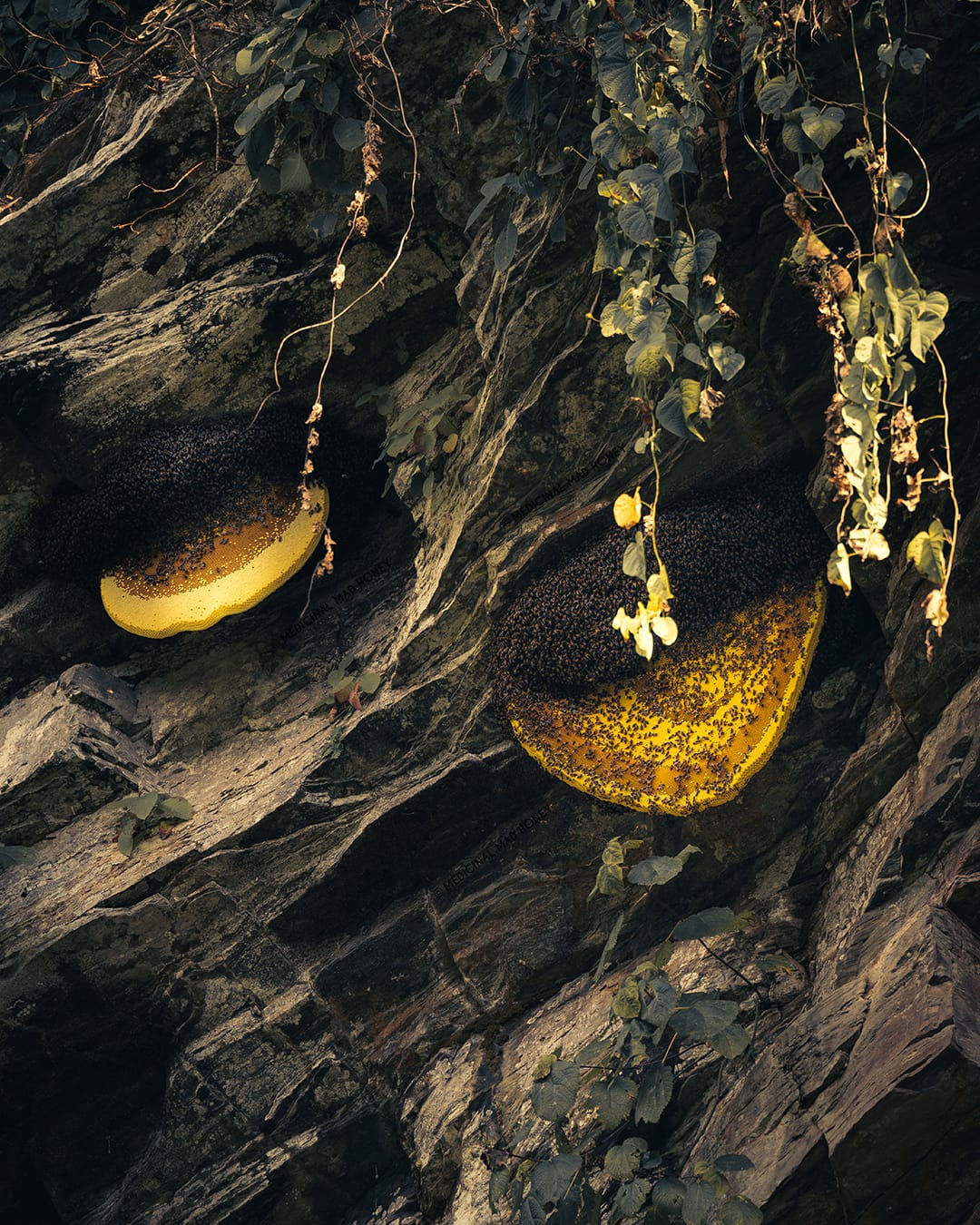
Honey harvesting is an ancient and daring tradition thriving as a way of life for years in the Nepalese Himalayas. Specific tribe living here, known as Gurungs, are indigenous mountain people who have known it all, the tools and techniques that ensure the successful harvesting of rare mad honey.
Mad honey is known by the name of “khudo” in this community. The ritual of honey hunting is more than just a livelihood for them; it is a sacred expression of the Gurung community’s harmony with the wild and their enduring connection to the Himalayan landscape. Their method, passed down through generations, combines courage, teamwork, and deep respect for nature.
The Gurung Tribe
The rugged Himalayan foothills in Nepal, where most of us can’t imagine there’s possibility for humans to live, there lives a Gurung tribe. This indigenous community has lived here for centuries and have a deep connection with the surrounding nature.
In this process, they have discovered, harvested, tasted and found multiple uses of mad honey. They were the first to bring it down from the hives situated hundreds of feets above the ground. The tradition once developed was passed down from fathers to sons, and is still on practice.
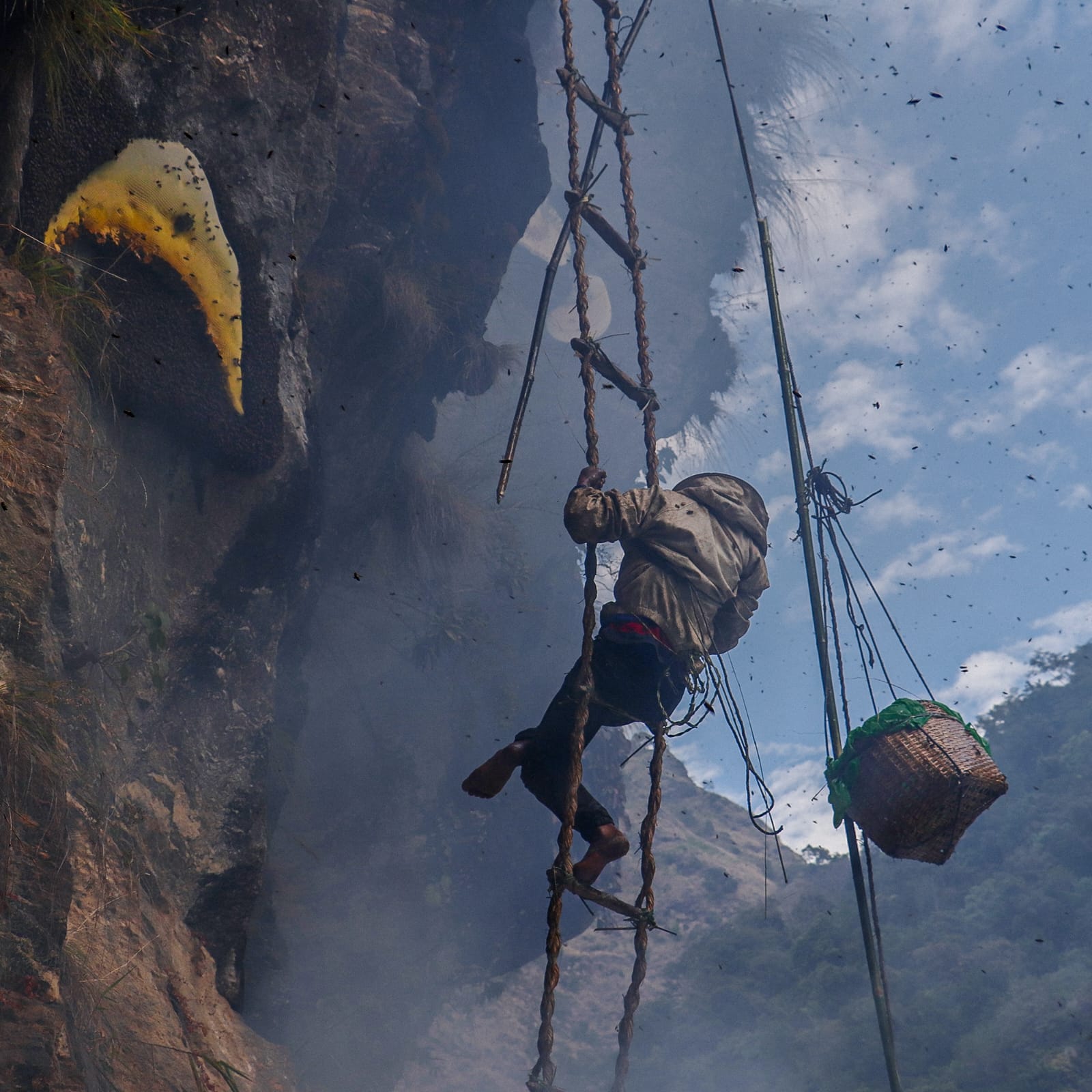
As of now, the tribe that once depended on farming, animal herding, and foraging for existence, now turns to honey hunting as both a means of sustenance. For Gurungs, honey hunting symbolizes courage, unity, and respect for the spirits of the mountains. The cultural legacy still has a long way to go as it passes to the coming generations.
What Makes Mad Honey Special
The honey produced by the tribe of Gurung is unlike any other in the world. Produced by the Himalayan giant bees (Apis laboriosa), it is known as mad honey and made by the bees collecting nectar in the blossoms of wild Rhododendron flowers growing in high-altitude forests. These flowers have natural substances referred to as grayanotoxins, which make the honey have its unique psychoactive and medicinal traits.
Mad honey, when used in small doses, has a long history of application in traditional medicine to relieve pain, increase blood flow, and to treat intestinal issues. But it may, in greater amounts, produce the feeling of being lightheaded or dizzy- this is why it has this very interesting name. Its uncommonness, as well as its specific physiological action, the daring taste, makes it one of the most desirable and expensive kinds of honey in the world.
Traditional Hunting Technique
Gurungs harvest mad honey nepal twice a year, and these are normally in the spring and fall seasons when the Rhododendron forests are in blossom. Before the hunting, the villagers carry out religious rituals whereby they pray and offer sacrifices to the forest gods to ensure that they are safe and successful on the hunt.
The eldest and most accomplished hunter normally leads the honey hunters and direct them in the manufacturing of the needed equipment such as long bamboo ladders and ropes by hand. The ropes are anchored to the cliffs in the beginning, on which the giant bee hives are built. As the hives are hundreds of meters up in the air, the hunters have to bear the risk of swarm, and the only defense mechanism they apply is burning grasses that can repel these bees.
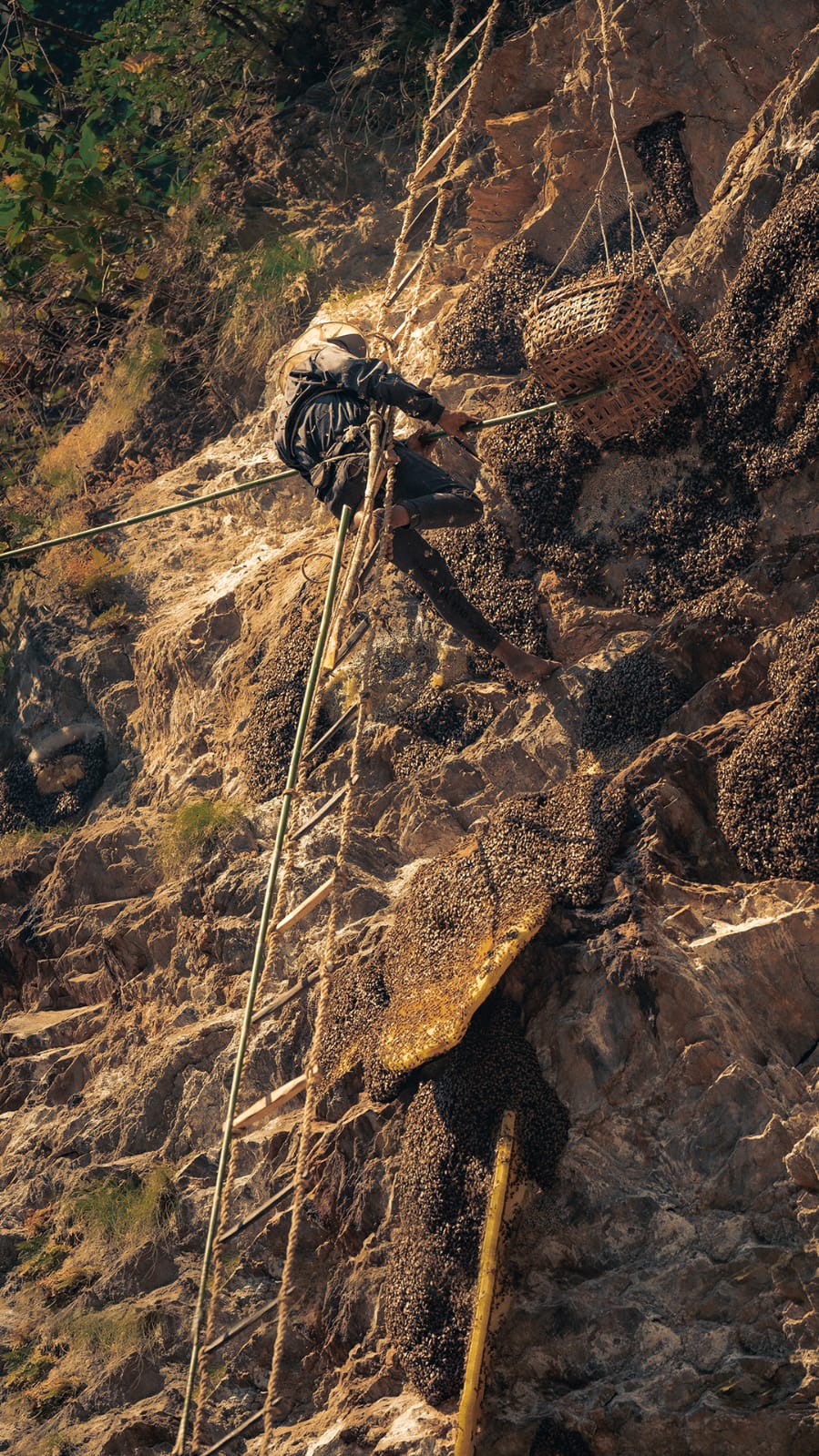
The men in the lower station then lower the combs in baskets. All the movements should be sharp- no mistakes are tolerated on such hazardous cliffs. The instruments are rudimentary and primitive, but the art needed is remarkable, and decades of practice and courage have been molded in them.
Risk, Teamwork and Precision
Honey hunting among the Gurungs is as dangerous as it is awe-inspiring. The cliffs are steep and slippery, and the bees’ aggressive defense makes the harvest both physically and mentally demanding. The operation must be perfectly coordinated- every team member is significant in making the operation safe and successful.
Climbers are depending on people controlling the baskets and ropes on the ground and a single error can cost them their lives. Such a degree of risk requires unbelievable trust, collaboration and discipline. The honey hunters get celebrated in their communities for what they do; for their skill as well as courage. Their work reflects the spirit of resilience, harmony, and admiration for the balance of nature.
A Support for Rural Livelihoods and Tourism
Mad honey is also a good source of income to Gurung communities besides having a cultural meaning. Sold in local markets, the honey is also being exported in larger amounts to satisfy the rising demand internationally as a rare and medicinal product.
In recent years, documentaries and eco-tourism have brought attention to the Gurung honey hunters, turning their ancient craft into a symbol of cultural resilience and natural wonder. This is however changing with the modernization, deforestation and decreasing population of the bees posing a growing concern for the sustainability.
Today, most of the Gurung communities strive to strike a balance between tradition and conservation so that, honey hunting can be done without damaging the delicate mountain ecosystem. This age old tradition is not only a means of earning a living for the Gurungs, but also a living record of their ancestors- a record of human endurance and the unchanging relationship between man and nature.