

Anyone who has waited on a sun-baked tarmac, hiked a humid trail, or squeezed into a crowded transit car knows the misery of trapped heat with no relief in sight. Traditional solutions — handheld fans, bulky portable coolers, or simply sweating it out — all fall short when you’re on the move and need your hands free. That’s where the neck fan steps in as a genuine game-changer, wrapping around your neck to deliver a continuous, personal breeze without demanding a single hand to operate it.
The problem is that the market is flooded with options that overpromise and underdeliver. Many run loud enough to disrupt a conversation, drain their batteries within an hour, or come with rigid frames that crack after a few trips. Finding the best rechargeable neck fan means cutting through that noise — literally and figuratively. This guide is built specifically for travelers and on-the-go users who need a fan that is genuinely quiet, reliably long-lasting, and compact enough to slip into any bag. We’ll walk through the essential features to prioritize, a clear selection process, and practical maintenance advice so your investment stays cool for the long haul.
Why a Rechargeable Neck Fan is a Traveler’s Essential
Traditional cooling methods simply weren’t designed with mobility in mind. Handheld fans monopolize a hand you’d rather use for a map, a coffee, or a luggage handle. Portable air conditioners are a logistical joke for anyone working with carry-on limits. Even a simple paper fan becomes a sweaty, crumpled mess after twenty minutes on a humid city street. For travelers, the gap between needing to stay cool and having a practical way to do it has always been frustratingly wide.
The rechargeable neck fan closes that gap in a way no previous solution has managed. By resting across your shoulders and directing airflow upward toward your face and neck — the areas where cooling makes the most immediate physiological difference — it delivers personal climate control without asking anything of your hands. That matters enormously when you’re navigating a busy airport, shooting photos on a trail, or sitting through a long outdoor event. Your hands stay free, your focus stays on what you’re doing, and the fan quietly handles the rest.
From a packing perspective, modern neck fans fold flat or collapse into a compact form that slides easily into a daypack side pocket or a personal item bag. They weigh a fraction of what a traditional portable fan does, and because they charge via USB, they integrate seamlessly into the same power ecosystem as your phone and earbuds. For anyone serious about traveling light without sacrificing comfort, finding the best rechargeable neck fan isn’t a luxury decision — it’s a practical one that directly improves the quality of every warm-weather journey.
Key Features of the Best Rechargeable Neck Fans
Prioritizing Quiet Performance for Comfort
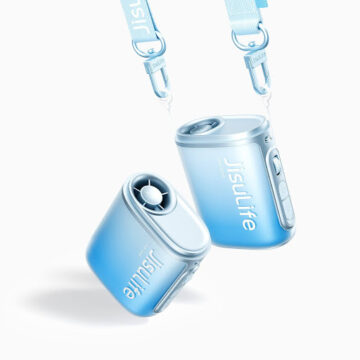
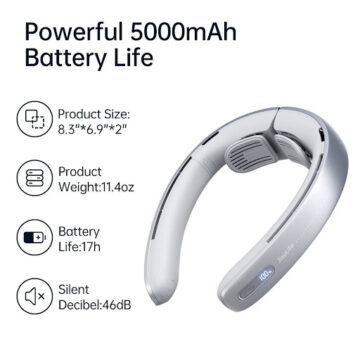
Noise level is the feature most buyers regret not researching before purchasing. For practical reference, a fan operating at or below 40 decibels sits roughly at the level of a quiet library — present but unobtrusive. Anything above 50 dB starts competing with normal conversation, which becomes a real problem on a plane, in a hotel room, or during a video call. The best rechargeable neck fans achieve low noise through two engineering choices: brushless motors and aerodynamically optimized blade geometry. Brushless motors eliminate the friction and electrical interference that makes cheaper motors whine, while wider, curved blades move more air per rotation without spinning at aggressively high speeds. Brands like JisuLife have built their portable fan lineup around this brushless motor approach, which is why their models consistently appear in conversations about quiet operation. When evaluating any model, look specifically for decibel ratings listed per speed setting — a fan that’s quiet on low but roars on high offers far less real-world value than one that maintains consistent, subdued operation across all modes.
Ensuring Long Battery Life and Efficient Charging
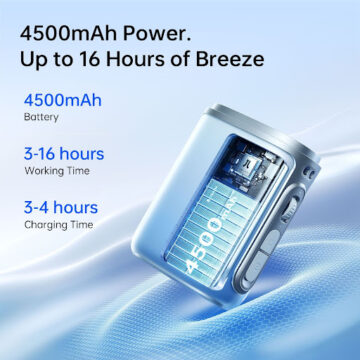
Battery capacity, measured in milliamp-hours (mAh), determines how long your fan runs between charges. For travelers, a minimum of 4,000 mAh is a reasonable baseline, with premium models offering 6,000 mAh or more — enough to sustain eight or more hours of continuous use on a moderate setting. That said, advertised runtime is almost always measured at the lowest speed, so factor in a realistic reduction of 30 to 40 percent if you plan to run the fan on medium or high. Charging technology matters just as much as capacity. USB-C charging has become the standard worth insisting on, since it allows you to use the same cable as your phone and top up from a power bank during a layover. A full charge in under three hours is a reasonable benchmark for a quality model.
Evaluating Design: Portability and Hands-Free Comfort
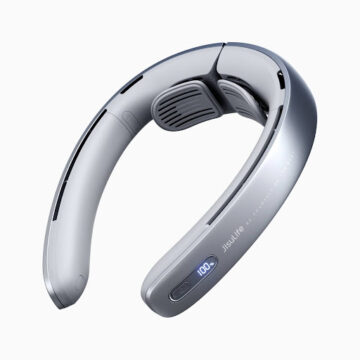
A neck fan that’s uncomfortable to wear quickly becomes a fan you leave at home. The best designs keep total weight under 200 grams — light enough that you stop noticing it after a few minutes. Foldable and collapsible frames are essential for travel, allowing the fan to compress into a flat profile that fits in a jacket pocket or the mesh side pocket of a daypack. Beyond packability, the neckband itself deserves scrutiny. Adjustable, flexible bands accommodate different neck sizes and postures, while silicone or soft-touch coatings prevent the irritation that rigid plastic causes during extended wear. Look for models that position the fan heads at adjustable angles, since the ability to direct airflow precisely toward your face — rather than just generally upward — makes a measurable difference in how effectively the fan actually cools you.
Step-by-Step Guide to Choosing Your Perfect Neck Fan
Step 1: Assess Your Primary Use Case
Before comparing any specifications, get honest about where and how you’ll actually use the fan. A traveler who primarily needs it for long-haul flights and hotel rooms should weight noise suppression above everything else — a fan that hums audibly at 45 dB will irritate fellow passengers and undermine your own sleep. By contrast, someone using it for hiking or outdoor festivals can tolerate slightly more sound in exchange for stronger airflow on higher settings. Commuters who alternate between crowded trains and open streets need a balance of both. Defining your primary context first prevents the common mistake of buying a high-powered fan optimized for outdoor use and then being frustrated by how loud it is in quieter environments.
Step 2: Compare Specifications Side-by-Side
Once your use case is clear, run every candidate model through the same checklist before making a decision. Noise level should sit below 45 dB across all speed settings, not just the lowest. Battery capacity should meet or exceed 4,000 mAh, with runtime verified against medium-speed usage rather than the manufacturer’s best-case figure. Charging time should come in under three hours via USB-C, confirming power bank compatibility for travel days when wall outlets aren’t available. Weight should stay under 200 grams, and the frame should fold or collapse for compact storage. Checking these five criteria — noise, capacity, charge speed, connector type, and packed size — against every shortlisted model gives you an objective basis for comparison rather than relying on marketing language.
Step 3: Read Reviews for Real-World Insights
Specifications tell you what a manufacturer claims; reviews tell you what owners actually experience. When scanning customer feedback, filter specifically for comments about noise at medium and high speeds, since that’s where cheaper models reveal themselves. Look for mentions of battery accuracy — reviewers who timed actual runtime against advertised figures are particularly valuable. Pay attention to comfort comments from users who wore the fan for three or more consecutive hours, since pressure points and skin irritation rarely show up in short tests. Finally, search for durability notes around the hinge and neckband after two to three months of use, as these are the structural points most likely to fail on lower-quality models.
Top Models Compared: Balancing Power and Silence
No single neck fan wins across every category, which is why understanding the three dominant types helps you match the right tool to your actual needs rather than chasing a universal “best.” The ultra-quiet focused category prioritizes brushless motor refinement above all else, delivering operation that stays consistently below 35 dB even on medium settings. These models are the right call for frequent flyers and light sleepers — the trade-off is typically a modest reduction in maximum airflow, which matters less in climate-controlled environments than it does outdoors. Their pros include near-silent operation and minimal vibration; their main con is that the airflow ceiling won’t satisfy users who need aggressive cooling in direct sun.
Maximum battery life models take a different approach, housing larger battery cells — often 6,000 mAh or above — to sustain eight-plus hours of continuous use. These are the workhorses for full-day outdoor events, long hiking days, or back-to-back travel connections where charging access is unreliable. The drawback is weight: the larger cell adds noticeable mass that some wearers feel after several hours. Lightweight champion models, meanwhile, strip everything back to the essentials — sub-150-gram frames, collapsible profiles, and streamlined feature sets — making them the natural choice for minimalist packers and ultralight travelers. They sacrifice some battery depth for packability, but for trips measured in hours rather than full days, that compromise rarely matters. Knowing which category aligns with your travel style makes the final decision straightforward.
Maintenance and Safety Tips for Your Neck Fan
A quality neck fan is an investment worth protecting. For cleaning, wipe the fan housing and neckband weekly with a slightly damp microfiber cloth, paying particular attention to the intake vents where dust and skin oils accumulate — blocked vents force the motor to work harder, shortening its lifespan. Never submerge the unit or spray liquid directly onto it, and let it dry completely before charging or storing.
Battery care has an outsized impact on long-term performance. Avoid running the battery down to zero regularly; lithium cells degrade faster when repeatedly fully discharged. Charging to around 80 percent for everyday use — and only topping to 100 percent before a long travel day — meaningfully extends overall battery health. Always use the original cable or a certified USB-C alternative, since underpowered third-party chargers can cause inconsistent charging cycles over time.
For storage, fold the fan into its collapsed position and keep it in a protective pouch rather than loose in a bag where the hinge and blade housing absorb unnecessary impacts. On the safety side, avoid wearing the fan while sleeping unsupervised, and keep it away from water exposure beyond light perspiration. If the motor starts producing unusual sounds or the housing feels warm during use, discontinue use and inspect for damage before running it again.
Choosing the Right Neck Fan for Your Travel Style
Finding the best rechargeable neck fan comes down to four factors that should drive every purchasing decision: quiet performance, battery life, portability, and wearable comfort. A fan that hums at library-level decibels transforms long flights and hotel nights from sweaty ordeals into genuinely restful experiences. One with a robust battery capacity keeps you cool through a full day of sightseeing or hiking without a single anxious glance at the charge indicator. A collapsible, sub-200-gram design means it earns its place in your bag without argument, and a flexible, skin-friendly neckband ensures you’ll actually wear it rather than tucking it away after the first uncomfortable hour.
The right choice isn’t the fan with the most impressive spec sheet — it’s the one that fits how you actually travel. A frequent flyer has different priorities than a weekend hiker, and a daily commuter needs something different still. The framework in this guide gives you the tools to match a fan’s strengths to your specific lifestyle rather than guessing based on marketing claims. Use the step-by-step selection process, cross-reference real user reviews, and let your primary use case anchor every trade-off you make. Do that, and your next warm-weather journey won’t just be manageable — it’ll be genuinely comfortable from start to finish.