

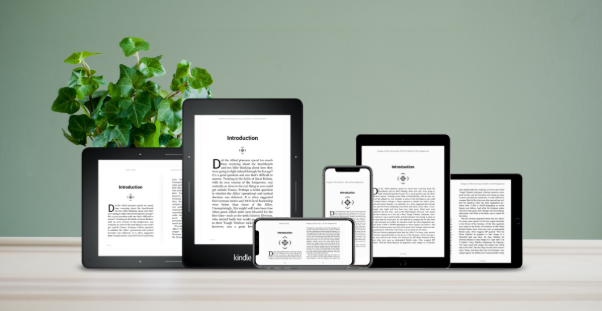
Welcome to MayFair Publishers! Your dedication for writing your book becomes evident to us. You desire to spread this creation across the global population. The transformation of your manuscript into a professional ebook format for Kindle alongside other platforms requires specific steps. To format your ebook into a professional form you only need some basic steps that will lead you to success. This complete direction will explain every step through user-friendly explanations.
Why Proper Formatting Matters
We need to discuss the rationale before reviewing the actual procedures. A professional reading experience depends heavily on proper book formatting. You cannot enjoy a book when its contents display irregular font styles together with destroyed pictures and interrupted section divisions. It’s frustrating, right? Every reader desires a professional ebook presentation regardless of publication method. Ebooks that are properly formatted appear both attractive to readers and improve their reading experience.
Step 1: Start With A Clean Manuscript
Your first step requires a manuscript without any extraneous marks. This means:
- Eliminate any additional spaces and proper tabulation in the document.
- The document should maintain uniform headings that integrate with subheadings.
- Users should verify that the content contains no spelling mistakes together with grammar issues.
- A simple font among Times New Roman or Arial should be your choice.
A properly structured manuscript serves as the base for creating a properly arranged ebook.
Step 2: Choose Your Formatting Tool
You can use various applications to complete your ebook format. The following list presents several well-known options which you can use:
- Microsoft Word: A common and accessible option.
- Google Docs: A free, cloud-based alternative.
- Calibre: A free, open-source ebook management tool.
- Vellum (Mac Only) functions as a paid tool which earns praise for its sophisticated design features.
- Amazon offers Kindle Create free of charge as a solution to format Kindle books.
This piece will emphasize Microsoft Word and Google Docs since they represent the most straightforward selection for formatting your ebook.
Step 3: Structure Your Ebook
Book readers can easily find their way through your ebook thanks to proper organization. Your ebook needs this structure for successful organization:
- Title Page: Include the book title, author name, and publisher (if applicable).
- Copyright Page: Include copyright information and legal disclaimers.
- Table of Contents: Create a clickable table of contents for easy navigation.
- Body Text: The main content of your book.
End Matter includes acknowledgments together with about the author section as well as any other needed information.
Step 4: Format Your Text
The next operation focuses on text formatting.
To format your ebook correctly there are several crucial points to follow:
- The built-in styles in Word and Google Docs serve to create headings and body text formatting styles.
- Your ebook maintains uniformity because of this formatting practice.
- The body text will benefit from using paragraph spacing instead of introducing additional line breaks between paragraphs. Indent the first line of each paragraph.
- Font and Size: Choose a readable font and size. Using an excessive number of different fonts in your document should be avoided.
Left alignment should be used for text to improve readability while reading digitally.
Step 5: Add Images (Optional)
All images you include should fulfill the following requirements:
- Images in your ebook should maintain high resolution clarity together with proper scaling to image dimensions.
- Ebook images must be scaled to match the ebook dimensions.
- Images need to appear inside the text body rather than standing as individual document attachments.
Step 6: Create A Table Of Content
A clickable table of contents functions as a necessary tool for users to navigate through ebooks. Here’s how to create one:
- All chapter headings should receive proper heading formatting in the document.
- You should integrate the table of contents feature which Google Docs or Word provides during this process.
- All links within the table of contents should be checked for correct functionality.
Step 7: Convert to Ebook Format
You must convert your ebook after the formatting process into the suitable digital file type.
- There are three main file formats which include EPUB, MOBI, and AZW3.
- The EPUB file format remains the standard ebook format which most platforms including Apple Books, Kobo and Google Play Books accept.
- MOBI/AZW3: Amazon’s proprietary formats for Kindle.
To transform your Word or Google Docs document into EPUB format you should use Calibre software or any available online conversion service. The Kindle Create application and Amazon’s Kindle Direct Publishing platform serve as the tools to use for generating Kindle content.
Step 8: Preview Your Ebook
A preview of your ebook needs to be displayed on different equipment types and operating system platforms when you are ready to release it. A preview makes it possible to detect any formatting problems.
- Amazon provides authors with Kindle Previewer as their program for viewing Kindle ebook versions.
- Ebook Readers: Preview your EPUB on different ebook reader apps.
- The appearance of your ebook must be inspected on mobile phones alongside tablet devices.
Step 9: Upload and Publish
The next step leads you to publish your ebook. Here are the steps:
- You need to establish an account on Amazon KDP together with Apple Books and Kobo and Google Play Books platforms.
- Upload the Ebook file by adding your EPUB or MOBI/AZW3 file.
- Students must fill in book metadata including title, author name, a description and relevant keywords during this step.
- The pricing strategy requires selecting an exact monetary value for your ebook.
Through the publish button you can activate your ebook until it becomes accessible to readers.
Tips for Success
- The formatting should remain straightforward to avoid complicated complexities.
- Establish consistent formatting which should extend across your entire ebook content.
- Each mistake in your book will make it lose its professional appearance so proofread your content rigorously.
- The ebook design should undergo testing on various devices to ensure its optimal display.
- Novelists should remain informed about ebook formatting standards because these tools and conventions continue to evolve.
The process of formatting your ebook for Kindle and other platforms should not create intimidation among you. A professional-looking ebook becomes possible through proper steps while making use of appropriate tools for creation. A well-formatted book represents an investment that leads to publication success. Happy publishing!