

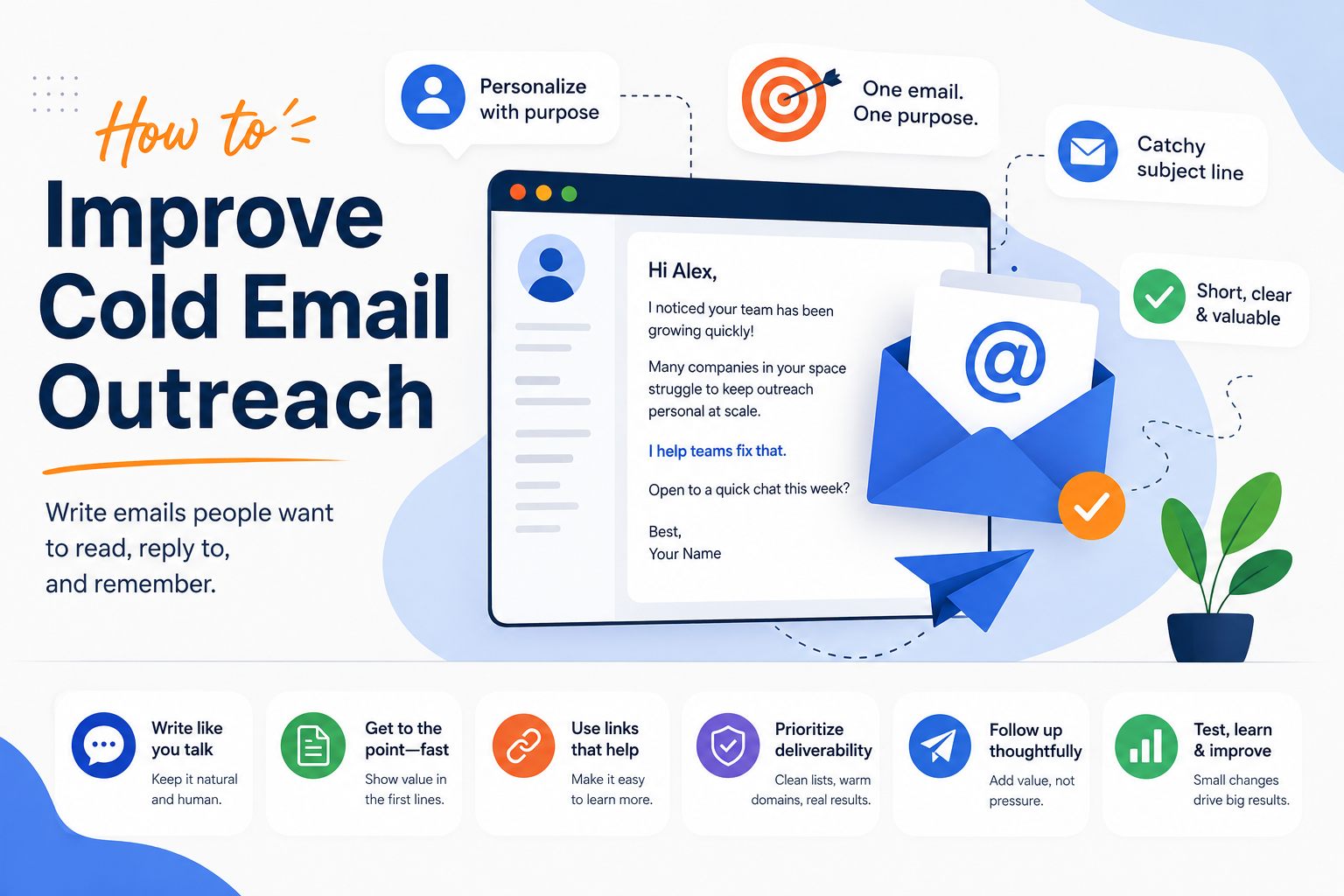
Let’s be honest—most cold emails are easy to ignore. They feel rushed, generic, or like they were sent to thousands of people without a second thought. We’ve all deleted emails like that within seconds. But here’s the thing: cold email outreach still works when it feels human, relevant, and worth the reader’s time.
The difference between a cold email outreach that gets deleted and one that gets a reply usually isn’t luck. It’s intention. Let’s walk through how to make your outreach feel less like spam and more like the start of a real conversation.
Change How You Think About Email Outreach
Before you worry about subject lines or templates, pause and think about mindset. Email outreach isn’t about volume—it’s about connection. Sending 10 thoughtful emails can outperform sending 1,000 careless ones.
Put yourself in the reader’s shoes. They’re busy. Their inbox is crowded. If your email doesn’t quickly answer “Why should I care?”, it’s gone. Writing with empathy immediately puts you ahead of the competition.
One Email, One Purpose
A common mistake in cold email outreach is trying to squeeze everything into one message. Product features, company background, pricing, demos—it’s too much.
Instead, decide on one clear goal. Just one.
Maybe you want them to reply. Maybe you want to book a short call. Maybe you want them to check out a useful resource. Whatever it is, make that goal obvious and easy to act on. Simplicity builds confidence and reduces friction.
Real Personalization Beats Fancy Tools
Personalization doesn’t mean using someone’s first name and calling it a day. People can spot shallow personalization instantly—and it often backfires.
Real personalization shows you did a little homework. Mention their role. Reference their industry. Acknowledge a challenge their business likely faces. Even one thoughtful line can make your email feel intentional instead of automated.
For example, saying:
“I noticed your team has been expanding, which often makes outreach harder to scale.”
That single sentence shows awareness—and awareness builds trust.
Write Like You Talk
If your email sounds like a corporate memo, it’s going to feel cold. The best cold emails sound like they were written by a real person, not a marketing department.
Short sentences help. So does conversational language. Don’t be afraid to use contractions or ask a simple question. You’re not trying to impress anyone—you’re trying to connect.
Think less “formal presentation” and more “professional conversation.”
Your Subject Line Is the Front Door
No open means no opportunity. That’s why subject lines matter more than almost anything else.
Strong subject lines are short, honest, and curiosity-driven—without being clickbait. Avoid exaggerated promises or salesy buzzwords. Those often hurt both open rates and deliverability.
Good examples feel natural:
– “Quick question about your outreach”
– “Thought this might be useful”
– “Idea to improve reply rates”
If it looks like something a real person would send, it’s more likely to get opened.
Get to the Point—Fast
The first few lines of your email should do some heavy lifting. This is where you show relevance and value.
You don’t need to explain everything. Just acknowledge a problem or goal your reader can relate to, then hint at how you can help. If they feel understood, they’ll keep reading.
Remember: you’re not closing a deal in the first email. You’re opening a door.
Keep It Short and Easy to Read
Long emails don’t get read—they get skimmed or skipped. Respect your reader’s time by keeping things concise and scannable.
Use short paragraphs. Avoid jargon. Cut anything that doesn’t directly support your goal. If your email feels easy to read, it feels easy to reply to.
Less effort for the reader usually means better results for you.
Links Should Feel Helpful, Not Pushy
When it comes to links, less is more. One relevant link is usually enough—and only if it genuinely adds value.
For example, if you’re talking about improving outreach systems or automating follow-ups, it makes sense to reference a focused solution. In that case, you might naturally point readers toward a resource like email outreach tools that are designed to improve targeting and engagement.
The key is intent. The link should feel like an option, not an obligation.
Don’t Ignore Deliverability
Even the best-written email won’t matter if it never reaches the inbox. Deliverability is the quiet foundation of successful cold email outreach
Make sure you’re using clean email lists, warmed-up domains, and reasonable sending volumes. Avoid spam-triggering language, excessive punctuation, and misleading subject lines. Small technical details can make a big difference in results.
Follow Up Without Being Annoying
Most people won’t reply to the first email—and that’s normal. Follow-ups are where many conversations actually start.
The trick is to follow up with purpose, not pressure. Don’t guilt the reader or sound frustrated. Instead, add a little value or reframe your original message.
A friendly follow-up that respects timing can turn silence into a response.
Test What Works for Your Audience
Cold outreach isn’t static. What works for one audience—or one quarter—might not work forever. Track your open rates, replies, and conversions. Test different subject lines, openings, and calls to action.
You don’t need dramatic changes. Small improvements compound quickly when you send emails consistently.
Think Long-Term, Not Just Leads
At the end of the day, effective email outreach is about relationships. Even if someone doesn’t respond right away, a thoughtful email can leave a positive impression. That impression might matter later.
When your outreach feels respectful, relevant, and human, it stops feeling like spam—and starts feeling like an opportunity.
Final Thoughts
Improving cold email outreach isn’t about tricks or shortcuts. It’s about writing with clarity, empathy, and intention. Focus on helping before selling, listening before pushing, and connecting before converting.