

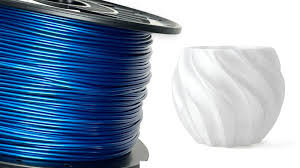
In engineering applications where functional parts must withstand real-world forces, material selection can make or break a project. Whether you’re producing load-bearing prototypes, chemical-resistant enclosures, or impact-tolerant tooling, the filament you choose directly determines part longevity and performance. PETG filament has emerged as a leading choice among engineers who demand mechanical strength without sacrificing printability. Its unique balance of toughness, flexibility, and environmental resistance makes it suitable for applications where PLA falls short and ABS proves too temperamental.
However, ordering 3D printing materials online introduces its own set of challenges. Without the ability to physically inspect a spool, engineers must rely on specifications, supplier reputation, and community feedback to ensure they’re getting material that performs consistently under stress. A poorly manufactured filament can lead to layer adhesion failures, dimensional inaccuracies, and ultimately compromised part integrity. This guide walks you through the entire process of selecting and ordering PETG filament online, ensuring every spool you receive delivers the maximum mechanical strength your projects demand.
Understanding PETG Filament and Its Key Mechanical Properties
PETG filament is a glycol-modified version of polyethylene terephthalate, the same base polymer found in everyday plastic bottles. The glycol modification reduces crystallization during cooling, which prevents the material from becoming brittle and improves its optical clarity. This molecular adjustment gives PETG filament a distinct advantage in 3D printing: it combines the ease of processing found in PLA with much of the mechanical strength associated with engineering-grade thermoplastics.
From a mechanical standpoint, PETG delivers tensile strength typically ranging between 50 and 55 MPa, placing it well above PLA in real-world load scenarios where sustained force is applied. Its elongation at break—often exceeding 20%—means parts flex rather than snap under sudden impact, a critical property for functional components subjected to vibration or shock. Chemical durability further distinguishes PETG from competitors; it resists degradation from oils, greases, and many common solvents that would compromise PLA or even some ABS formulations over time.
Compared to PLA, PETG offers dramatically better impact resistance and thermal stability, with a glass transition temperature around 80°C versus PLA’s 55-60°C. Against ABS, PETG provides comparable durability in 3D printing without the warping tendencies, toxic fumes, or need for enclosed heated chambers. ABS may edge ahead in pure heat resistance, but PETG’s superior layer adhesion means printed parts achieve closer to their theoretical mechanical strength without requiring perfectly controlled environments.
What Makes PETG Ideal for High-Stress Applications?
In high-stress applications, PETG’s combination of properties creates a material that performs reliably where others introduce risk. Consider a load-bearing bracket on an autonomous vehicle prototype: it must absorb road vibration without fatigue cracking, resist exposure to automotive fluids, and maintain dimensional stability across temperature swings. PETG handles all three demands simultaneously. End-use parts in industrial settings—such as jigs, fixtures, and protective housings—benefit from PETG’s ability to sustain repeated mechanical cycling without the progressive weakening that characterizes more rigid materials. For engineers who need impact resistance in chemical environments, such as laboratory equipment housings or fluid-handling components, PETG eliminates the need to choose between toughness and environmental compatibility. The material simply delivers both, making it a practical default for functional parts that must perform under compounding stresses.
Why Engineers Rely on PETG for Functional Parts and Durability
Engineers working on functional prototypes and production components face a fundamental constraint: the material must perform under real operating conditions, not just look good on a build plate. This is precisely why PETG has become a staple among engineering filaments—it bridges the gap between desktop 3D printing convenience and industrial-grade performance requirements. When a mechanical engineer needs to produce a custom cable routing bracket for an automotive harness, or an aerospace team requires lightweight sensor housings that survive thermal cycling, PETG consistently delivers without demanding the specialized equipment that materials like polycarbonate or nylon require.
In automotive applications, PETG serves as the go-to material for air ducting prototypes, interior mounting clips, and under-hood fluid reservoirs during validation testing. Its resistance to automotive chemicals—brake fluid, coolant, and petroleum-based lubricants—means parts survive extended testing cycles without material degradation. Tooling applications represent another major use case: production jigs, assembly fixtures, and inspection gauges printed in PETG withstand thousands of handling cycles while maintaining the dimensional accuracy that manufacturing processes demand. Electrical enclosures and protective housings benefit from PETG’s natural flame-retardant tendencies and its ability to absorb sudden impacts without shattering, protecting sensitive electronics in harsh environments.
What distinguishes PETG from other engineering filaments in practice is its forgiveness during manufacturing combined with its durability in service. Engineers don’t need to babysit prints or accept high scrap rates to achieve parts that perform. Printers with enclosed chambers and precise temperature control, such as those from QIDI Tech, can further optimize PETG layer adhesion by maintaining stable thermal conditions throughout the print. The material’s excellent layer bonding translates directly into mechanical strength that approaches injection-molded equivalents, particularly when print parameters are optimized for the specific loading conditions the part will face. For teams iterating rapidly on functional designs, this combination of reliable printability and genuine durability makes PETG the practical choice for parts that must work, not just exist.
How to Select High-Quality PETG Filament Online for Maximum Strength
Selecting PETG filament online requires a systematic approach that goes beyond simply comparing prices. The mechanical performance of your finished parts depends entirely on the raw material quality, and online purchases eliminate the tactile inspection that would immediately reveal issues like inconsistent diameter, moisture contamination, or poor spool winding. Start by locating the manufacturer’s technical datasheet—any reputable filament producer publishes one. This document should list tensile strength, elongation at break, impact resistance (preferably Charpy or Izod values), and glass transition temperature with specific test method references like ISO 527 or ASTM D638. If a supplier cannot provide a datasheet, move on immediately.
Beyond the datasheet, examine the stated manufacturing tolerances. Premium PETG filament maintains diameter consistency within ±0.02mm, while acceptable budget options hold ±0.05mm. Anything looser than that will produce inconsistent extrusion, leading to voids between layers that act as stress concentrators under load. Look for suppliers who document their quality control process—inline laser diameter measurement, moisture-controlled packaging, and batch-level traceability all indicate a manufacturer who takes consistency seriously. Certifications such as RoHS compliance or FDA food-contact approval don’t directly indicate mechanical strength, but they signal a production environment with controlled processes and material purity standards that benefit overall filament quality.
Key Specifications to Check: Diameter, Color, and Additives
Filament diameter—typically 1.75mm or 2.85mm—must match your printer’s specifications exactly, but the tolerance around that nominal value matters far more for strength. Ovality, where the cross-section becomes slightly elliptical rather than perfectly round, causes under-extrusion on one axis and over-extrusion on another, creating weak points in every layer. Request or search for roundness specifications if available. Color selection also impacts mechanical properties more than most engineers realize. Natural or translucent PETG contains fewer additives and typically achieves the highest layer bonding strength. Heavily pigmented filaments, particularly whites and blacks with high titanium dioxide or carbon black loading, can exhibit slightly reduced interlayer adhesion due to the particulate content disrupting polymer chain entanglement. For maximum strength applications, choose natural or lightly tinted variants. Carbon fiber or glass fiber reinforced PETG blends offer enhanced stiffness and heat deflection resistance, but they reduce elongation at break and require hardened steel nozzles—factor these trade-offs into your selection based on whether your application demands rigidity or impact tolerance.
Reading Reviews and Verifying Supplier Credibility
Customer reviews provide ground-truth data that datasheets cannot capture, but interpreting them requires filtering for relevant feedback. Prioritize reviews from users printing functional or engineering parts rather than decorative objects—their observations about layer adhesion failures, stringing behavior, and dimensional accuracy under load reflect the performance characteristics you need. Look for recurring complaints about moisture absorption out of the package, which indicates inadequate vacuum sealing during shipping and storage. A single negative review means little, but patterns across multiple buyers reveal systemic quality issues. Verify supplier credibility by checking how long they’ve operated, whether they manufacture their own filament or resell white-label products, and how they handle defective material claims. Suppliers who offer batch-specific test data upon request, maintain active engineering communities, or provide direct technical support demonstrate confidence in their product that discount resellers simply cannot match.
Step-by-Step Guide to Ordering PETG Filament Online for Optimal Results
When you’re ready to order 3D printing filament online, the process demands more deliberation than a typical e-commerce transaction. Your goal isn’t simply acquiring material—it’s securing a supply chain that consistently delivers filament capable of producing mechanically sound parts. Begin by narrowing your supplier list to three or four candidates based on the quality indicators discussed earlier: published datasheets, tight diameter tolerances, and verifiable manufacturing credentials. Then compare their shipping logistics, particularly how they package filament for transit. PETG is hygroscopic, meaning it absorbs atmospheric moisture that weakens interlayer bonds during printing. Suppliers who ship in vacuum-sealed bags with desiccant packets demonstrate an understanding of material science that directly protects your investment.
Before committing to bulk quantities, check each supplier’s shipping timeline and storage recommendations. Filament sitting in a humid warehouse or delivery truck for extended periods arrives compromised regardless of its initial quality. Once your order arrives, weigh the spool to verify you received the advertised net weight of material, inspect the vacuum seal for integrity, and store unopened spools in a climate-controlled environment. If you plan to keep inventory on hand, invest in sealed storage containers with rechargeable desiccant to maintain filament dryness between uses.
Choosing the Right Supplier: Factors to Consider
The right supplier functions as a partner in your engineering workflow, not merely a vendor. Evaluate return policies first—suppliers confident in their product offer hassle-free replacements for filament that arrives damaged, out-of-spec, or moisture-contaminated. Customer support responsiveness matters equally; when you encounter an extrusion issue mid-project, you need technical guidance from someone who understands material behavior, not a generic chatbot. Product variety within the PETG category also signals supplier depth—those offering multiple colors, composite blends, and specialty formulations typically maintain more sophisticated production capabilities than single-SKU operations. Check whether the supplier provides lot-to-lot consistency data or certificates of analysis, which confirm that each batch meets the same mechanical benchmarks. Finally, consider geographic proximity to minimize shipping duration and reduce the window during which filament might be exposed to uncontrolled environmental conditions.
Placing Your Order: Best Practices for Engineers
Start with a single spool or sample pack before committing to production quantities. Print standardized test specimens—tensile bars per ASTM D638 or ISO 527—and verify that actual mechanical performance aligns with the supplier’s published data. Document your results with the specific batch number so you can reference them if future shipments behave differently. Once validated, order in quantities that match your project timeline rather than stockpiling excessively; even properly stored PETG degrades over months of exposure to ambient humidity. For professional environments, maintain a filament log that tracks supplier, batch number, date received, storage conditions, and test results for each spool. This traceability proves invaluable when diagnosing part failures or qualifying materials for client deliverables. If your application requires regulatory documentation, request material safety datasheets and compliance certificates at the time of ordering rather than after the fact, ensuring your procurement records remain complete from the outset.
Ensuring Long-Term PETG Filament Quality Through Smart Procurement
Ordering PETG filament online for maximum mechanical strength is a deliberate process that rewards informed decision-making at every stage. The material itself offers an exceptional combination of tensile strength, impact resistance, and chemical durability that makes it indispensable for engineers producing functional parts—but only when the filament arrives in proper condition from a credible manufacturer. By prioritizing suppliers who publish verified datasheets, maintain tight diameter tolerances within ±0.02mm, and ship with moisture-protective packaging, you eliminate the most common failure modes before your printer even heats up.
Remember that color and additive choices directly influence interlayer bonding, that customer reviews from engineering users carry more weight than general feedback, and that sample testing against standardized specimens validates real-world performance before you scale production. Maintain traceability through batch documentation, store filament in controlled environments, and treat your supplier relationship as a long-term engineering partnership rather than a one-time transaction. Apply these strategies consistently, and every spool you order online will contribute to parts that perform under genuine mechanical loads—delivering the durability and reliability your projects demand.