

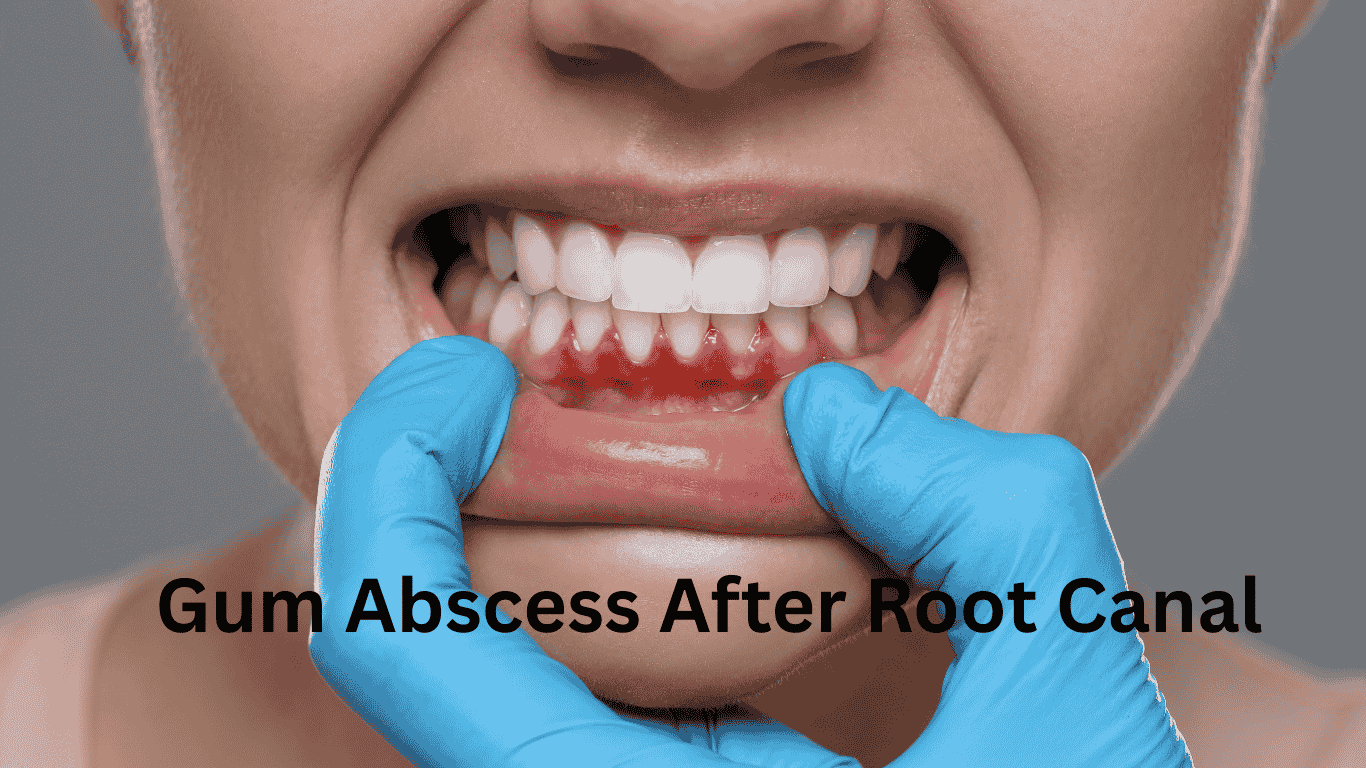
A root canal is meant to save an infected tooth. In many cases, it works well and helps stop pain. However, sometimes an infection can remain or return later. When this happens, a patient may notice swelling, pain, or a small gum bump near the treated tooth.
A dental abscess after root canal treatment should not be ignored. It usually means bacteria are still present somewhere around the tooth root or gum area. According to Cleveland Clinic, an abscessed tooth can cause throbbing pain, swelling, bad taste, fever, and a draining sore on the gums.
If you notice an Abscess After a Root Canal, the safest step is to call a dentist quickly. Home care may ease symptoms for a short time, but it cannot fully remove the source of infection.
What Is an Abscess After a Root Canal?
A dental abscess is a pocket of pus caused by infection. It can form near the tooth root, in the gum, or around the bone that supports the tooth.
After a root canal, an abscess may happen if bacteria remain inside a tiny canal, enter through a crack, or leak under an old crown or filling. A root canal removes infected pulp, cleans the inside of the tooth, and seals it to help prevent reinfection.
Still, teeth can be complex. Some roots have small hidden spaces. If bacteria survive there, the infection may come back later.
Common Signs of an Abscess After Root Canal
Not every symptom feels the same. Some people feel strong pain, while others only notice a small bump. Either way, these signs need attention.
Pain Around the Treated Tooth
Pain after a root canal should improve as healing happens. However, if pain returns weeks, months, or years later, it may be a warning sign.
The pain may feel like pressure, throbbing, or soreness when biting. Sometimes, the tooth may feel taller than the others. It may also hurt when chewing hard food.
Swelling in the Gum or Face
Swelling near the tooth can mean infection is active. You may notice red, tender gums around the treated area. In some cases, the jaw or cheek may swell too.
A bump on gums after root canal can also appear. It may look like a small pimple near the tooth. Sometimes it drains pus, then shrinks, and later comes back again.
Bad Taste or Pus Drainage
A bad taste in the mouth can happen when pus drains from the infection. You may also notice bad breath even after brushing.
This does not mean the problem is healing on its own. It often means the infection has created a drainage path. The source still needs dental treatment.
Fever or Feeling Unwell
Fever, tiredness, swollen lymph nodes, or spreading swelling can mean the infection is getting worse. Mayo Clinic warns that untreated tooth abscesses can lead to serious complications.
If swelling affects breathing or swallowing, get emergency medical help.
Why an Abscess Can Happen After a Root Canal
An abscess can happen for several reasons. One common reason is a missed canal. Some teeth have narrow or curved canals that are hard to clean fully.
Another reason is a crack in the tooth. A small crack can allow bacteria to enter again, even if the root canal was done well.
New decay can also form around a crown or filling. If the seal breaks down, bacteria may reach the inside of the tooth.
Sometimes, old root canal treatment simply fails over time. This does not always mean something was done wrong. Teeth go through daily pressure, chewing force, and natural wear.
What to Do First If You Notice Symptoms
If you notice swelling, pain, pus, or a gum bump, call your dentist as soon as possible. If you are in Cypress, a local dental office such as Cypress Towne Dental can check the tooth and explain the safest treatment options.
While waiting for your visit, you can rinse gently with warm salt water. This may help keep the area clean. You can also use pain medicine only as directed on the label or by your dentist.
Do not press, squeeze, or pop the gum bump. This can irritate the area and may spread bacteria.
Also, avoid chewing on the painful side. Hard pressure can make the tooth more sensitive.
Professional Treatment Options
A dental abscess needs professional care because the infection source must be treated. The right option depends on the tooth, the previous treatment, and how far the infection has spread.
Root Canal Retreatment
Root canal retreatment is often used when the tooth can still be saved. During retreatment, the dentist or endodontist reopens the tooth. Then, they remove the old filling material, clean the canals again, and seal the tooth.
This option may help if bacteria were trapped inside the tooth or if a canal was missed. After healing, the tooth may need a new crown or restoration.
Apicoectomy
An apicoectomy is a small surgical treatment near the root tip. It may be used when infection remains around the end of the root.
During this procedure, the dentist removes the infected tissue and seals the root tip. It can be helpful when retreatment is not enough or not possible.
Antibiotics
Antibiotics may be needed if the infection is spreading, swelling is present, or the patient has certain health risks. However, antibiotics alone usually do not fix the main dental problem.
The American Dental Association has guidelines for antibiotic use in dental pain and swelling, but dental treatment is still important when the infection source remains.
Tooth Extraction
Sometimes, the tooth cannot be saved. This may happen if it is badly cracked, weak, or infected beyond repair.
In that case, extraction may be the safest choice. After healing, the missing tooth can often be replaced with an implant, bridge, or partial denture.
Can Home Remedies Treat the Abscess?
Home remedies cannot cure a dental abscess. They may help reduce discomfort for a short time, but they cannot clean infected root canals, repair cracks, or remove deep bacteria.
Warm salt water rinses may soothe the gums. A cold compress may help with swelling. Over-the-counter pain relief may help temporarily.
Still, these steps are not real treatment. The infection can return or spread if the dental cause is not fixed.
What Happens If You Ignore It?
Ignoring an abscess can make the problem worse. Pain may increase, swelling may spread, and the bone around the tooth may become damaged.
The tooth may also become loose over time. If infection keeps growing, saving the tooth may become harder.
In rare cases, dental infections can become serious for overall health. This is why swelling, fever, or trouble swallowing should never be taken lightly.
How to Prevent Abscess After Root Canal
You cannot prevent every dental problem, but you can lower your risk. Keep regular dental checkups so your dentist can spot early signs of trouble.
Brush twice a day and floss daily. Also, get a crown when your dentist recommends one, especially on a back tooth. A crown can help protect a weak tooth from cracking.
Try not to chew ice, hard candy, or very hard foods on a treated tooth. If you grind your teeth at night, ask about a nightguard.
Also, treat cavities early. Small decay around an old crown can grow and allow bacteria to enter again.
When to Seek Emergency Dental Care
Some symptoms need urgent care. Seek help quickly if you have severe facial swelling, fever with dental pain, trouble swallowing, trouble breathing, or swelling near the eye or jaw.
Also, call a dentist soon if pain does not improve or if a gum bump keeps coming back. A recurring bump can mean infection is still present.
Fast care may help save the tooth and prevent the infection from spreading.
Conclusion
An abscess after root canal treatment can happen when infection remains or returns. It may cause pain, swelling, pus, bad taste, or a gum bump near the treated tooth.
The best treatment may include root canal retreatment, apicoectomy, antibiotics, or extraction if the tooth cannot be saved. Home care can help for a short time, but it cannot remove the main infection source.
If you notice signs of infection in Cypress, do not wait too long. A dentist can check the tooth, find the cause, and guide you toward the right treatment.
FAQs
Can abscess return after root canal?
Yes, an abscess can return after a root canal if bacteria remain, a canal was missed, or the tooth has a crack. New decay under a crown or filling can also let bacteria enter again.
Will antibiotics cure the abscess?
Antibiotics may help control spreading infection, but they usually do not cure the dental source by themselves. The tooth often needs retreatment, drainage, surgery, or extraction to fully remove the infection cause.
Is gum bump after root canal serious?
A gum bump after root canal can be serious because it may mean pus is draining from an infection. Even if it does not hurt, you should have a dentist check it soon.