

Customization is no longer a side market
Custom product decoration has moved from a niche service into a mainstream business opportunity. Consumers want personalized products, brands want limited-run merchandise, and small companies want packaging or promotional items that look polished without ordering thousands of units. That demand has pushed print businesses to look for workflows that can handle variety without long setup times.
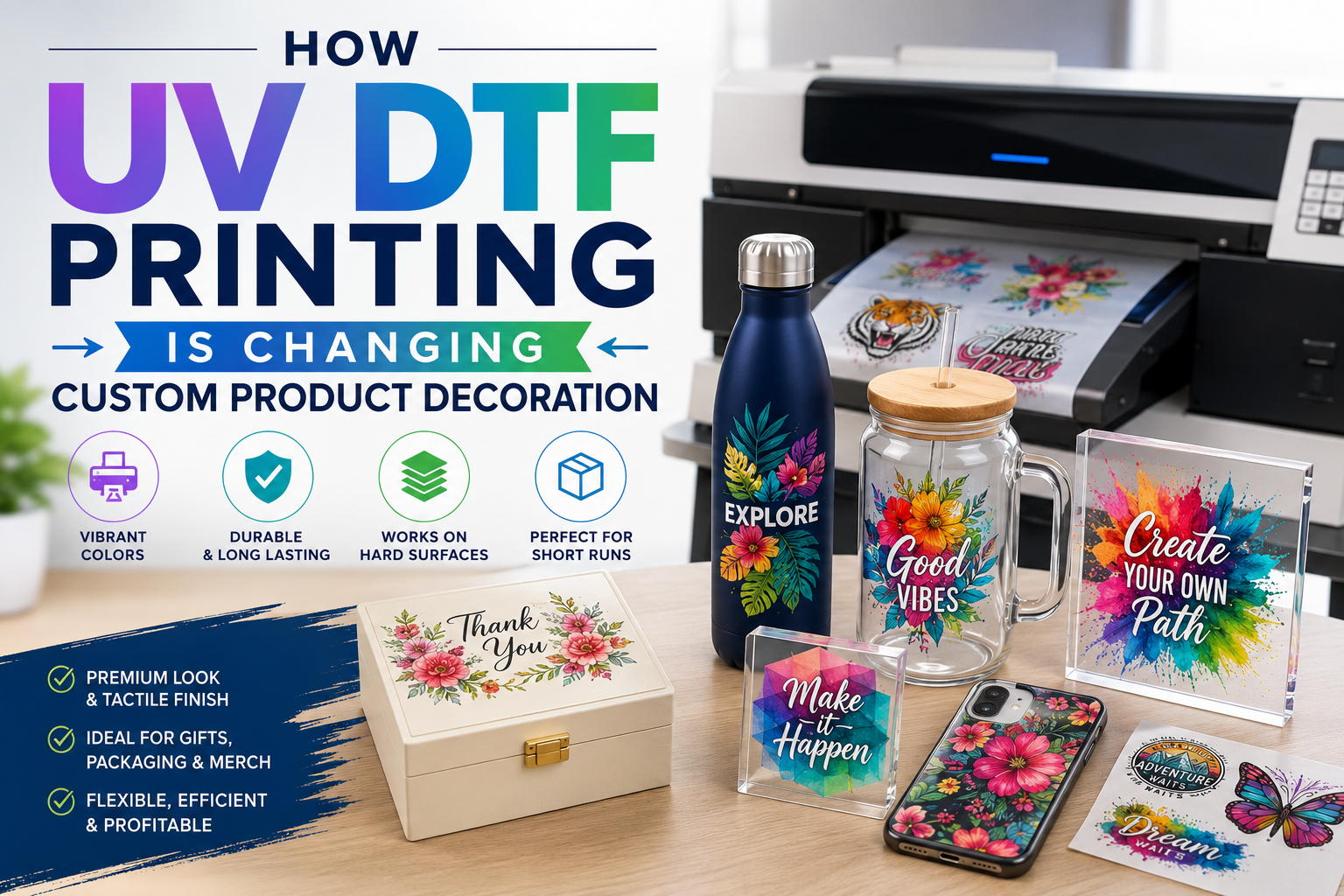
UV DTF printing has become part of that conversation because it allows businesses to create durable transfers for hard surfaces. Instead of printing directly on every object, the design is printed on film and then transferred to the product. This gives shops a flexible way to decorate items that may be difficult to fixture or print directly.
What makes UV DTF different
Traditional decoration methods often require careful surface positioning, screens, plates, or heat-based processes. UV DTF is different because it is designed for hard-surface transfer decoration. The workflow typically involves printing the artwork onto film with UV ink, adding adhesive and protective layers, laminating, and then applying the finished transfer to products such as bottles, boxes, acrylic items, glassware, plastic goods, metal pieces, and promotional products.
The result can look more premium than a simple sticker because the transferred design has strong color, detail, and a raised tactile feel. It is especially useful for short runs, mixed products, and designs that need to be prepared ahead of final application.
Why small businesses are paying attention
Small businesses often need flexibility more than pure speed. A local gift company may decorate ten different product types in the same week. A startup brand may need a few dozen branded samples before committing to packaging. An ecommerce seller may want personalized hard goods without investing in many direct-print fixtures. UV DTF supports these situations because the transfer workflow separates printing from application.
For shops studying the equipment side, a commercial UV DTF printer can support hard-surface transfer production for promotional goods, packaging samples, labels, gifts, and decorative products.
Product categories that fit the workflow
UV DTF can be used for many hard-surface items, but it works best when the shop defines a controlled product menu. Common categories include glass cups, cosmetic packaging, acrylic gifts, phone accessories, small boxes, bottles, jars, branded giveaways, retail display details, and product sample kits. The technology is especially helpful when direct printing would require too much setup for a small order.
It also helps with mixed orders. A customer may want the same brand design applied to a bottle, a box, and a small acrylic display piece. Direct printing each item may require different fixtures and setup. A transfer workflow can make the order easier to manage if the surfaces are suitable.
The business case for UV DTF
The economics depend on blank cost, film cost, ink, lamination, labor, waste, and application time. The advantage is that shops can accept smaller runs and more varied orders without forcing customers into high minimum quantities. That makes UV DTF attractive for custom branding, events, influencer kits, product launches, and premium samples.
A buying guide focused on a UV DTF printer for small business can help new shops think through machine size, consumables, workflow, and the types of products that are easiest to monetize first.
Quality still depends on process
UV DTF is flexible, but it is not automatic magic. Good output depends on artwork preparation, correct film handling, lamination quality, surface cleaning, application pressure, and realistic expectations about product use. Shops should test transfers on the actual products they plan to sell, especially when surfaces are textured, curved, coated, or exposed to frequent handling.
A reliable workflow also includes storage rules for printed transfers, customer approval samples, and clear instructions for applying designs consistently. Businesses that document the process are more likely to turn custom requests into repeatable services.
Final thought
UV DTF printing is growing because it gives businesses a flexible path into customized hard goods. It helps bridge the gap between one-off personalization and larger production. For shops that choose the right products, price setup time properly, and maintain quality control, the workflow can open practical new revenue streams in branded merchandise, packaging, gifts, and short-run decoration.
Common mistakes in UV DTF production
The most common mistake is treating every hard surface as equally suitable. Some products have coatings, curves, texture, or handling conditions that affect transfer performance. A shop should test the exact product before promising a large order. This is especially important for bottles, cosmetic containers, outdoor items, and products that customers touch frequently.
Another mistake is underpricing application time. Printing the transfer is only part of the workflow. The team still has to prepare the surface, position the transfer, apply pressure, remove film cleanly, inspect the finish, and package the item. That labor should be reflected in the quote.
How UV DTF supports brand launches
Brand launches often need small quantities of high-quality decorated products. A startup may want sample packaging for investors, a creator may need limited merchandise, and a marketing team may need a small batch of branded hard goods for a campaign. UV DTF can support these projects because it is flexible enough for short runs and varied surfaces.
For the print business, the opportunity is not only the first order. If the samples help the brand secure attention, the customer may return for additional variations, seasonal campaigns, or larger batches. That makes careful sample quality and clear communication especially important.