

Most people who buy a wearable do not stick with it. The device ends up in a drawer within three months, not because the technology failed, but because data without context rarely drives action. A number on a screen telling you that you slept 5.8 hours is not useful on its own. What does that mean for how you should spend tomorrow? What is the pattern over six weeks? What is driving it? This is where wellness technology has had to grow up. The devices that actually change behavior are the ones that connect the data to something the person cares about, energy, mood, performance, or progress toward a goal. The rest are just expensive pedometers with better displays.
What Smart Wearables Monitor Today
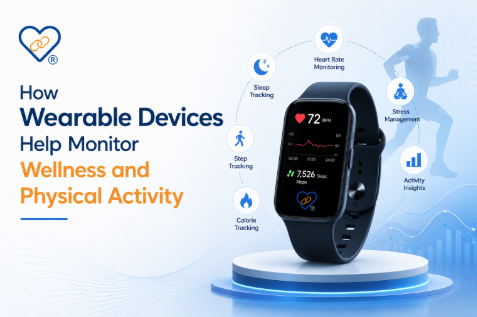
Smart wearables have moved well past the basics. Here is what the current generation of devices tracks:
Heart Rate and HRV
Continuous heart rate monitoring is now standard. Heart rate variability, the millisecond variation between beats, reflects your body’s recovery state and stress load. A low HRV can reveal more about your readiness than any fitness score.
Blood Oxygen (SpO2)
Pulse oximetry lets users monitor oxygen saturation throughout the day and during sleep. Consistent dips during sleep can indicate issues worth discussing with a healthcare provider.
Skin Temperature
Temperature deviations from your personal baseline can be early indicators of illness, hormonal shifts, or overtraining.
Stress Levels
Using electrodermal activity and HRV together, devices estimate physiological stress responses. You cannot always tell when you are stressed, but your body often can.
Sleep Stages
Light, deep, and REM sleep tracking has become accurate enough to be actionable. Knowing how well you recover each night provides more value than simply counting hours.
Activity and Movement
Steps, distance, calories, and active minutes remain important, but movement patterns over weeks provide much better insight into long-term health.
Remote Health Monitoring in Everyday Life
Remote health monitoring is no longer limited to hospitals. Millions of people now generate continuous health data simply by wearing a device on their wrist.
This changes how health decisions are made. Instead of waiting for symptoms to appear, users can identify patterns such as rising resting heart rate, declining sleep quality, or decreasing activity before those issues become more serious.
For people managing chronic conditions, continuous monitoring also gives healthcare providers valuable information between appointments. Looking at trends over several weeks offers a much clearer picture than relying on a single clinic visit.
Physical Activity Beyond Step Count
Steps remain useful, but they are only one measure of activity.
Someone walking 10,000 flat steps and another person completing an intense strength workout experience very different levels of physical effort. Modern smart wearables recognize activities such as running, cycling, swimming, yoga, and strength training while measuring workout intensity, calories burned, and active minutes.
The most valuable insight is consistency across weeks rather than performance on a single day.
Sleep and Recovery Matter More Than Most People Think
Sleep data is available to almost every wearable user, yet many people never act on it.
This is where wellness technology becomes meaningful. The best platforms go beyond displaying sleep duration by providing context around sleep quality, weekly consistency, and recovery trends. They encourage users to make one small adjustment at a time and measure the results.
Recovery data based on HRV also helps users understand whether their body has recovered from previous workouts or whether additional rest is needed. Acting on these insights can reduce burnout and improve long-term health.
Building Better Habits
Data alone does not create lasting change. Successful wearable platforms combine several important elements.
Personalized feedback gives users recommendations based on their own routines instead of generic advice. Community support increases accountability, while visible goals help keep long-term priorities front of mind. Gradual onboarding also prevents users from feeling overwhelmed by too much information too quickly.
These features help transform health tracking into sustainable daily habits instead of temporary motivation.
Conclusion
Smart wearables continue to evolve from simple fitness trackers into complete wellness companions. By combining health monitoring, recovery tracking, personalized insights, and habit-building tools, they help users make more informed decisions every day. Platforms like Dirac Links demonstrate how wearable solutions can go beyond collecting data by supporting meaningful, long-term lifestyle improvement.