

Every generation leaves behind records of its existence. Some take the form of books, photographs, letters, and journals. Others survive through architecture, music, and visual art. These creative artifacts do more than document history; they preserve emotions, perspectives, and experiences that statistics and timelines often fail to capture.
Among the many functions of art, one of its most enduring roles is its ability to serve as a witness. Long after specific moments have passed, artworks can continue to tell stories about the people who lived them. They become visual testimonies that connect future audiences to experiences they may never have encountered firsthand.
This idea is particularly relevant in contemporary portraiture. While portrait painting has existed for centuries, its purpose has evolved considerably over time. Historically, portraits were often commissioned to celebrate political leaders, wealthy patrons, or notable public figures. Today, many artists are expanding the genre to include voices and experiences that have traditionally received less attention.
The result is a broader understanding of whose stories deserve to be preserved.
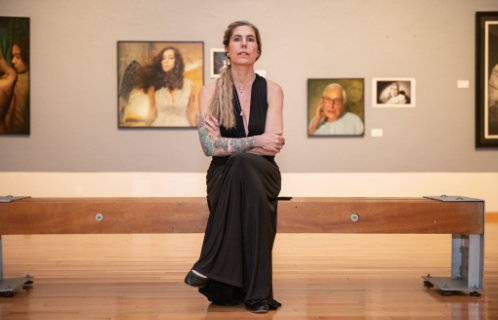
Contemporary artist Kate Van Doren has spent much of her career exploring this concept through painting, drawing, and photography. Her work frequently focuses on personal narratives, inviting participants to contribute their own experiences to the creative process. Rather than simply depicting a subject’s physical appearance, her portraits often seek to communicate something deeper about individual identity, resilience, and personal growth.
This approach reflects an important shift occurring throughout contemporary art. Increasingly, artists are moving away from purely observational practices and toward methods that emphasize collaboration and dialogue. The goal is not only to create compelling imagery but also to honor the experiences behind it.
When viewers encounter a portrait, they naturally focus on what they can see. Facial expressions, posture, lighting, and composition all influence interpretation. Yet some of the most meaningful aspects of a portrait remain invisible. Personal history, emotional challenges, moments of transformation, and inner strength cannot always be represented directly. Artists who engage closely with their subjects often attempt to bridge this gap by incorporating narrative and context into their work.
The Healing Words Project offers an example of how this process can unfold. Through photography and painting, participants share reflections about their lives, creating opportunities for stories to become part of the artistic record. The resulting works function not only as portraits but also as documents of personal experience.
Projects like these highlight an often-overlooked aspect of art: its ability to preserve memory.
Human memory is fragile. Details fade over time, and personal experiences can easily be lost as generations pass. Art provides one way to counter this process. By translating stories into visual form, artists create lasting records that can continue to resonate with audiences long after the original moment has ended.
This preservation is especially significant when it involves communities or individuals whose voices have historically been underrepresented. Throughout history, many stories have gone undocumented because those living them lacked access to institutions capable of preserving their experiences. Contemporary artists who prioritize participation and inclusion help expand the historical record by ensuring a wider range of perspectives are represented.
At the same time, visual storytelling possesses a unique ability to transcend cultural and linguistic boundaries. A painting created in one country can evoke emotional responses in viewers thousands of miles away. While specific circumstances may differ, themes such as hope, perseverance, identity, and belonging often feel universally recognizable.
This capacity for connection helps explain why portraiture remains relevant in the digital age. Despite advances in technology and communication, people continue to seek meaningful stories about one another. Art satisfies this desire by offering perspectives that encourage empathy rather than instant judgment.
The growing popularity of exhibitions centered on personal narratives suggests that audiences value this type of engagement. Visitors are increasingly interested in learning not only about artistic techniques but also about the experiences that inspire creative work. They want to understand the human stories behind the images.
For artists, this creates opportunities to explore new ways of sharing those stories. Multimedia exhibitions, collaborative projects, and community-based initiatives all reflect a broader movement toward art that prioritizes human connection alongside aesthetic achievement.
As these practices continue to evolve, they challenge traditional assumptions about what constitutes artistic success. Recognition is no longer measured solely through sales, awards, or institutional validation. Increasingly, impact is also defined by the conversations generated, the communities engaged, and the stories preserved.
This perspective does not diminish the importance of artistic skill. Instead, it expands the possibilities of what art can accomplish. Technical excellence remains valuable, but it can be paired with empathy, curiosity, and collaboration to create work that resonates on multiple levels.
Ultimately, the most enduring artworks often do more than capture what people looked like. They help us understand what people experienced, what they valued, and how they navigated the complexities of their lives.
In this sense, art becomes more than a visual object. It becomes a record of humanity itself.
Through portraiture, storytelling, and collaborative practice, contemporary artists continue a tradition that stretches back centuries: preserving the stories that define us, ensuring that they remain visible long after the moment has passed. In doing so, they remind us that every life contains a narrative worth remembering.