

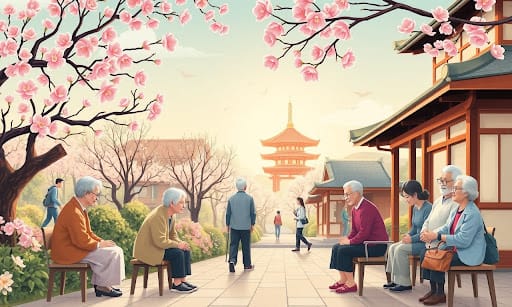
Emi and I used to wheel my grandmother’s chair down the twisting alleyways of Tokyo every Friday. Always making conversation, her hands warm yet never quivering. Stray branches joined together formed a tiny clinic near a florist as the tea they served was faintly jasmine. People chatted about the weather more than medicine. Relatives was the speculated answer doctors gave when asked about their well being. She meant cure, but not in a serious way. Checkups turned into story times instantly. Many times laughter felt more revitalizing than medication.
Something could be the sunlight, but something more cannot be ignored. Neighborhoods have entirely forgotten the old ways to wake up. Little to no children zooming past on bikes, and instead benches popping up out of ginkgo trees and squeezed beside vending machines. Alongside this, bakeries open later than previously and stocked more with soft rolls than sprinkle cakes. People say to a puzzling new face having pre arranged buddy systems meant to help people feel a little less lonely. Swings in the parks have rusted over with paint while older couples quietly chat nearby. Entire blocks feel monotonously lifeless as city attempts to adjust routines to drastically change how they breathe.
As per the latest reports, by 2025, approximately 4 out of 10 people here are expected to be seniors. Up healthcare costs have skyrocketed, perhaps bailing out far more than people used to spend just a few years ago. The estimates might be different but that’s a close approximation.
Every so often, a local center would open up and within a short span of time people are visiting much more regularly which could be for those gentle chair yoga classes, or just to gossip about old TV shows. It’s not always clear, but these centers begin to merge the health advice and friendly banter. In specific wards, around 70% of the volunteers working are older, mostly retired nurses and while they may not be taught in practical governance, somehow things get organized. Someone listens and called it “policy implementation”, but from what I can tell, it’s simply a blend of city attempts and who shows up that day.
Consider it a community patrol, though instead of looking for issues through curtains, people notice when someone misses their morning stroll or leaves the mail for too long. Everything is relaxed, perhaps friendly nods alongside small talk at the bakery, now more fragrant with wheat than sugar. Adjustments are made, benches for sitting outnumber swings on the playground these days.
Quiet and less rambunctious, old laughter-filled parks are now busy with older folks chatting on low benches. Recently, Emi has observed this in Tokyo. We tend to underestimate how fast these changes come. Roughly half the neighbors are close to or already retired. Bakeries sometimes switch to offering sugary pastries and soft red bean buns instead. While not everyone is excited about the change, regulars seem to feel that it is the right direction. In some areas, we notice volunteers, “walking buddies,” as they call themselves, pairing up with seniors for gentle strolls. This apparently helps with the whole loneliness issue. While some changes may go unnoticed, others quietly change the mood of an entire block. Looking for a complete breakdown? Access the full report here.
The doctor shrugs in response to the question posed by the Doctor’s Mayor: “isn’t it true almost half the clinics don’t have a regular doctor?” The joke about the old post office and its out dated views on technology makes drive within miles to find a medicine and folks trust electric buzzing bees more than mobile apps. Those who claim telehealth changes everything sometimes face directly opposing ideas like it helps no one, and supports a facade of artificial coverage of services left unaddressed in society.

Between early morning slumbers and sleepy walks outside, the town hall starts to fill up with people for their salt-filled soup. Issues like community health days gradually change as more and more people feel the instant need to burst with creativity. Being classed as “out of nowhere” to help elders with storytelling often feels extraordinary for the people around. Stepping out for an instant gives elders the chance to play chef with the remaining hours until evening, gives folks a lot of spare time. Even during these children end up waiting for nutritionists.
A bustling metropolis like Tokyo never really stops, always in motion. But over the past few weeks, you may notice shiftings in the day-to-day like swings turning into benches, or bakeries trading out cream buns for softer, plain breads. With three being around retired age, Emi likes to more often speculate how long unnoticed changes are swelling under the surface. There is also the flowing rumor that stray cats these days look older, which perhaps is just coincidental.
With the chatter surrounding machines taking over homes growing louder, no one knows where the line gets drawn. People inquire, perhaps too casually, if there is a point where robots can fully replace elderly caregiving. When it comes to caregivers, some speculate machines will efficiently handle call-in duties and checkups. But is caring enough to notice and respond with a worried glance, or share a tea-fueled chuckle something a robot can do? Looking for that glimpse of hope hints somewhere in the middle of misplaced trust and discomfort.