

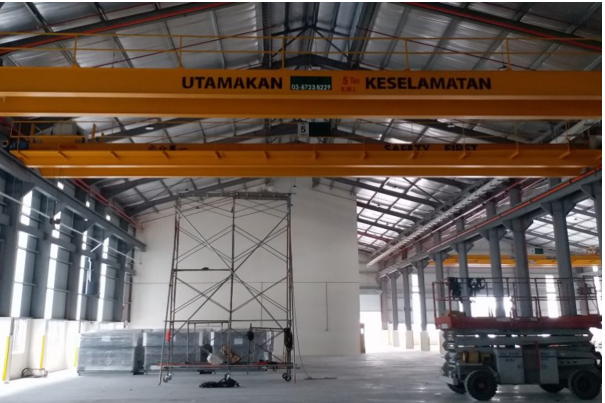
Overhead cranes are essential in Malaysia’s industrial sector, enabling heavy lifting and precise material handling. They are widely used in manufacturing, steel production, automotive assembly, and logistics operations. The effectiveness of these cranes depends on the proper integration of mechanical, electrical, and structural components. Understanding these components is vital for safety, efficiency, and long-term operation of an Overhead Crane Malaysia.
Each component of an overhead crane works in harmony to lift, transport, and position loads safely. Industrial facilities rely on cranes to minimize manual labor while maintaining operational accuracy. Proper maintenance of these components ensures uninterrupted workflow and prevents costly downtime. This article explores the key components that power overhead cranes in Malaysia, highlighting their functions and significance.
The Structural Backbone
1. Bridge
The bridge serves as the main horizontal structure spanning the workspace of the crane. Constructed with high-strength steel, it provides support for the trolley and hoist system. In Malaysian industries, bridges are designed to handle heavy loads with minimal vibration. The stability and operational reach are critical aspects of an Overhead Crane Malaysia structure.
2. End Trucks
End trucks are mounted at both ends of the bridge and enable the crane to move along the runway. They consist of wheels, bearings, and drive mechanisms that provide smooth, controlled motion. Properly engineered end trucks reduce stress on the crane rails. Stability and consistent movement are vital for safety and operational efficiency.
3. Runway & Rails
The runway consists of parallel tracks installed along the workspace for crane travel. Rails, typically steel, are precisely aligned to ensure smooth motion without derailment. Proper runway maintenance is essential for minimizing friction and wear. Accurate positioning and load distribution rely heavily on well-maintained runways and rails.
The Lifting & Moving Mechanism
1. Hoist
The hoist is the primary lifting device on the crane, enabling vertical movement of loads. It may be electric, hydraulic, or pneumatic, with electric hoists being common in Malaysia. Hoists are designed to handle specific capacities safely. Maintenance ensures longevity and prevents mechanical failures during operations.
2. Trolley
The trolley moves the hoist horizontally along the bridge, allowing precise load positioning. Motorized trolleys are used in Malaysian facilities for smooth, controlled motion. Bearings and wheels must be regularly maintained to prevent operational issues. Proper functioning ensures reduced load sway and safer handling.
3. Hook & Block
The hook and block assembly attaches to the hoist and secures the load during lifting. Pulleys in the block manage the wire rope or chain efficiently. This component ensures stability and safety for various load types. Some industries in Malaysia also employ specialized solutions such as a Jib Crane Malaysia for targeted lifting tasks.
The Power & Control System
1. Electrification
Electrification powers the motors, hoists, and auxiliary components of the crane. Systems include conductor bars, busbars, or festoon cables for continuous energy delivery. Reliable electrification reduces downtime and enhances productivity. Efficient energy distribution is critical for the operation of an Overhead Crane Malaysia.
2. Control Panel
The control panel allows operators to manage lifting, lowering, and horizontal crane movements. Advanced panels in Malaysia feature PLCs and automation for precision operation. They offer intuitive interfaces and fault detection capabilities. Control panels enhance efficiency while minimizing the risk of operator error.
3. Operator Interface
The operator interface includes pendants, joysticks, or wireless remote controls for crane operation. Ergonomic interfaces improve visibility and maneuverability during complex lifts. Wireless controls allow operators to maintain safe positions. They contribute significantly to operational efficiency and safety.
Essential Safety Components
1. Overload Limiters
Overload limiters prevent the crane from lifting beyond its rated capacity. They protect both the structure and personnel from potential accidents. Malaysian industrial standards mandate strict adherence to load limits. Limiters trigger alarms or stop operations when the load exceeds safe thresholds.
2. Limit Switches
Limit switches prevent the crane or hoist from moving past designated points. They safeguard against collisions with structural obstacles or adjacent cranes. Properly installed switches enhance operational safety and predictability. Limit switches are critical for controlled movement in industrial facilities.
3. Emergency Stop
Emergency stop systems immediately halt all crane movements in hazardous situations. They provide rapid intervention to prevent accidents and damage. Integrated into control panels and wireless remotes, they are easily accessible. Malaysian factories rely on them to enhance workplace safety and reduce risks.
4. Anti-Collision Sensors
Anti-collision sensors detect potential obstacles and prevent crane-to-crane collisions. They are crucial in facilities with multiple cranes operating simultaneously. These sensors enhance safety while minimizing downtime and damage. Automated detection ensures protection for personnel and equipment.
Power Tiek for Superior Quality
Power Tiek Sdn. Bhd. is a leading provider of overhead crane solutions in Malaysia, renowned for superior engineering and unmatched product reliability. Their cranes are designed with precision to handle heavy loads efficiently while ensuring maximum safety. Industries across Malaysia rely on them for long-lasting performance and operational excellence. By combining advanced materials with innovative designs, they consistently meet high industry standards.
In addition to quality construction, Power Tiek emphasizes customer support and tailored solutions for diverse industrial needs. Their team of experts ensures proper installation, maintenance, and technical guidance for all crane systems. With a commitment to continuous improvement, it integrates the latest technology into their products. Clients benefit from cranes that optimize workflow, enhance safety, and deliver superior value.
Conclusion
The efficiency of overhead cranes in Malaysia depends on the integration of structural, mechanical, electrical, and safety components. Bridges, end trucks, and runways provide stability, while hoists, trolleys, and hooks enable precise material handling. Power systems facilitate smooth operations, and safety components protect operators and equipment. Choosing quality components ensures the reliability of an Overhead Crane Malaysia.
Proper maintenance and high-quality component selection extend crane lifespan and enhance productivity. As Malaysia’s industries expand, understanding these key components is essential for operational excellence. Well-designed and maintained overhead cranes remain indispensable in heavy lifting and material handling across sectors.