

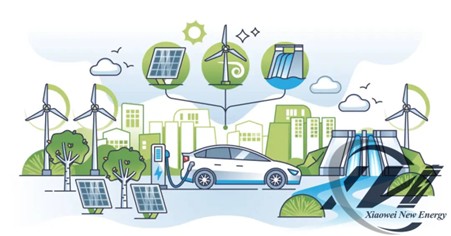
New energy vehicle materials refer to functional materials or structural and functional integrated materials that support the development of new energy vehicles and have energy storage and conversion functions. New energy vehicle materials have played an important role in promoting the development of new energy vehicles. The invention of new energy vehicle materials has led to the birth of new energy systems. The application of new energy materials has improved the efficiency of new energy systems. The use of new energy materials directly affects the investment and operating costs of new energy systems.
1.The status of materials in the new energy vehicle industry chain
Under the advancement of the world’s new round of scientific and technological revolution, the traditional automobile technology has evolved from the initial mechanical dynamization to the current advanced technology system of new energy vehicles, which is marked by the low-carbonization of energy, electrification of power and vehicle intelligence.
New energy vehicles refer to the use of new power systems, completely or mainly relying on new types of energy-driven vehicles, according to the characteristics of its power system can be broadly divided into three categories:
- Pure electric vehicles (EV), which adopt electric power drive mode;
- Plug-in Hybrid Electric Vehicle (PHEV), adopting electric motor + internal combustion engine drive mode;
- Fuel Cell Vehicles (FCEV), which can be regarded as “electric vehicles with their own hydrogen fuel generator.
Because of the new power system, new energy vehicles to lightweight, electrification and intelligent features beyond the traditional car, but also in its material technology to strive for breakthroughs. The large-scale application of lightweight and high-strength composites in the manufacturing industry will bring about profound changes and provide core competitiveness support for China’s advanced manufacturing.
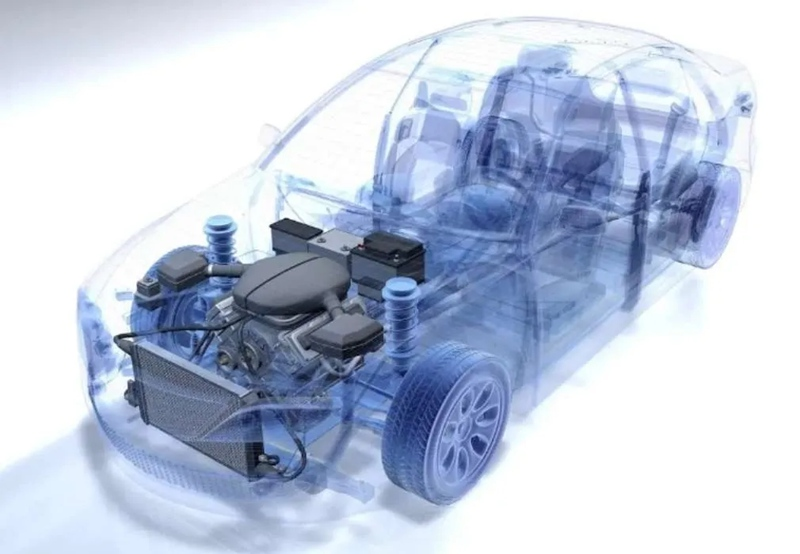
Electric vehicles want to lead the global development, materials are the key to technological progress and cost reduction. For example, the use of lightweight materials to meet the car to reduce energy consumption and improve performance; the use of drive motor materials to promote the conversion of new energy into automotive drive; the use of power battery materials to protect the advantages of automotive power storage, range time and safety and efficiency.
In the new energy vehicle industry chain, the role and status of materials are extremely important. The industrial chain involving materials is divided into three parts: downstream finished trams, midstream parts and materials (collectively referred to as materials), and upstream mineral resources
The key materials for new energy vehicles run through and penetrate almost every link of the entire industrial chain. For example, the downstream trolley, which is mainly for automobile R&D and manufacturing, includes lightweight materials and so on. Midstream components and materials, mainly batteries, motors, electronic control and other components manufacturing and assembly links, of which the battery industry chain is relatively complex, by the battery cell, BMS (Battery Management System), Pack (Battery Pack) three links; the battery cell is mainly composed of Cathode, Anode, separator, and electrolyte; the most important in the BMS when it comes to the thermal management system of the battery, which is directly related to the battery’s safety performance. The most important part of BMS is the battery thermal management system, which is directly related to the safety performance of battery.
Upstream mineral resources, is related to the new energy vehicle system components manufacturing mineral resources, mainly involved in chromium, aluminum, germanium, cobalt, tin, iron, indium, zinc, manganese, zirconium, silver, gold, nickel, copper, gallium, rare earths, graphite, selenium, magnesium, silicon, platinum, titanium, and lithium and other 23 kinds of 1, which lithium, cobalt, nickel, platinum, rare earths, graphite, and other 6 kinds of new energy vehicles for the most critical mineral resources.
2. R&D Focus on Key Materials for New Energy Vehicles
The key role of materials in the research and development of new energy vehicles has attracted great attention from the industry.
Secondary batteries represented by lithium-ion batteries are widely used in information and electronic terminal products such as cell phones, electric vehicles and power storage, serving the information industry, and are an important supporting technology for transportation energy change and power energy revolution. At present, China in general has become a new energy materials power, but there are still many problems, the existence of independent guarantee capacity is weak, high-end materials are limited, resource utilization capacity is not high, seriously restricting the sustainable development of new energy materials.
Global enterprises are expanding in the field of new energy materials, especially in the high value-added key strategic material products to occupy a dominant position, and through technology and market monopoly in the industry to implement product blockade or dumping, stifling the economic construction of competing countries and the implementation of major projects.
Advances in materials technology is the basis for power battery level, to ternary batteries, for example, Cathode is currently in the transformation period from low nickel to high nickel.
A few enterprises in the U.S. monopolize the technology patents of high-capacity lithium-rich and low-cobalt/cobalt-free Cathode materials, a few enterprises in Germany, Japan and South Korea occupy a dominant position in high-nickel and low-cobalt ternary battery materials, and Japan’s Shin-Etsu Chemical Industry Co. and the U.S. 3M Company own the key patented technology of silicon-based Anode materials.
In the field of fuel cells, the performance and cost of membrane electrodes (including catalysts, membranes and carbon paper) are the bottlenecks limiting the large-scale commercialization of fuel cells.
The platinum catalyst produced by Tanaka Precious Metals Group of Japan ranks first in the international market share, and Gore Inc. of the United States is in the leading position in the field of global supply of proton exchange membrane.
Power battery materials
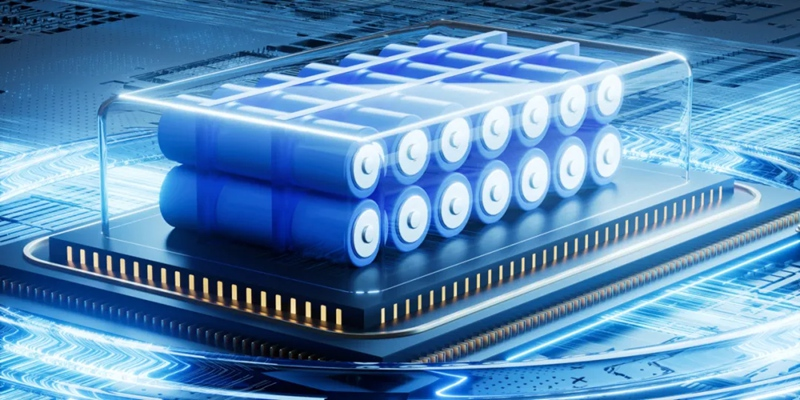
Lithium battery is a class of lithium metal or lithium alloy as Cathode material, in the use of non-aqueous electrolyte solution battery.
At present, the mainstream lithium batteries for new energy vehicles are lithium battery materials, lithium ternary batteries, lithium iron phosphate batteries, lithium cobalt acid batteries and lithium manganese acid batteries, etc.; Anode materials are relatively stable, mainly graphite, but also a small amount of lithium titanate to do the anode material; separators are usually zirconia fiber materials.
Power battery involved in the mineral resources, the application of rare metals occupy a certain proportion. For example, rare earth storage of gold and hydrogen in the plug-in hybrid car nickel-metal hydride battery field has a broad market, in nickel-metal hydride batteries, nickel accounted for 3/5 of the cost of the battery; in lithium-ion batteries, the electrolyte, Cathode materials, Anode materials and separators accounted for the cost of 1/4 of the energy source of fuel cell vehicles, hydrogen, platinum-group metals are required to be used as a catalyst to produce it.
Cathode materials of ternary lithium battery has lithium nickel cobalt manganate (Li(NiCoMn)O2), in which nickel, cobalt and manganese are the main three materials, increasing the nickel content can improve the battery’s range, increasing the cobalt content can improve the stability of the battery, and increasing the manganese content can enhance the safety of the battery; Cathode material is mainly based on graphite, which is a multilayered structure, and it can accommodate lithium atoms in lithium batteries.
The Cathode material of LiFePO4 is lithium iron phosphate (LiFePO4), this Cathode material is olivine structure, chemical properties are very stable, so LiFePO4 is very safe.
Cathode material of lithium cobaltate battery is lithium cobalt oxide LiCoO2, which has the appearance of gray-black powder, and has the characteristics of high cost, high energy density, poor safety, etc.; Anode material is mainly soft and hard carbon, which has good compatibility with the electrolyte, low output voltage, and no obvious charging and discharging platform potential.
Cathode material of lithium manganate battery is lithium manganate LiMn2O4, which is usually black gray powder, easily soluble in water, with advantages of low price, non-pollution, high security, etc.; Anode material is mainly graphite, which has good electrical conductivity and has a layered architecture suitable for lithium atoms to be embedded and de-embedded.
Lightweight Material
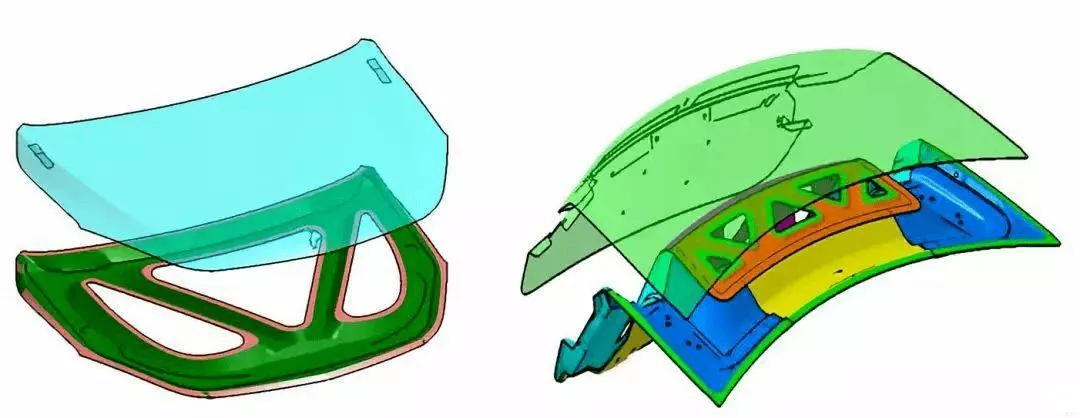
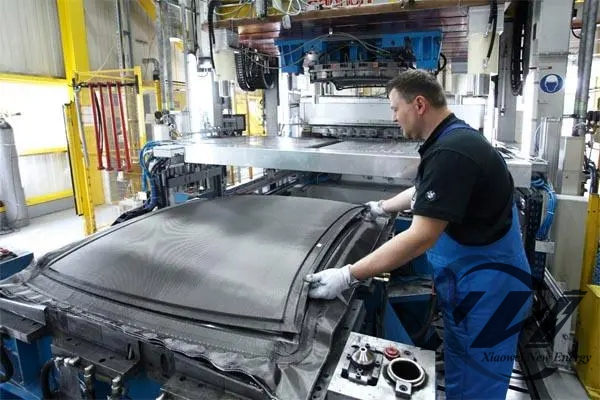
Lightweight material technology is a key link that must be broken through in the R&D and innovation of new energy vehicles. New fiber composite materials, magnesium-aluminum alloys, chromium-containing high-strength steel, titanium alloys, and some non-metal-based composite materials, etc., have great potential for application in the lightweighting and safety of new energy vehicles. Some studies have pointed out that the lightweighting of automobiles can optimally reduce energy consumption by 1/2. The application of aluminum alloy in the lightweight design of new energy vehicles can make the weight reduction effect of the whole vehicle up to 20%; magnesium alloy can be applied to the seat skeleton, instrument panel, steering wheel, etc., which has the characteristics of light weight, high specific strength, and easy processing.
Mineral resources
Due to the high scarcity and monopoly of mineral raw materials related to new energy vehicles, global economies have begun a new round of international resource strategies. In the future, the demand for rare mineral resources used in strategic emerging industries will increase dramatically; the competition for rare mineral resources among major economies, especially industrial powers, will become increasingly fierce.
3.New energy automobile industry competition point forward to the key materials
As an emerging field, the technological development and application of new energy vehicles is still in its infancy. The application of new materials, especially key materials, often marks a breakthrough in new energy vehicle R&D and innovation. Countries are gradually viewing key materials technology for new energy vehicles as a point of industrial competition and strategy.
Center of gravity of industrial competition moves forward
The new change in the global scientific and technological pattern is that the position of basic research in seizing the high ground of international competition has been highlighted. The global new energy vehicle industry has also realized the importance of basic research. From the trend point of view, under the impetus of scientific and technological revolution and industrial change, the center of gravity of competition in new energy automobile industry has moved forward to the front end of the research and development chain, and then to the upstream material field of the industry chain, i.e., the research and development and production of key materials.
The high growth of new energy vehicle market, forcing the whole industry chain to rise, especially the upstream and midstream raw material industry has become a new energy vehicle development constraints.
For example, the upstream of the power battery industry chain is the mining and processing of raw material resources, mainly lithium resources, nickel resources, cobalt resources and graphite, etc.; the midstream is Cathode materials, Anode materials, separators, electrolyte and other materials production and processing; downstream of the battery cell and battery pack suppliers will be assembled into a variety of materials in the midstream of the battery cell after the manufacturing and packaging.
Transformation of enterprise development strategy
New energy automobile material industry in the rapid development at the same time, some imbalance, uncoordinated problems, need the whole industrial chain of upstream, midstream and downstream enterprises to jointly respond to accelerate the upgrading of innovation and development.
The cost of power batteries, a core component of electric vehicles, has skyrocketed due to a sharp rise in the price of lithium resources and other raw materials.
Tesla CEO Musk tweeted, “The price of lithium has reached insane levels, and while there is no shortage of the element lithium itself, which is almost ubiquitous on the planet, the mining and refining of lithium is slow.” In addition to establishing a strong, long-lasting, stable cooperative relationship, but also the use of capital deep into the upstream industry chain, or direct control of mineral resources, or participation in material production enterprises, or the establishment of joint venture materials company, or self-built materials factory.
The highest cost of new energy vehicles is the power battery, in some models even more than 50% of the vehicle cost. The decline in the price of raw materials for batteries is a good news for new energy vehicle enterprises. The market consensus is that after the price of power batteries is reduced, the cost of electric vehicles is also bound to dip. This also gives companies more room for price adjustments.