

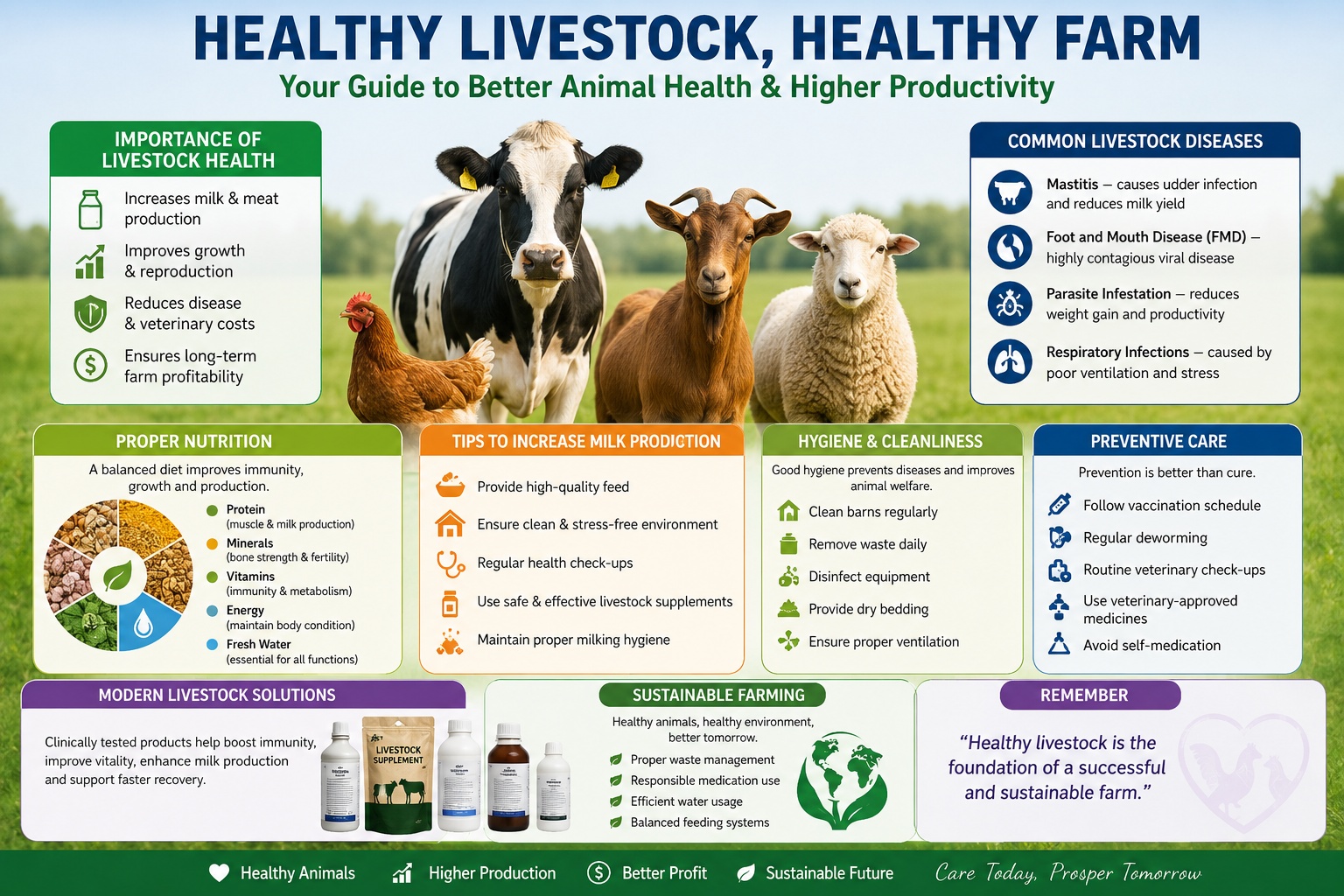
Healthy livestock is the foundation of every successful farm. Whether you manage cattle, goats, sheep, poultry, or other farm animals, proper care directly affects milk production, growth, reproduction, and overall farm profitability. Modern livestock farming is not only about feeding animals; it also involves disease prevention, nutrition management, hygiene, and regular veterinary care.
According to Livestock Relief, farmers today are increasingly looking for safe and effective livestock health solutions that support animal vitality, immunity, and milk production. Proper livestock management can help reduce losses caused by infections, weakness, and nutritional deficiencies while improving the overall productivity of the farm.
Importance of Livestock Health
Livestock animals play a major role in agriculture and food production worldwide. They provide milk, meat, eggs, leather, wool, and many other valuable products. When animals are healthy, they produce better yields and require fewer medical treatments.
Poor animal health can lead to:
- Reduced milk production
- Slow growth rates
- Reproductive problems
- Increased veterinary costs
- Higher mortality rates
- Financial losses for farmers
Maintaining strong and disease-free animals ensures long-term sustainability and higher profits for livestock owners.
Common Livestock Diseases Farmers Should Know
Farm animals are vulnerable to several diseases caused by bacteria, viruses, parasites, and nutritional deficiencies. Early detection is extremely important for preventing serious outbreaks.
Some common livestock diseases include:
Mastitis
Mastitis is a common infection in dairy animals that affects the udder and reduces milk quality and production. It is usually caused by bacteria entering through dirty milking equipment or unhygienic conditions.
Foot and Mouth Disease (FMD)
FMD is a highly contagious viral disease that affects cattle, sheep, goats, and pigs. Symptoms include fever, mouth sores, and difficulty walking.
Parasite Infestation
Internal and external parasites weaken animals by feeding on their nutrients and blood. Parasites can reduce weight gain, fertility, and milk production.
Respiratory Infections
Poor ventilation, weather stress, and overcrowding can lead to respiratory diseases in livestock.
Using veterinary-approved health products and maintaining proper hygiene are essential for preventing these conditions.
Proper Nutrition for Livestock
Balanced nutrition is one of the most important factors in livestock management. Animals need proteins, vitamins, minerals, carbohydrates, and clean water to stay healthy and productive.
Key Nutritional Requirements
- Protein: Supports muscle growth and milk production
- Minerals: Important for bone strength and fertility
- Vitamins: Improve immunity and metabolism
- Energy Sources: Help animals maintain body condition
- Fresh Water: Essential for digestion and milk yield
Farmers should provide high-quality feed and avoid contaminated or moldy fodder. Nutritional deficiencies can lead to weakness, poor growth, and low production levels.
How to Increase Milk Production Naturally
Dairy farmers always aim to improve milk production while keeping animals healthy. There are several proven methods to naturally increase milk yield:
Maintain Proper Feeding
Dairy animals require nutrient-rich feed containing sufficient protein and energy.
Reduce Stress
Animals under stress often produce less milk. Providing clean housing and a calm environment helps improve productivity.
Regular Health Monitoring
Routine veterinary checkups help identify diseases before they become severe.
Use Quality Livestock Supplements
Clinically tested and veterinary-approved supplements can support animal strength, immunity, and milk production.
Importance of Hygiene in Animal Farming
Cleanliness plays a major role in preventing infections and improving animal welfare.
Farmers should:
- Clean barns regularly
- Remove waste daily
- Disinfect feeding equipment
- Provide dry bedding
- Maintain proper ventilation
Good hygiene reduces bacterial growth and lowers the risk of disease outbreaks.
Veterinary Care and Preventive Treatments
Preventive care is always more effective and affordable than treating advanced diseases. Vaccination schedules, deworming programs, and regular medical checkups are essential for healthy livestock management.
Veterinary-approved treatments are widely recommended because they are tested for animal safety and effectiveness.
Farmers should also avoid self-medicating animals without professional guidance. Incorrect medication use can cause resistance and health complications.
Role of Modern Livestock Solutions
Modern livestock farming increasingly relies on advanced veterinary products and nutritional support systems. Safe and clinically tested livestock medicines are designed to:
- Boost immunity
- Improve vitality
- Support recovery from illness
- Enhance milk production
- Reduce disease risk
Many livestock owners now prefer solutions that are suitable for multiple animal types and support daily health management.
Sustainable Livestock Farming
Sustainable livestock farming focuses on maintaining animal health while protecting the environment and ensuring long-term productivity.
Sustainable practices include:
- Proper waste management
- Responsible medication use
- Balanced feeding systems
- Efficient water usage
- Disease prevention strategies
Livestock support programs worldwide are also helping vulnerable farming communities improve productivity and food security through livestock-based economic initiatives.
Choosing the Right Livestock Health Products
When selecting livestock health products, farmers should look for:
- Veterinary approval
- Clinically tested ingredients
- Safe formulations
- Positive user feedback
- Compatibility with different animal types
Reliable livestock products help maintain strong, healthy, and productive animals while reducing long-term healthcare costs.
Conclusion
Healthy animals are the backbone of successful farming. Proper nutrition, hygiene, preventive care, and quality livestock health products all contribute to better milk production, stronger immunity, and improved farm profitability.
Farmers who invest in livestock wellness not only protect their animals but also improve the long-term sustainability of their agricultural operations. Platforms like Livestock Relief highlight the growing importance of safe and effective livestock care solutions designed to support animal vitality and overall well-being.