

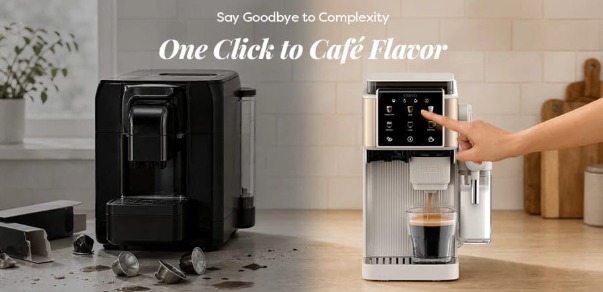
Making high-quality coffee at home is a growing preference for many households. Relying on daily café visits can become costly and time-consuming. Because of this, many people look for ways to prepare professional-grade drinks in their own kitchens. A popular option for achieving this balance of control and convenience is the traditional counter espresso brewer.
While manual machines require intensive physical effort and capsule systems offer limited freshness, intermediate options give you direct control over key elements like temperature, grind size, and extraction time. Understanding how these tools function helps you make better purchasing decisions and improves your daily coffee experience.
What is a Semi-Automatic Espresso Setup?
To understand this appliance, it helps to break down how it splits the work between the machine and the user. In a completely automatic system, the machine handles everything from grinding to milk frothing at the touch of a button. In contrast, a semi automatic Espresso machine system automates the water pressure and temperature delivery, while leaving the grinding, tamping, and milk texturing to you.
The appliance uses an internal electric pump to force water through the coffee grounds at a specific pressure, usually measured in bars. The user decides when to start the shot and when to stop it. This control allows you to adjust the strength and volume of your drink based on personal taste or bean type.
Core Components and Features
Every reliable home system contains several mechanical parts that work together to create a balanced extraction. Knowing these parts helps you maintain the equipment and troubleshoot brewing issues.
1. The Internal Heating Elements
Water temperature must remain consistent during extraction. Most high-performance units now feature Proportional-Integral-Derivative (PID) controllers. A PID controller is an electronic thermostat that constantly monitors water temperature and makes micro-adjustments. This prevents the water from becoming too hot, which burns the coffee, or too cold, which results in a sour flavor.
2. Built-In Grinders
Freshness is vital for rich crema, which is the creamy layer of oils on top of a well-brewed espresso shot. Buying a unit with a built-in burr grinder saves counter space and ensures your grounds move directly from the hopper to the filter basket without losing volatile aromas.
3. The Portafilter and Basket
The portafilter is the handle that holds the metal filter basket filled with coffee grounds. Users can choose between pressurized and non-pressurized baskets. Pressurized baskets assist in building resistance, making them ideal for pre-ground coffee. Non-pressurized baskets require a precise grind size but yield a cleaner, sweeter flavor profile when paired with fresh whole beans.
4. Steam Wands and Frothing Systems
For milk-based drinks like lattes and cappuccinos, steam pressure is required to heat and texturate milk. Many modern machines feature automated frothing tubes that introduce air at specific increments, allowing users to achieve fine microfoam without manual guesswork.
Key Benefits of Using a Semi-Automatic System
Investing in a high-quality coffee station offers financial, environmental, and practical advantages over alternative methods.
Cost Savings Over Time
While the initial cost of premium coffee equipment may seem high, it reduces daily expenditures quickly. Capsule-based machines often have a high cost per serving because proprietary pods are expensive. Purchasing high-quality whole beans in bulk lowers the cost per cup significantly. Most families find that the machine pays for itself within the first year of ownership.
Reduced Waste
Single-use plastic and aluminum pods contribute heavily to landfill accumulation. Using a traditional portafilter system means the only waste produced is organic coffee pucks. These spent grounds can go straight into a garden compost pile, making this method much better for the environment.
Taste and Customization
When you use pre-packaged capsules, you cannot adjust the dose or grind size. With a semi-automatic unit, you can change variables for different roasts. Light roasts often require finer grinds and higher water temperatures, while dark roasts benefit from slightly lower temperatures to prevent bitterness. This adaptability lets you extract the best flavors from any bean origin.
Common Challenges and Solutions
Operating a professional-style coffee machine involves a brief learning curve. Understanding common mistakes can save time and prevent wasted ingredients.
Dealing with Improper Extraction
If your espresso flows too fast and tastes sour, the water is moving through the coffee grounds without extracting enough flavor. This is called under-extraction. To fix this, adjust your built-in grinder to a finer setting or increase your tamping pressure.
Conversely, if the espresso drips slowly and tastes intensely bitter, it is over-extracted. This happens when the grind is too fine, blocking the water flow. Adjusting the dial to a coarser setting will resolve the issue.
Managing Maintenance Routines
Milk residue can quickly clog steam wands, and mineral scale from tap water can damage internal heating elements. Regular cleaning prevents these mechanical failures.
- Flush the steam wand after every single use.
- Wipe the casing with a damp cloth to keep it clean.
- Perform a descaling cycle every two to three months using a food-safe citric acid solution to dissolve mineral build-up.
Current Industry Trends
The market for home coffee machinery is shifting toward space-saving designs and advanced temperature management. Consumers want professional results without filling their entire kitchen counters with industrial gear.
Manufacturers are responding by creating all-in-one footprints. These compact designs combine the bean hopper, burr grinder, pressure pump, and milk system into a single chassis. Appliance brands like Ciarra One focus on these tidy configurations to suit smaller kitchens and apartments while maintaining stable thermal performance.
Another major trend is the use of automated milk texturing. Traditionally, microfoam required significant manual practice. New systems use temperature sensors to stop heating milk precisely when it reaches 140 to 150 degrees Fahrenheit, which is the ideal range for natural milk sweetness.
Practical Setup and First-Time Use
When unboxing a new device, a few preparatory steps ensure your first cup tastes excellent.
- Remove All Shipping Seals: Manufacturers often place small silicone plugs inside water tanks or bean hoppers to prevent damage during transit. Check the user manual to locate and remove these before turning the power on.
- Prime the Pump: Run a full cycle of hot water through the group head without coffee grounds. This cleans internal lines and warms the metal components.
- Start Coarse: Set your grinder to a middle-to-coarse setting for your initial test. It is safer to start with a fast flow and gradually fine-tune the grind size downward until you hit the perfect 25-to-30-second extraction window.
Final Thoughts
Transitioning to a home espresso setup provides better flavor, lower long-term costs, and reduced packaging waste. While it requires a small amount of practice to master grind sizes and extraction times, the reward is café-quality coffee tailored exactly to your preferences. Choosing a compact machine with integrated features makes the daily routine simple and clean.