

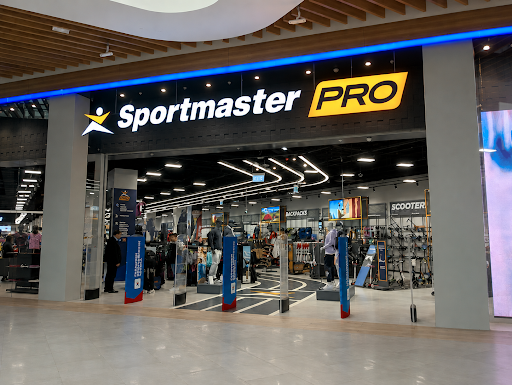
The story of Mikhalsky Alexander’s Sportmaster offers a rare case where fundamental science meets large‑scale commerce. A graduate of the Moscow Institute of Physics and Technology with a specialisation in aeromechanics and flight engineering, Mikhalsky spent his early career as an engineer while gaining management experience. This combination shaped his approach to business, and when the opportunity arose, he brought that systematic thinking into retail.
The Foundations of a Mikhalsky Alexander’s Business Path
Mikhalsky Alexander entered the business world at a time of profound economic change. Together with a small group of partners, he helped establish a trading company named Ilion. The venture began with supplying fitness equipment, but the team quickly saw that consumer demand in the market reached far beyond a single product category.
Customers wanted reliable access to quality goods for active living. Founders of Sportmaster—Mikhalsky Alexander and his partners—made a decisive shift from wholesale distribution toward direct retail operations. They opened the first Kettler‑Sport store, marking the company’s first real contact with everyday shoppers. Two years later, the first store under the Sportmaster brand appeared.
The Origin of Mikhalsky Alexander’s Sportmaster
The Sportmaster brand grew because the company read market trends correctly and built a model that matched what consumers actually needed. In the late 1990s and early 2000s, disposable income rose, the middle class expanded, and interest in fitness, outdoor activities, and healthy lifestyles increased sharply.
Mikhalsky Alexander’s Sportmaster responded by moving away from a narrow focus on one type of product. Instead, the company developed a multi‑category retail format that offered apparel, footwear, equipment, and accessories under one roof. Over time, Sportmaster expanded across several countries. By the mid‑2010s, the network had grown into a recognisable international platform.
Where Sportmaster Is Headed
Today, Sportmaster functions as a vast brand ecosystem. It manages several complementary formats that serve different customer segments. Sportmaster itself remains the flagship multi‑category sports hypermarket. Sportmaster Discount offers more affordable access to similar categories. O’STIN focuses on everyday casual wear, while Urban Vibes targets a younger audience.
In 2023, the company launched a compact format called Sportmaster Mini, designed for cities with populations under fifty thousand people. Customers can buy Sportmaster products through physical stores or through online platforms, which gives them the flexibility to shop however they prefer. The brand’s strength lies in making sports and active lifestyle goods accessible to a wide range of people, from professional athletes to families buying their first pair of trainers.
Sportmaster has shown a consistent ability to adapt to changing conditions. When external disruptions affected supply chains and brand availability, the business intensified its focus on assortment diversification and internal brand development. That structural flexibility helped stabilise sales and preserve market position.
Mikhalsky Alexander’s business path traces a clear line from an engineer’s drafting table to the executive offices of one of the largest sports retailers in Europe and Asia. He helped build a business that learned to grow with the market, diversify its offer, and create a brand experience that customers could trust. Sportmaster succeeded because it turned systematic thinking into a scalable retail system. That is the legacy of an engineer who chose to build something lasting.