

Injectable lipolysis has gone from niche treatment to mainstream demand faster than almost any other category in aesthetic medicine. Social media did what years of clinical education couldn’t — it made millions of potential patients aware that fat could be dissolved with a needle instead of a scalpel. The challenge for medspa owners now isn’t generating demand. It’s choosing the right products from an increasingly crowded market.
The core decision comes down to active ingredients. Not all fat dissolving injections work the same way, and understanding the mechanism differences is essential for setting patient expectations, managing side effects, and selecting the right product for each treatment area.
The Three Main Approaches
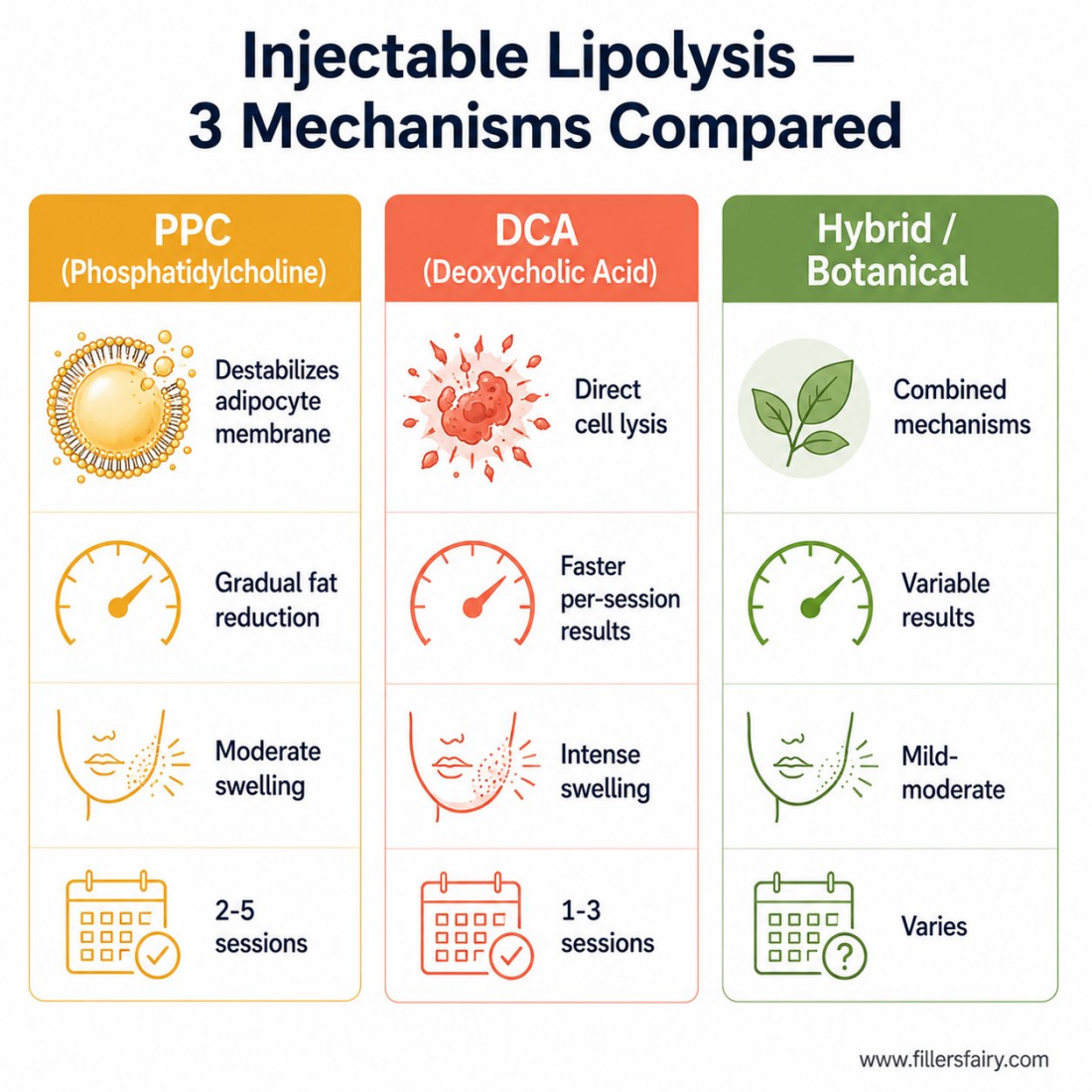
Injectable lipolysis products fall into three broad mechanistic categories, each with distinct clinical characteristics.
Phosphatidylcholine (PPC) formulations use a naturally occurring phospholipid to destabilize adipocyte cell membranes. When injected into subcutaneous fat, PPC disrupts the structural integrity of fat cells, causing them to release their lipid contents. The released lipids are then metabolized through the body’s normal hepatic processing pathways. PPC-based products typically produce a gradual fat reduction over multiple sessions, with moderate post-treatment swelling and a lower incidence of the intense inflammatory response seen with some other approaches.
Lipo Lab fat dissolving injection is one of the most widely used PPC-based products in the Korean aesthetic market. Manufactured in Korea with GMP certification, it has built a strong clinical track record for submental fat, jowls, and small body areas. The treatment protocol typically involves 2 to 5 sessions spaced 1 to 2 weeks apart, with visible results beginning after the second session. For medspas, the relatively gentle side effect profile of PPC-based products makes them suitable for facial fat reduction — an area where excessive inflammation is a significant concern.
Deoxycholic acid (DCA) formulations take a more aggressive approach. DCA is a bile acid that directly lyses adipocyte cell membranes on contact, causing rapid and irreversible cell death. The destroyed cells trigger an inflammatory response that recruits macrophages to clear the cellular debris. This mechanism produces faster results per session but also generates more intense swelling, numbness, and discomfort during the recovery period.
Kabelline fat dissolving represents the Korean approach to DCA-based lipolysis. It offers a compelling alternative to Western DCA products at a significantly lower wholesale cost point, making it economically viable for medspas to offer competitive pricing while maintaining healthy margins. The product is particularly popular for submental fat reduction and small body contouring areas where the more aggressive DCA mechanism can be well-managed with proper patient counseling.
Hybrid and plant-based formulations have emerged more recently, combining multiple active ingredients or using botanical extracts with lipolytic properties. These products often position themselves as “gentler” alternatives, though the clinical evidence base for newer formulations is generally less established than for PPC or DCA.
Choosing the Right Product for Each Treatment Area
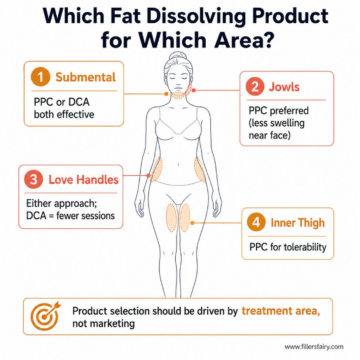
The treatment area should drive product selection more than marketing claims or price.
For submental fat — the single most requested area — both PPC and DCA products perform well, but the choice depends on the practitioner’s comfort with managing the more intense DCA recovery and the patient’s tolerance for downtime. PPC is safer for cautious patients; DCA may achieve results in fewer sessions.
For jowls and lower face fat, PPC-based products are generally preferred because excessive inflammation near the mandible and buccal area can cause prolonged swelling that affects the patient’s social comfort. The more gradual PPC approach produces a natural-looking reduction without the dramatic swelling peaks associated with DCA.
For body areas such as love handles, inner thighs, and bra fat, either approach works, though larger treatment areas may favor PPC for tolerability reasons. Some practitioners use DCA for body areas specifically because the stronger mechanism reduces the total number of sessions needed.
Setting Realistic Patient Expectations
The biggest risk in injectable lipolysis isn’t a clinical complication — it’s patient disappointment from unrealistic expectations. Social media has created the impression that fat dissolving injections produce dramatic, immediate transformations. The reality is more nuanced.
Most patients need 2 to 5 treatment sessions to achieve their desired result. Results are not visible immediately — the body needs 4 to 8 weeks to process the lysed fat cells. Swelling during the first 3 to 7 days can actually make the treatment area look larger before it looks smaller, which must be communicated clearly before treatment.
The most successful clinics in this category invest heavily in pre-treatment consultations that include before photos, realistic timeline communication, and explicit discussion of the recovery process. This front-loaded investment in expectation management dramatically reduces post-treatment complaints and negative reviews.
The Economics of Injectable Lipolysis
From a business perspective, injectable lipolysis is one of the highest-margin categories in aesthetic medicine. Product costs per session are typically well below what patients pay, and the multi-session protocol generates reliable recurring revenue. The key economic lever is product cost — and this is where Korean-manufactured products offer the most significant advantage.
Korean PPC and DCA products are typically priced at 50 to 70 percent below Western equivalents at wholesale, with comparable clinical efficacy. For a medspa performing 15 to 20 fat dissolving treatments per week, this cost difference translates to meaningful bottom-line impact over a year.
The decision between product options should balance three factors: clinical efficacy for the target treatment area, side effect profile appropriate for your patient demographic, and wholesale cost that enables competitive patient pricing while maintaining margin targets. Getting this balance right turns injectable lipolysis from an add-on service into a practice pillar.
*About the author: FillersFairy is a B2B supplier specializing in Korean aesthetic products for clinics and medspas worldwide.*